Tura-Ceide Olga, Lobo Borja, Paul Tanja, Puig-Pey Raquel, Coll-Bonfill Núria, García-Lucio Jéssica, Smolders Valérie, Blanco Isabel, Barberà Joan A, Peinado Víctor I
Department of Pulmonary Medicine, Hospital Clínic-Institut d'Investigacions Biomèdiques August Pi i Sunyer (IDIBAPS)-University of Barcelona, Villarroel, 170, Barcelona, 08036, Spain.
Biomedical Research Networking Center in Respiratory Diseases (CIBERES), Madrid, Spain.
Respir Res. 2017 Mar 23;18(1):50. doi: 10.1186/s12931-017-0530-0.
Cigarette smoke (CS) is associated with lower numbers of circulating stem cells and might severely affect their mobilization, trafficking and homing. Our study was designed to demonstrate in an animal model of CS exposure whether CS affects the homing and functional capabilities of bone marrow-derived mesenchymal stem cells (BM-MSCs).
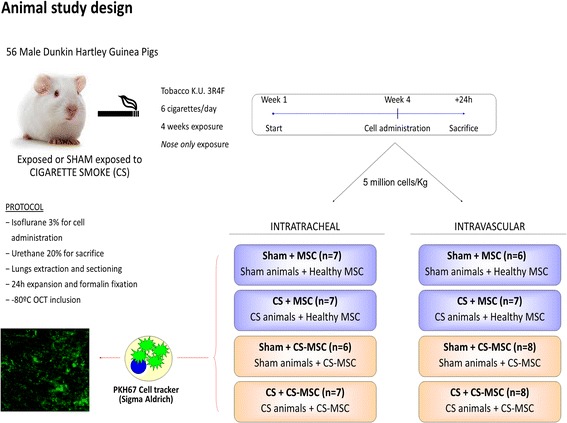
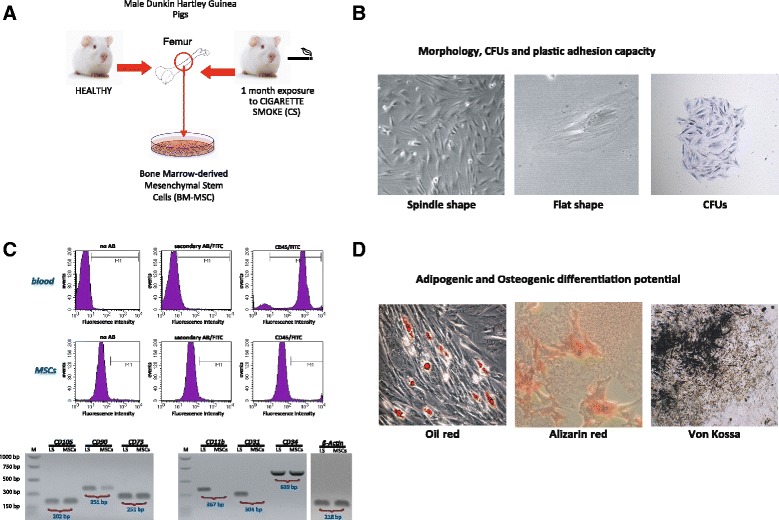
Guinea pigs (GP), exposed or sham-exposed to CS, were administered via tracheal instillation or by vascular administration with 2.5 × 10 BM-MSCs obtained from CS-exposed or sham-exposed animal donors. Twenty-four hours after cell administration, animals were sacrificed and cells were visualised into lung structures by optical microscopy. BM-MSCs from 8 healthy GP and from 8 GP exposed to CS for 1 month were isolated from the femur, cultured in vitro and assessed for their proliferation, migration, senescence, differentiation potential and chemokine gene expression profile.
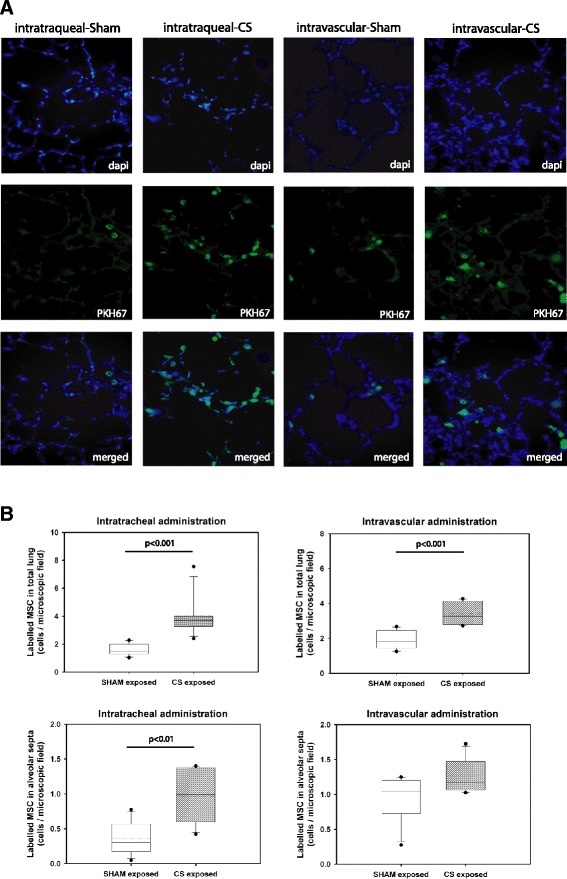
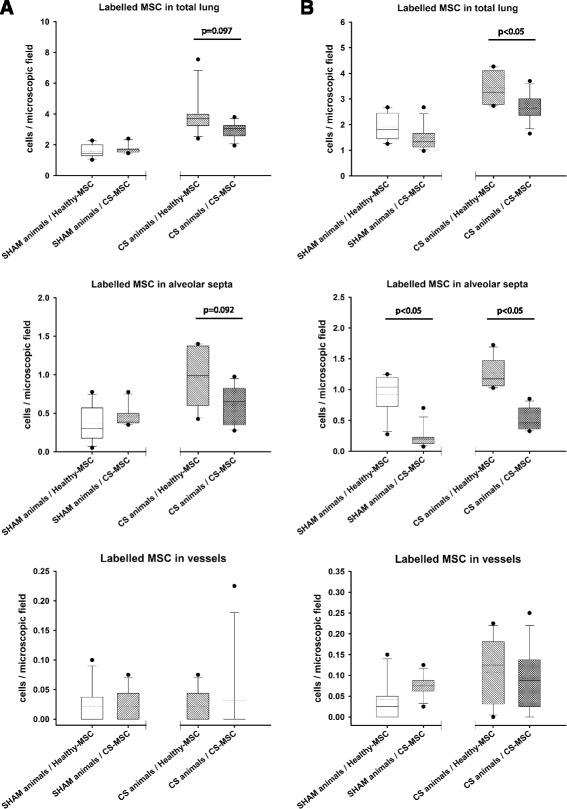
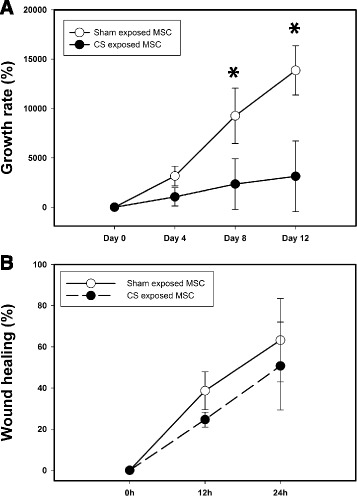
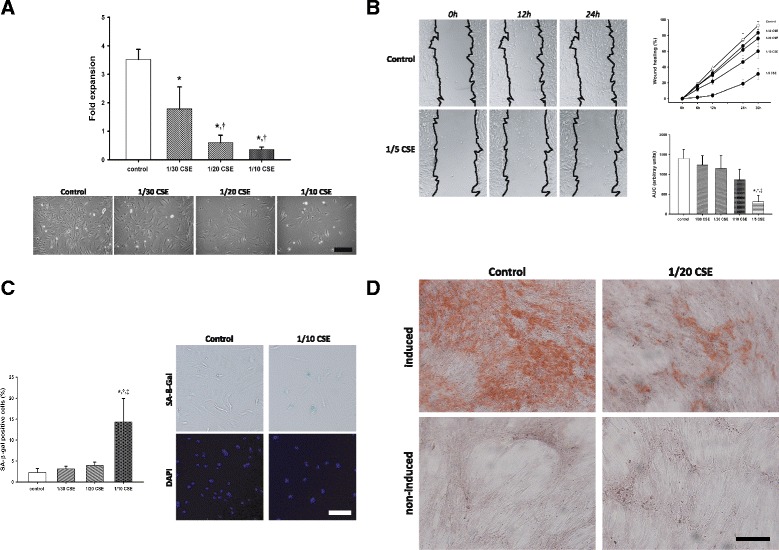
CS-exposed animals showed greater BM-MSCs lung infiltration than sham-exposed animals regardless of route of administration. The majority of BM-MSCs localized in the alveolar septa. BM-MSCs obtained from CS-exposed animals showed lower ability to engraft and lower proliferation and migration. In vitro, BM-MSCs exposed to CS extract showed a significant reduction of proliferative, cellular differentiation and migratory potential and an increase in cellular senescence in a dose dependent manner.
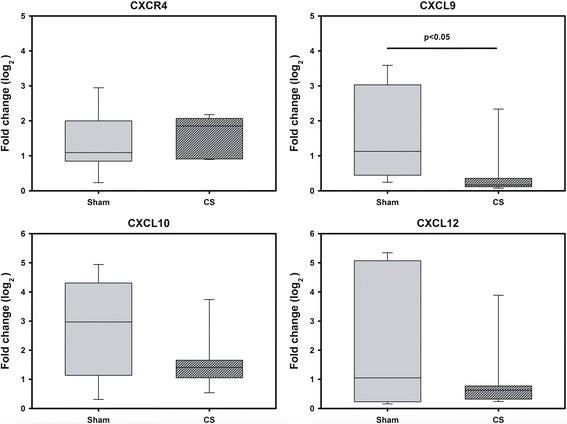
Short-term CS exposure induces BM-MSCs dysfunction. Such dysfunction was observed in vivo, affecting the cell homing and proliferation capabilities of BM-MSCs in lungs exposed to CS and in vitro altering the rate of proliferation, senescence, differentiation and migration capacity. Additionally, CS induced a reduction in CXCL9 gene expression in the BM from CS-exposed animals underpinning a potential mechanistic action of bone marrow dysfunction.
香烟烟雾(CS)与循环干细胞数量减少有关,可能会严重影响其动员、运输和归巢。我们的研究旨在通过CS暴露的动物模型来证明CS是否会影响骨髓间充质干细胞(BM-MSC)的归巢和功能能力。
将暴露于CS或假暴露于CS的豚鼠通过气管内滴注或血管给药,给予从暴露于CS或假暴露的动物供体获得的2.5×10个BM-MSC。细胞给药后24小时,处死动物,通过光学显微镜观察细胞在肺结构中的情况。从8只健康豚鼠和8只暴露于CS 1个月的豚鼠的股骨中分离出BM-MSC,进行体外培养,并评估其增殖、迁移、衰老、分化潜能和趋化因子基因表达谱。
无论给药途径如何,暴露于CS的动物比假暴露的动物表现出更多的BM-MSC肺浸润。大多数BM-MSC定位于肺泡隔。从暴露于CS的动物获得的BM-MSC显示出较低的植入能力以及较低的增殖和迁移能力。在体外,暴露于CS提取物的BM-MSC显示出增殖、细胞分化和迁移潜能的显著降低以及细胞衰老的剂量依赖性增加。
短期CS暴露会诱导BM-MSC功能障碍。这种功能障碍在体内被观察到,影响了暴露于CS的肺中BM-MSC的细胞归巢和增殖能力,并且在体外改变了增殖、衰老、分化和迁移能力的速率。此外,CS导致暴露于CS的动物骨髓中CXCL9基因表达降低,这支持了骨髓功能障碍的潜在机制作用。