Huang Yu, Fan Chao-Qiang, Dong Hui, Wang Su-Min, Yang Xiao-Chao, Yang Shi-Ming
Department of Gastroenterology, Xinqiao Hospital, Third Military Medical University, Chongqing, People's Republic of China.
Department of Biomedical Materials Science, School of Biomedical Engineering, Third Military Medical University, Chongqing, People's Republic of China.
Int J Nanomedicine. 2017 Mar 7;12:1815-1825. doi: 10.2147/IJN.S127349. eCollection 2017.
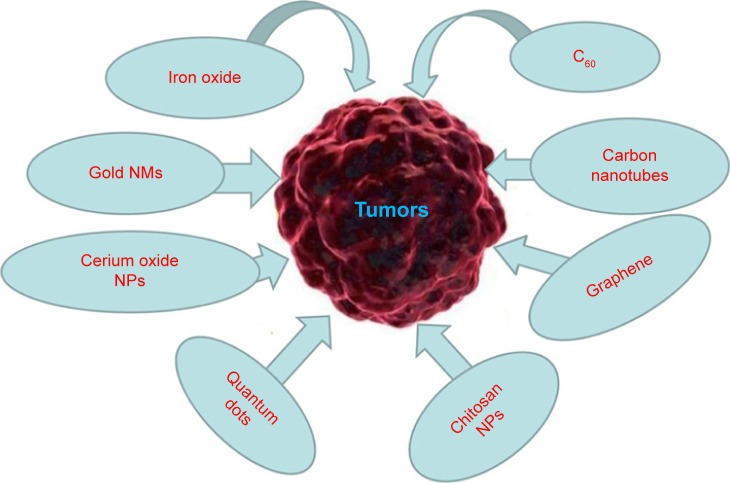
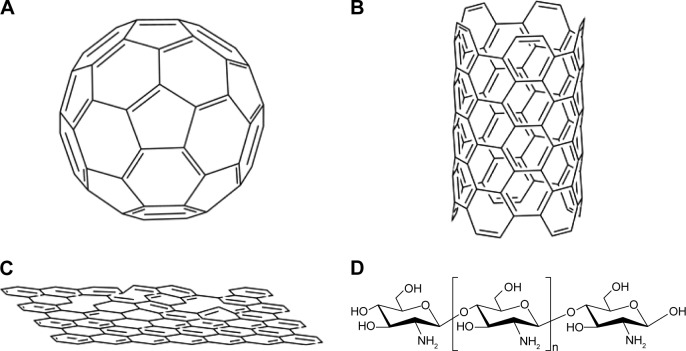
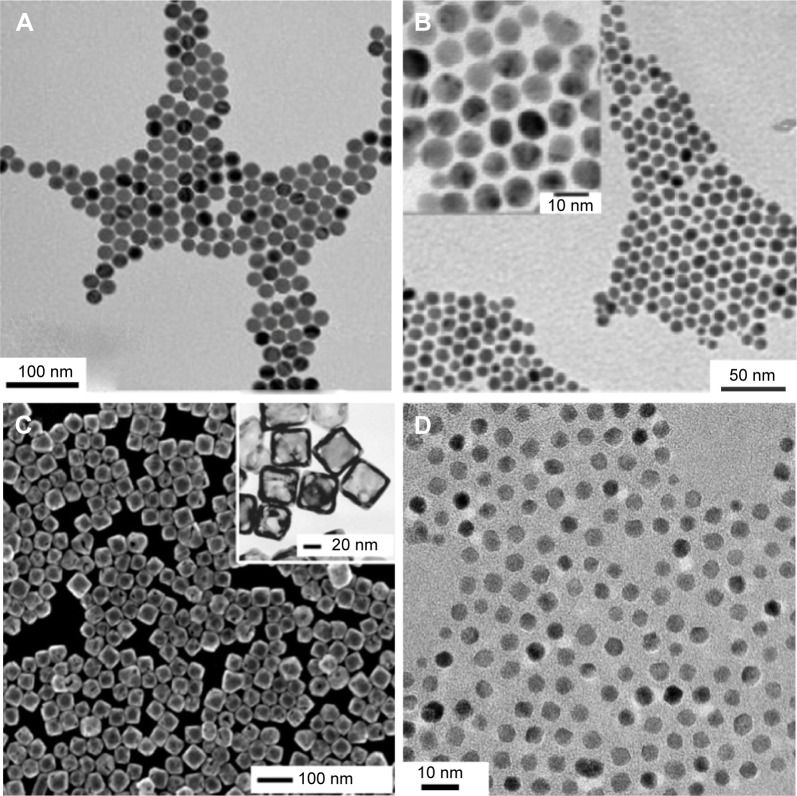
Tumors are one of the most serious human diseases and cause numerous global deaths per year. In spite of many strategies applied in tumor therapy, such as radiation therapy, chemotherapy, surgery, and a combination of these treatments, tumors are still the foremost killer worldwide among human diseases, due to their specific limitations, such as multidrug resistance and side effects. Therefore, it is urgent and necessary to develop new strategies for tumor therapy. Recently, the fast development of nanoscience has paved the way for designing new strategies to treat tumors. Nanomaterials have shown great potential in tumor therapy, due to their unique properties, including passive targeting, hyperthermia effects, and tumor-specific inhibition. This review summarizes the recent progress using the innate antitumor properties of metallic and nonmetallic nanomaterials to treat tumors, and related challenges and prospects are discussed.
肿瘤是最严重的人类疾病之一,每年在全球导致无数人死亡。尽管在肿瘤治疗中应用了许多策略,如放射治疗、化学疗法、手术以及这些治疗方法的联合使用,但由于肿瘤存在多药耐药性和副作用等特定局限性,它仍然是全球人类疾病中首要的杀手。因此,开发新的肿瘤治疗策略迫在眉睫且十分必要。近年来,纳米科学的快速发展为设计新的肿瘤治疗策略铺平了道路。纳米材料因其独特的性质,包括被动靶向、热疗效应和肿瘤特异性抑制,在肿瘤治疗中显示出巨大潜力。本文综述了利用金属和非金属纳米材料的固有抗肿瘤特性治疗肿瘤的最新进展,并讨论了相关挑战和前景。