Ma Ting, Wang Zhen, Zhang Yang-Mei, Luo Jian-Guang, Kong Ling-Yi
State Key Laboratory of Natural Medicines, Department of Natural Medicinal Chemistry, China Pharmaceutical University, 24 Tong Jia Xiang, Nanjing 210009, China.
Molecules. 2017 Mar 23;22(4):506. doi: 10.3390/molecules22040506.
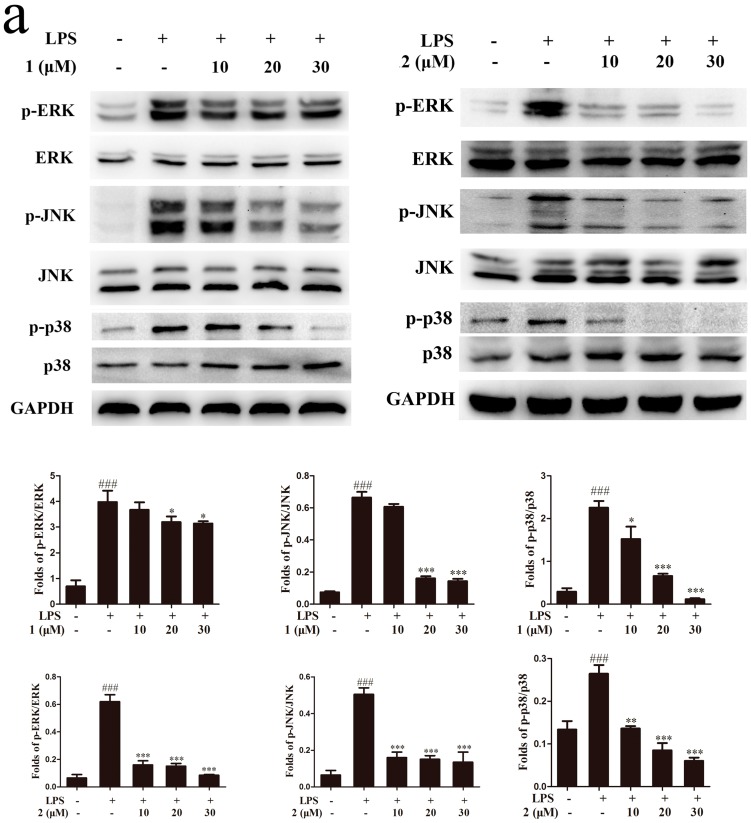
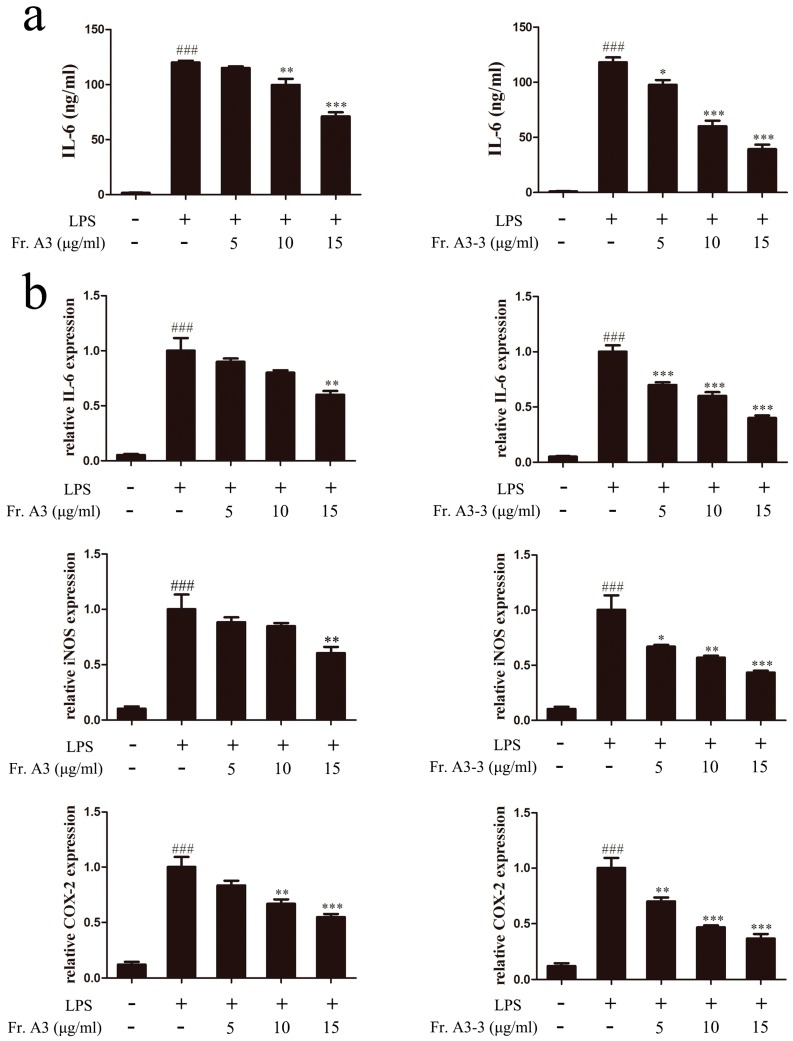
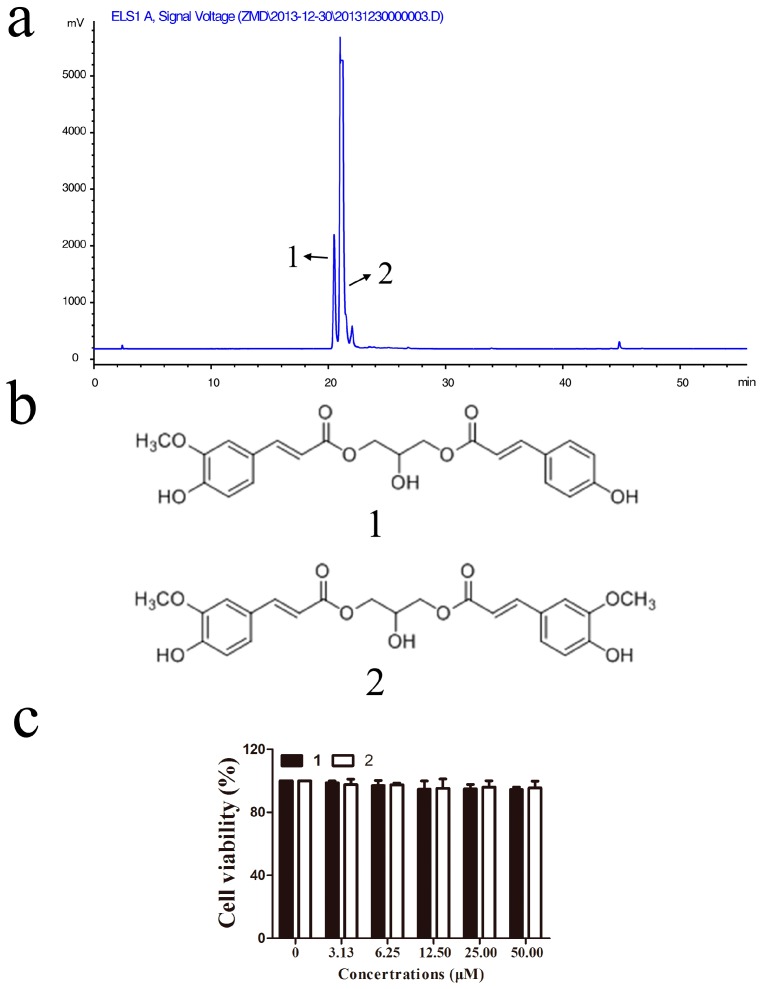
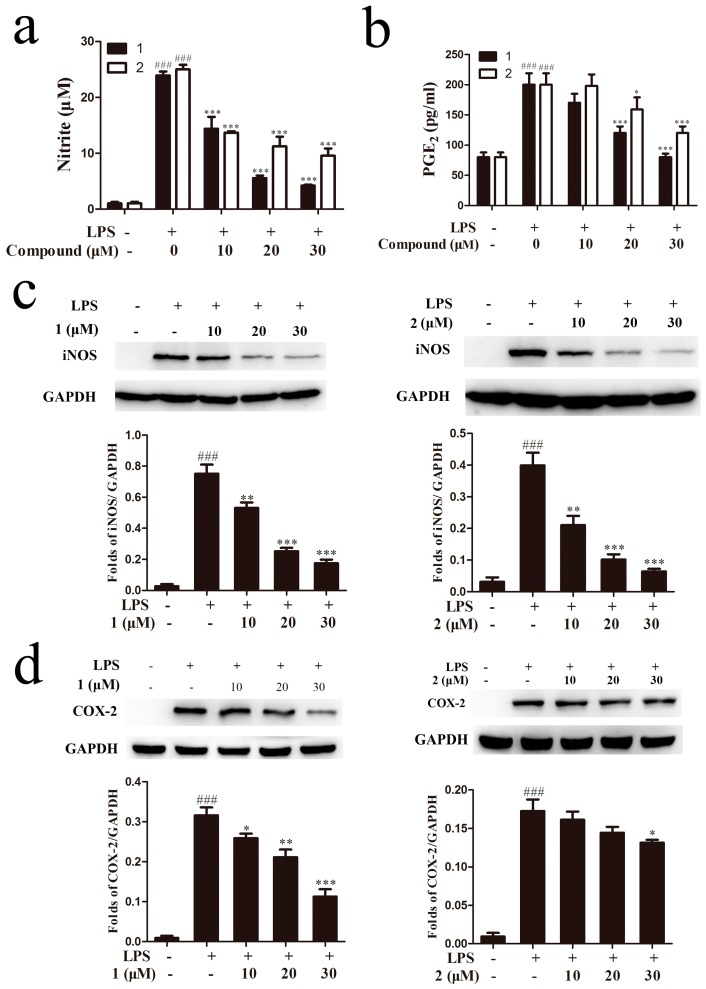
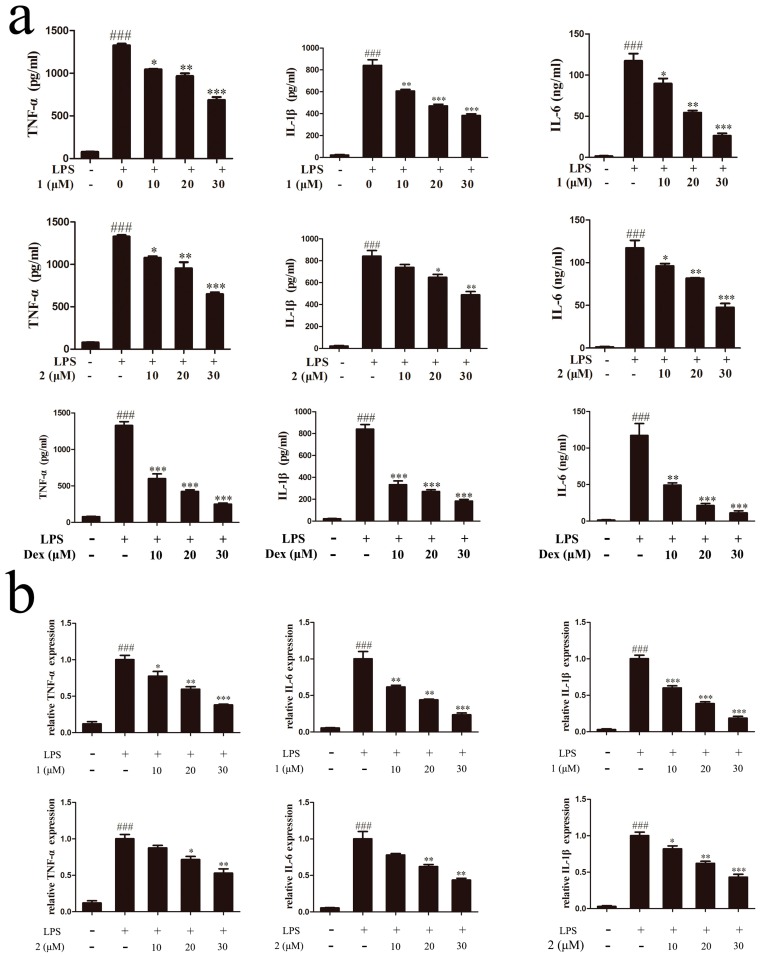
The bulbs of var. (LB) are commonly used as both traditional Chinese medicines and popular functional food for many centuries in China. Previous studies reported that the extract of lily bulbs exhibited anti-inflammatory activity both in vivo and in vitro, but its active components and associated molecular mechanisms remain elusive. In the present study, using bioassay-guided isolation method, two phenylpropenoid acylglycerols, 1--feruloyl-2---coumaroylglycerol () and 1,3--diferuloylglycerol (), were obtained and identified from the chloroform fraction of LB. Both compounds and significantly decreased the production of nitrite oxide (NO) in lipopolysaccharide (LPS)-stimulated mouse macrophage RAW264.7 cells in a dose-dependent manner with half maximal inhibitory concentration (IC) values of 9.12 ± 0.72 μM and 12.01 ± 1.07 μM, respectively. They also inhibited the production of prostaglandin E2 (PGE2) and several other pro-inflammatory cytokines, such as interleukin-1β (IL-1β), interleukin-6 (IL-6), and tumor necrosis factor-α (TNF-α). Furthermore, compounds and downregulated the protein levels of inducible nitric oxide synthase (iNOS) and cyclooxygenase-2 (COX-2). They also inhibited the nuclear translocation of nuclear factor-κB (NF-κB) p65 subunit and suppressed mitogen-activated protein kinases (MAPKs) pathway. Taken these data together, compounds and exhibited anti-inflammatory activities through acting on the NF-κB and MAPKs pathway. This research provides the first evidence on the major bioactive constituents and related molecular mechanisms of LB as an anti-inflammatory agent. Our findings also advanced the understanding of LB as a traditional herbal medicine for the prevention and treatment of inflammation.
在数百年间,卷丹(LB)的鳞茎在中国一直被用作传统中药和广受欢迎的功能性食品。先前的研究报道,百合鳞茎提取物在体内和体外均表现出抗炎活性,但其活性成分及相关分子机制仍不清楚。在本研究中,采用生物活性导向分离法,从卷丹的氯仿部位获得并鉴定出两种苯丙素酰甘油,即1 - 阿魏酰基 - 2 - 对香豆酰基甘油()和1,3 - 二阿魏酰基甘油()。这两种化合物均能以剂量依赖的方式显著降低脂多糖(LPS)刺激的小鼠巨噬细胞RAW264.7细胞中一氧化氮(NO)的产生,其半数最大抑制浓度(IC)值分别为9.12±0.72μM和12.01±1.07μM。它们还抑制前列腺素E2(PGE2)以及其他几种促炎细胞因子的产生,如白细胞介素 - 1β(IL - 1β)、白细胞介素 - 6(IL - 6)和肿瘤坏死因子 - α(TNF - α)。此外,这两种化合物下调了诱导型一氧化氮合酶(iNOS)和环氧化酶 - 2(COX - 2)的蛋白水平。它们还抑制核因子 - κB(NF - κB)p65亚基的核转位并抑制丝裂原活化蛋白激酶(MAPKs)通路。综合这些数据,这两种化合物通过作用于NF - κB和MAPKs通路表现出抗炎活性。本研究首次提供了卷丹作为抗炎剂的主要生物活性成分及相关分子机制的证据。我们的研究结果也增进了对卷丹作为预防和治疗炎症的传统草药的理解。