Yarus Michael
Department of Molecular, Cellular and Developmental Biology, University of Colorado, Boulder, CO 80309-0347, USA.
Life (Basel). 2017 Mar 23;7(2):13. doi: 10.3390/life7020013.
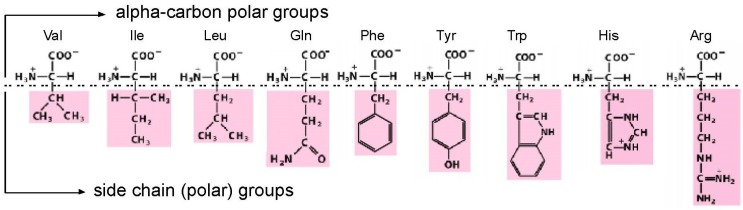
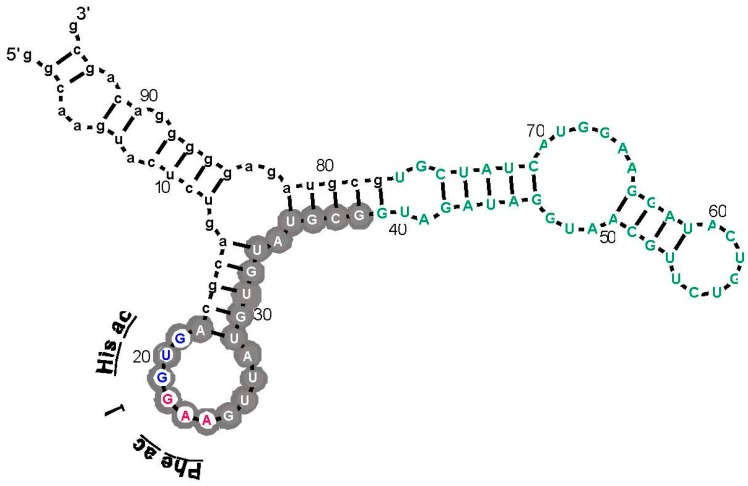
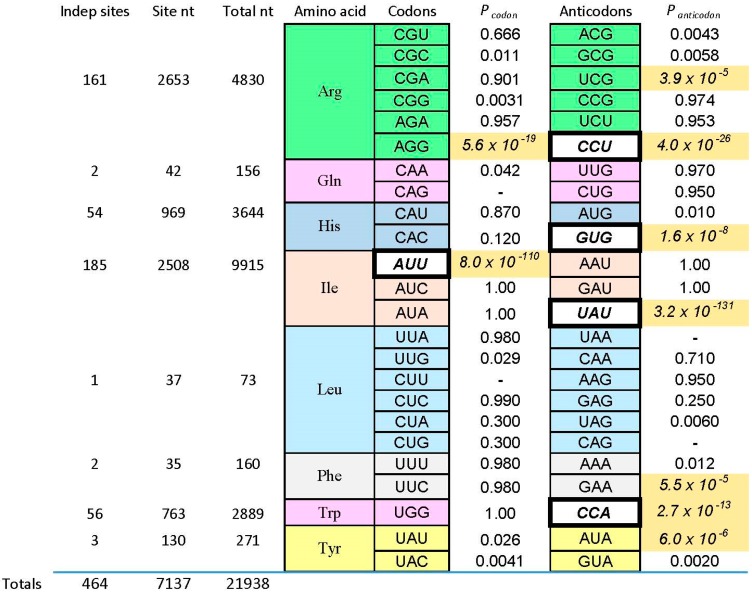
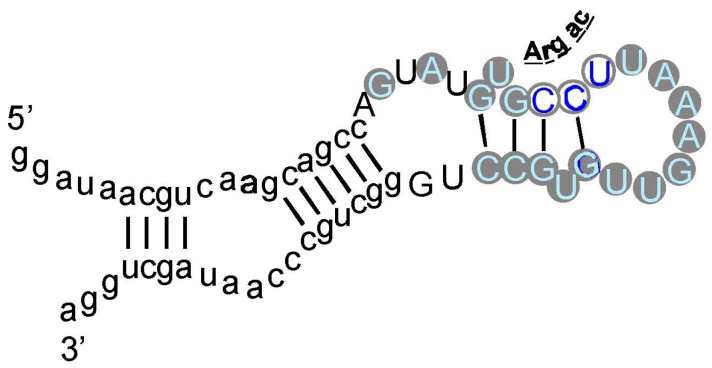
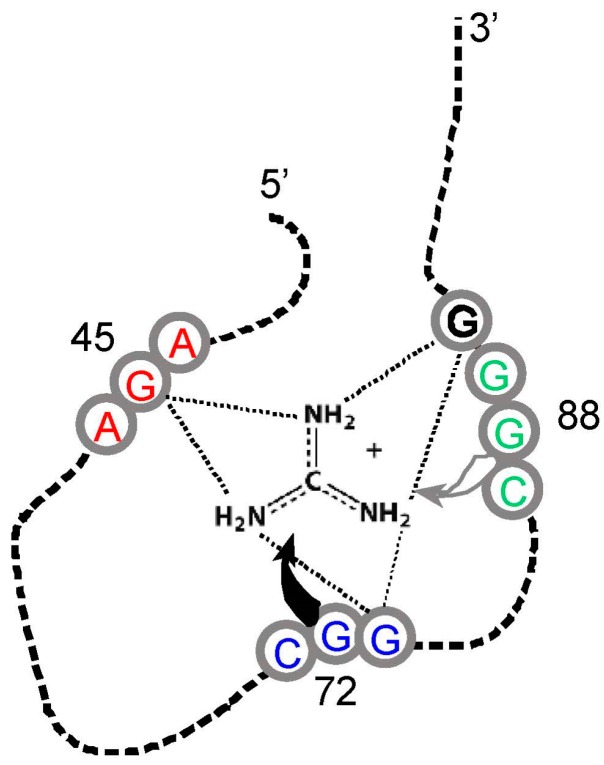
A significant part of the genetic code likely originated via a chemical interaction, which should be experimentally verifiable. One possible verification relates bound amino acids (or perhaps their activated congeners) and ribonucleotide sequences within cognate RNA binding sites. To introduce this interaction, I first summarize how amino acids function as targets for RNA binding. Then the experimental method for selecting relevant RNA binding sites is characterized. The selection method's characteristics are related to the investigation of the RNA binding site model treated at the outset. Finally, real binding sites from selection and also from extant natural RNAs (for example, the guanidinium riboswitch) are connected to the genetic code, and by extension, to the evolutionary progression that produced the code. During this process, peptides may have been produced directly on an instructive amino acid binding RNA (a DRT; Direct RNA Template). Combination of observed stereochemical selectivity with adaptation and co-evolutionary refinement is logically required, and also potentially sufficient, to create the striking order conserved throughout the present coding table.
遗传密码的很大一部分可能起源于一种化学相互作用,这种相互作用应该可以通过实验验证。一种可能的验证涉及结合的氨基酸(或者可能是它们的活化类似物)与同源RNA结合位点内的核糖核苷酸序列。为了引入这种相互作用,我首先总结氨基酸作为RNA结合靶点的作用方式。然后描述选择相关RNA结合位点的实验方法。选择方法的特点与一开始所处理的RNA结合位点模型的研究相关。最后,从选择中获得的以及现存天然RNA(例如,胍基核糖开关)中的真实结合位点与遗传密码相联系,并进而与产生该密码的进化进程相联系。在此过程中,肽可能直接在具有指导作用的氨基酸结合RNA(直接RNA模板,DRT)上产生。观察到的立体化学选择性与适应性以及共同进化优化的结合在逻辑上是必需的,并且也可能足以产生贯穿当前编码表所保守的显著秩序。