Gordon James M B, Aibara Shintaro, Stewart Murray
MRC Laboratory of Molecular Biology, Francis Crick Avenue, Cambridge Biomedical Campus, Cambridge CB2 0QH, UK.
Nucleic Acids Res. 2017 May 19;45(9):5577-5585. doi: 10.1093/nar/gkx158.
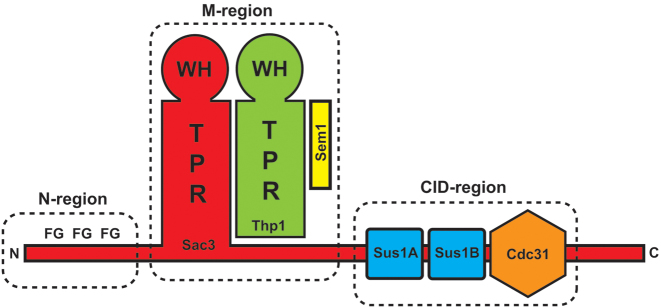
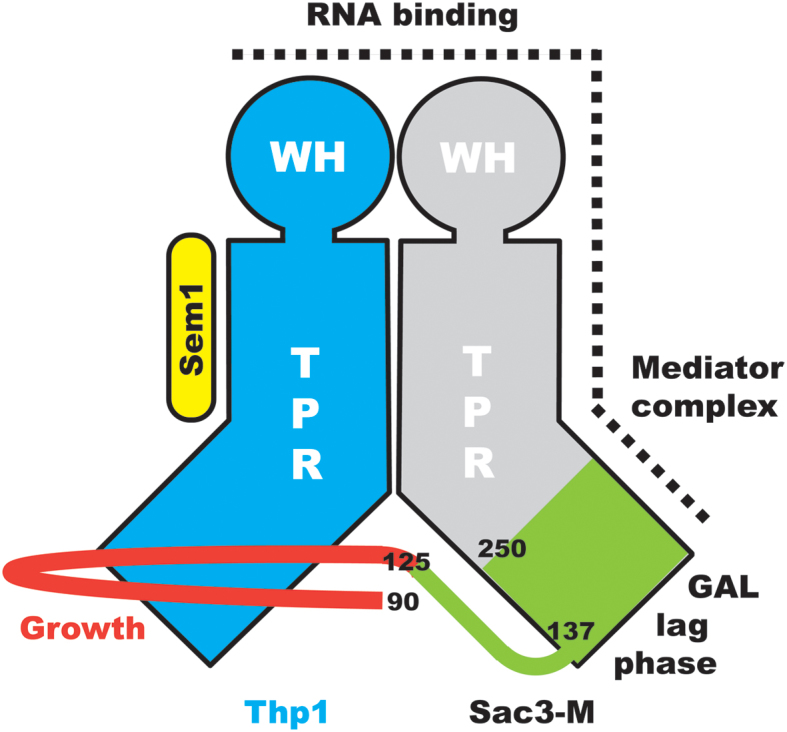
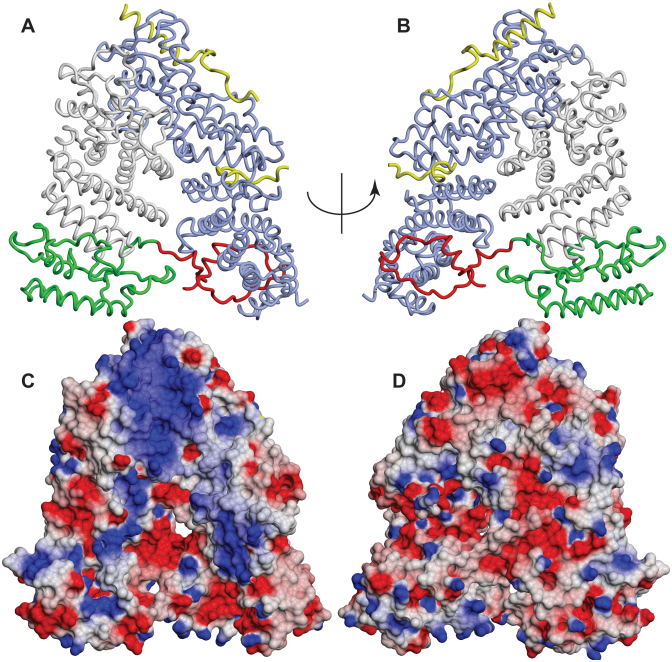
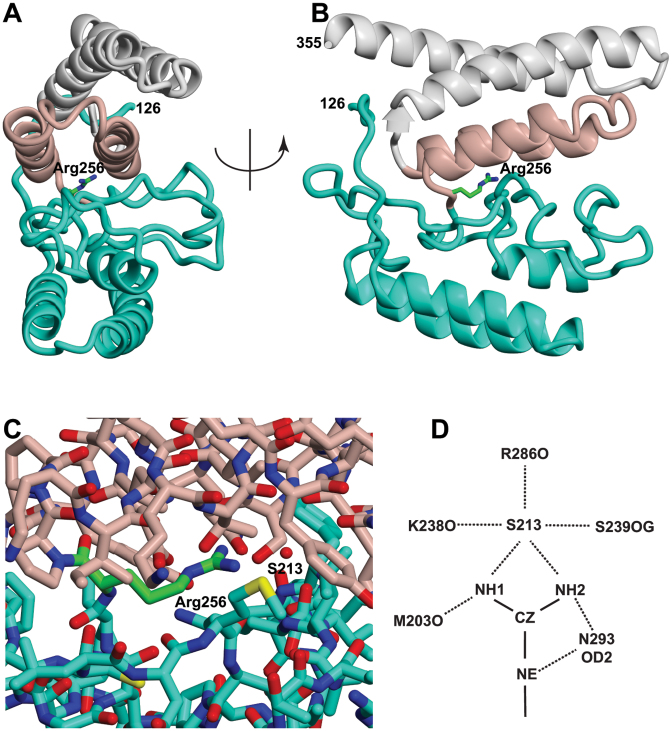
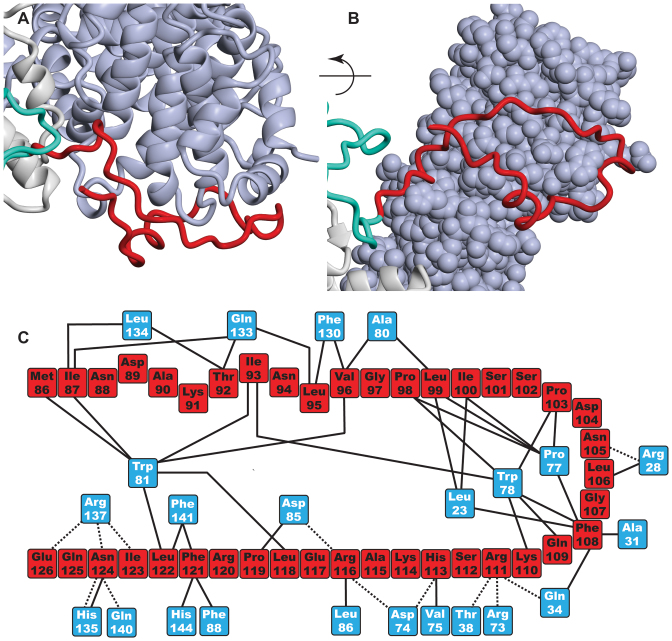
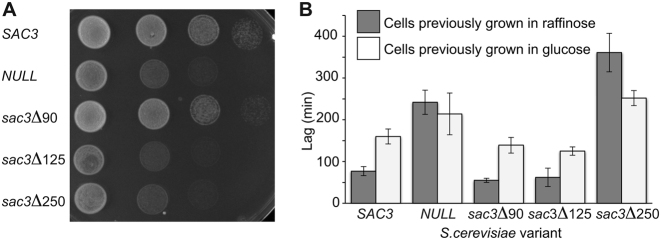
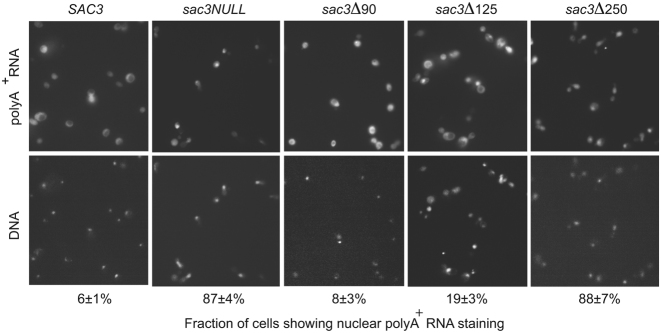
Transcription-export complex 2 (TREX-2, or THSC) facilitates localization of actively transcribing genes such as GAL1 to the nuclear periphery, contributes to the generation of export-competent mRNPs and influences gene expression through interactions with Mediator. TREX-2 is based on a Sac3 scaffold to which Thp1, Sem1, Cdc31 and Sus1 bind and consists of three modules: the N-region (Sac3∼1-100), which binds mRNA export factor Mex67:Mtr2; the M-region, in which Thp1 and Sem1 bind to Sac3∼100-550; and the CID region in which Cdc31 and two Sus1 chains bind to Sac3∼720-805. Although the M-region of Sac3 was originally thought to encompass residues ∼250-550, we report here the 2.3Å resolution crystal structure of a complex containing Sac3 residues 60-550 that indicates that the TPR-like repeats of the M-region extend to residue 137 and that residues 90-125 form a novel loop that links Sac3 to Thp1. These new structural elements are important for growth and mRNA export in vivo. Although deleting Sac3 residues 1-90 produced a wild-type phenotype, deletion of the loop as well generated growth defects at 37°C, whereas the deletion of residues 1-250 impaired mRNA export and also generated longer lag times when glucose or raffinose was replaced by galactose as the carbon source.
转录-输出复合物2(TREX-2,或THSC)促进诸如GAL1等正在活跃转录的基因定位于核周边,有助于生成具有输出能力的mRNA-蛋白质复合物,并通过与中介体相互作用影响基因表达。TREX-2基于Sac3支架,Thp1、Sem1、Cdc31和Sus1与之结合,它由三个模块组成:N区域(Sac3∼1-100),与mRNA输出因子Mex67:Mtr2结合;M区域,其中Thp1和Sem1与Sac3∼100-550结合;以及CID区域,其中Cdc31和两条Sus1链与Sac3∼720-805结合。尽管Sac3的M区域最初被认为包含约250-550位的残基,但我们在此报告了一个包含Sac3残基60-550的复合物的2.3Å分辨率晶体结构,该结构表明M区域的TPR样重复延伸至137位残基,且90-125位残基形成了一个将Sac3与Thp1连接的新环。这些新的结构元件对于体内生长和mRNA输出很重要。虽然删除Sac3残基1-90产生野生型表型,但删除该环也会在37°C时产生生长缺陷,而删除残基1-250则会损害mRNA输出,并且当葡萄糖或棉子糖被半乳糖作为碳源替代时还会产生更长的延迟时间。