Martinez-Vicente Marta
Neurodegenerative Diseases Research Group, Vall d'Hebron Research InstituteBarcelona, Spain; Autonomous University of Barcelona (UAB)Barcelona, Spain; Centro de Investigación Biomédica en Red sobre Enfermedades Neurodegenerativas (CIBERNED)Barcelona, Spain.
Front Mol Neurosci. 2017 Mar 8;10:64. doi: 10.3389/fnmol.2017.00064. eCollection 2017.
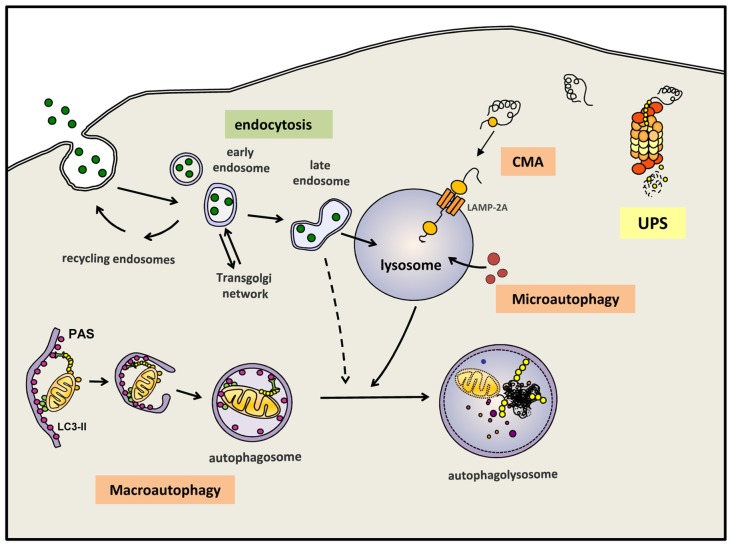
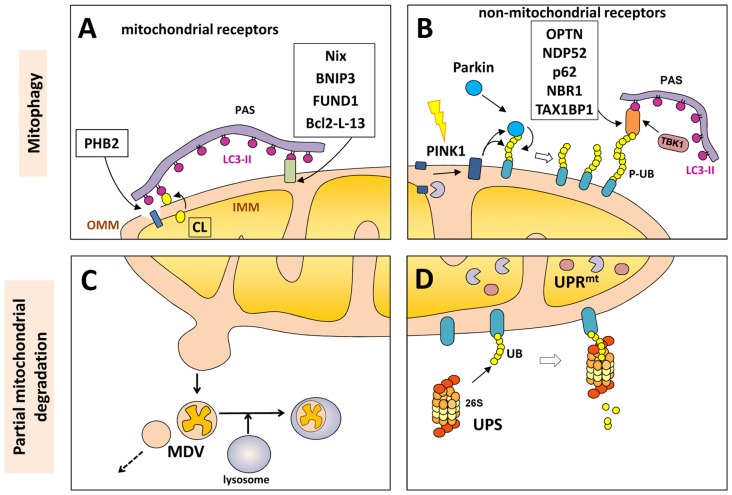
Neuronal homeostasis depends on the proper functioning of different quality control systems. All intracellular components are subjected to continuous turnover through the coordinated synthesis, degradation and recycling of their constituent elements. Autophagy is the catabolic mechanism by which intracellular cytosolic components, including proteins, organelles, aggregates and any other intracellular materials, are delivered to lysosomes for degradation. Among the different types of selective autophagy described to date, the process of mitophagy involves the selective autophagic degradation of mitochondria. In this way, mitophagy is responsible for basal mitochondrial turnover, but can also be induced under certain physiological or pathogenic conditions to eliminate unwanted or damaged mitochondria. Dysfunctional cellular proteolytic systems have been linked extensively to neurodegenerative diseases (ND) like Alzheimer's disease (AD), Parkinson's disease (PD), or Huntington's disease (HD), with autophagic failure being one of the main factors contributing to neuronal cell death in these diseases. Neurons are particularly vulnerable to autophagic impairment as well as to mitochondrial dysfunction, due mostly to their particular high energy dependence and to their post-mitotic nature. The accurate and proper degradation of dysfunctional mitochondria by mitophagy is essential for maintaining control over mitochondrial quality and quantity in neurons. In this report, I will review the role of mitophagy in neuronal homeostasis and the consequences of its dysfunction in ND.
神经元稳态依赖于不同质量控制系统的正常运作。所有细胞内成分都通过其组成元素的协调合成、降解和循环而不断更新。自噬是一种分解代谢机制,通过该机制,包括蛋白质、细胞器、聚集体和任何其他细胞内物质在内的细胞溶质成分被输送到溶酶体进行降解。在迄今为止描述的不同类型的选择性自噬中,线粒体自噬过程涉及线粒体的选择性自噬降解。通过这种方式,线粒体自噬负责基础线粒体更新,但在某些生理或致病条件下也可被诱导以消除不需要的或受损的线粒体。功能失调的细胞蛋白水解系统已被广泛认为与神经退行性疾病(ND)如阿尔茨海默病(AD)、帕金森病(PD)或亨廷顿病(HD)有关,自噬功能障碍是这些疾病中导致神经元细胞死亡的主要因素之一。神经元特别容易受到自噬损伤以及线粒体功能障碍的影响,这主要是由于它们特殊的高能量依赖性和有丝分裂后特性。线粒体自噬对功能失调的线粒体进行准确和适当的降解对于维持对神经元中线粒体质量和数量的控制至关重要。在本报告中,我将综述线粒体自噬在神经元稳态中的作用及其功能障碍在神经退行性疾病中的后果。