Dumas Georges, Curthoys Ian S, Lion Alexis, Perrin Philippe, Schmerber Sébastien
Department of Oto-Rhino-Laryngology, Head and Neck Surgery, University Hospital, Grenoble, France; EA 3450 DevAH, Development, Adaptation and Disadvantage, Faculty of Medicine and UFR STAPS, University of Lorraine, Villers-lès-Nancy, France.
Vestibular Research Laboratory, School of Psychology, the University of Sydney , Sydney, NSW , Australia.
Front Neurol. 2017 Mar 9;8:41. doi: 10.3389/fneur.2017.00041. eCollection 2017.
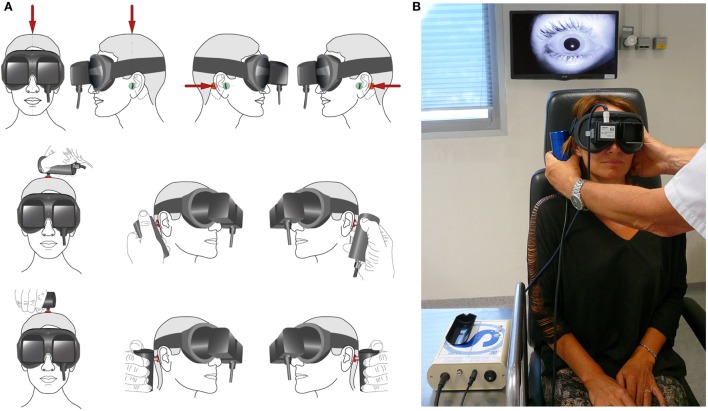
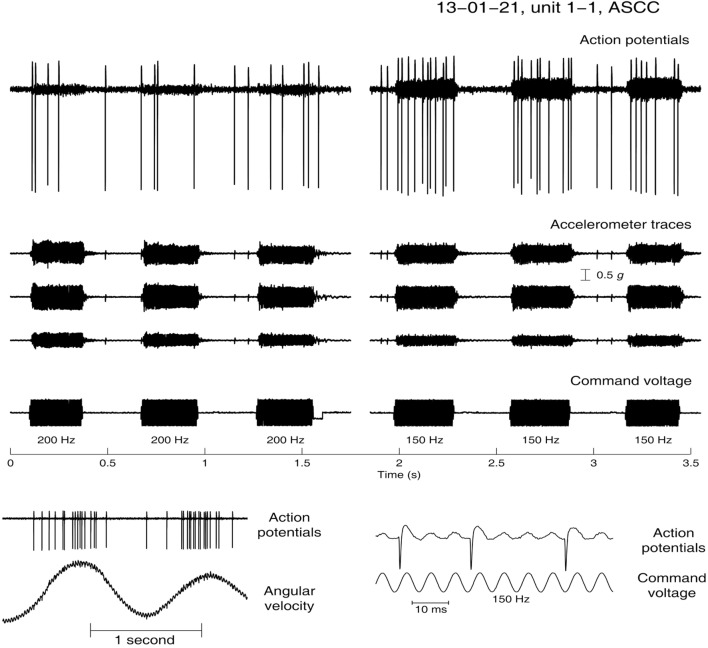
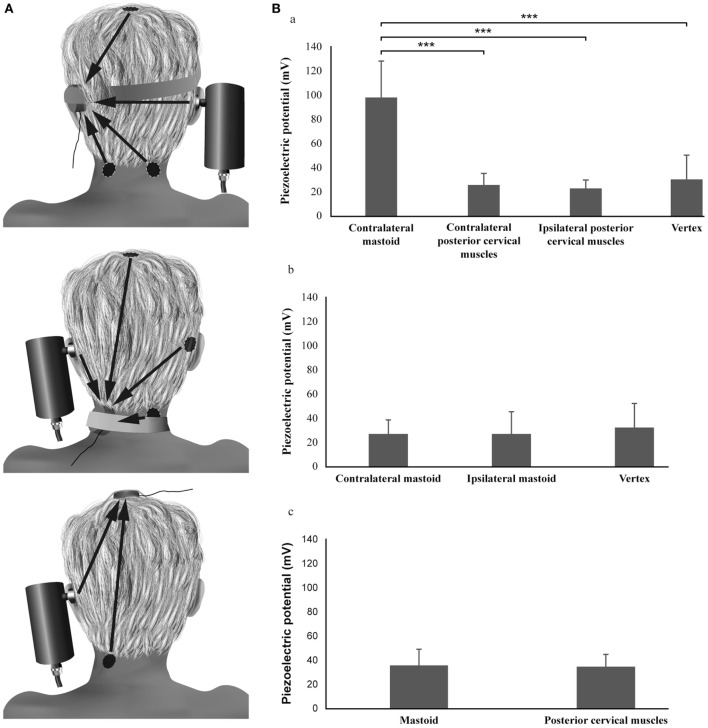
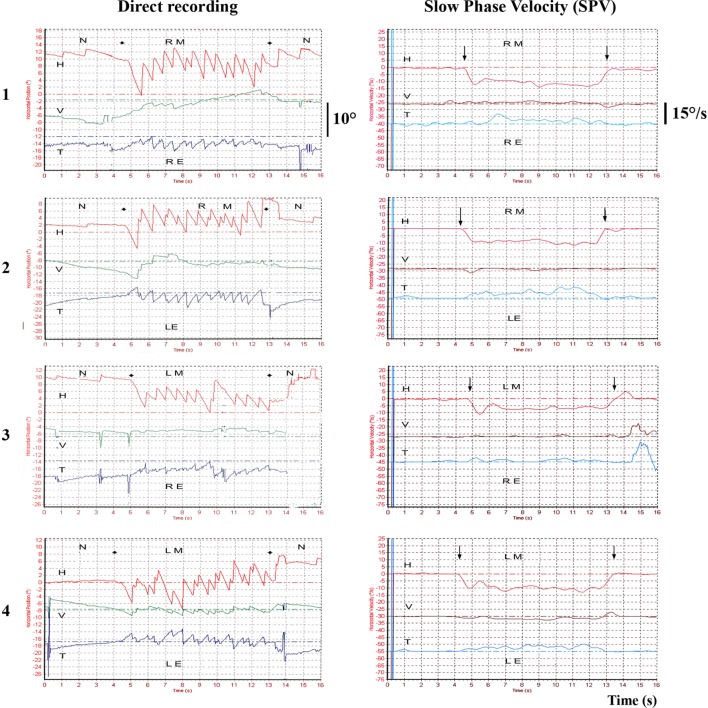
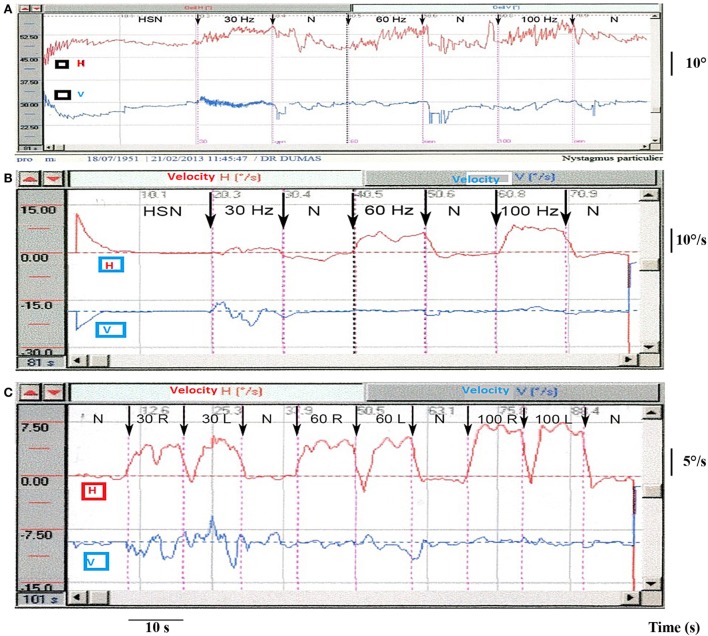
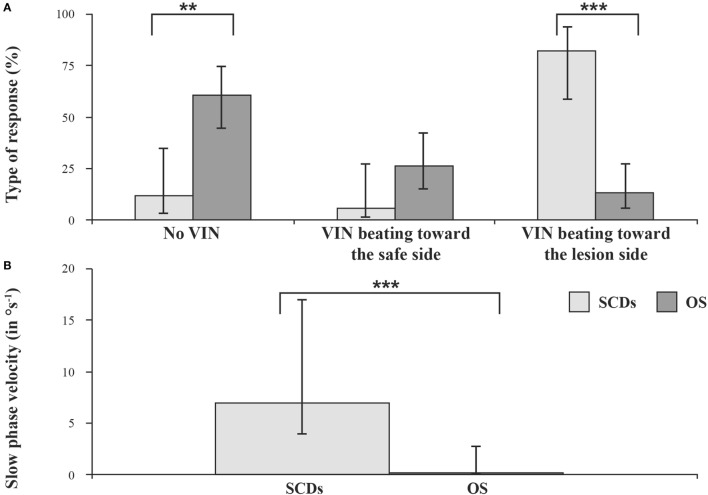
A 100-Hz bone-conducted vibration applied to either mastoid induces instantaneously a predominantly horizontal nystagmus, with quick phases beating away from the affected side in patients with a unilateral vestibular loss (UVL). The same stimulus in healthy asymptomatic subjects has little or no effect. This is skull vibration-induced nystagmus (SVIN), and it is a useful, simple, non-invasive, robust indicator of asymmetry of vestibular function and the side of the vestibular loss. The nystagmus is precisely stimulus-locked: it starts with stimulation onset and stops at stimulation offset, with no post-stimulation reversal. It is sustained during long stimulus durations; it is reproducible; it beats in the same direction irrespective of which mastoid is stimulated; it shows little or no habituation; and it is permanent-even well-compensated UVL patients show SVIN. A SVIN is observed under Frenzel goggles or videonystagmoscopy and recorded under videonystagmography in absence of visual-fixation and strong sedative drugs. Stimulus frequency, location, and intensity modify the results, and a large variability in skull morphology between people can modify the stimulus. SVIN to 100 Hz mastoid stimulation is a robust response. We describe the optimum method of stimulation on the basis of the literature data and testing more than 18,500 patients. Recent neural evidence clarifies which vestibular receptors are stimulated, how they cause the nystagmus, and why the same vibration in patients with semicircular canal dehiscence (SCD) causes a nystagmus beating toward the affected ear. This review focuses not only on the optimal parameters of the stimulus and response of UVL and SCD patients but also shows how other vestibular dysfunctions affect SVIN. We conclude that the presence of SVIN is a useful indicator of the asymmetry of vestibular function between the two ears, but in order to identify which is the affected ear, other information and careful clinical judgment are needed.
对任一乳突施加100赫兹的骨传导振动,在单侧前庭丧失(UVL)患者中会瞬间诱发主要为水平性的眼球震颤,快相指向患侧对侧。在健康无症状受试者中,相同刺激几乎没有影响或没有影响。这就是颅骨振动诱发的眼球震颤(SVIN),它是一种有用、简单、非侵入性、可靠的前庭功能不对称及前庭丧失侧别的指标。该眼球震颤与刺激精确锁定:始于刺激开始,止于刺激结束,无刺激后反转。在长时间刺激期间持续存在;可重复;无论刺激哪侧乳突,其摆动方向相同;几乎没有或没有适应性;并且是永久性的——即使是代偿良好的UVL患者也表现出SVIN。在无视觉注视和强效镇静药物的情况下,可通过Frenzel眼镜或视频眼震图观察到SVIN,并通过视频眼震描记法进行记录。刺激频率、位置和强度会改变结果,而且人与人之间颅骨形态的巨大差异会改变刺激效果。对100赫兹乳突刺激的SVIN是一种可靠的反应。我们根据文献数据并测试了超过18500例患者,描述了最佳刺激方法。最近的神经学证据阐明了哪些前庭感受器受到刺激、它们如何引起眼球震颤,以及为什么在半规管裂开(SCD)患者中相同的振动会导致眼球震颤指向患侧耳朵。本综述不仅关注UVL和SCD患者刺激和反应的最佳参数,还展示了其他前庭功能障碍如何影响SVIN。我们得出结论,SVIN的存在是双耳前庭功能不对称的有用指标,但为了确定哪侧耳朵受影响,还需要其他信息和仔细的临床判断。