Chen Zhihang, Krishnamachary Balaji, Bhujwalla Zaver M
JHU ICMIC Program, Division of Cancer Imaging Research, Russell H. Morgan Department of Radiology and Radiological Science, The Johns Hopkins University School of Medicine, Baltimore, MD 21205, USA.
Nanomaterials (Basel). 2016 Feb 22;6(2):34. doi: 10.3390/nano6020034.
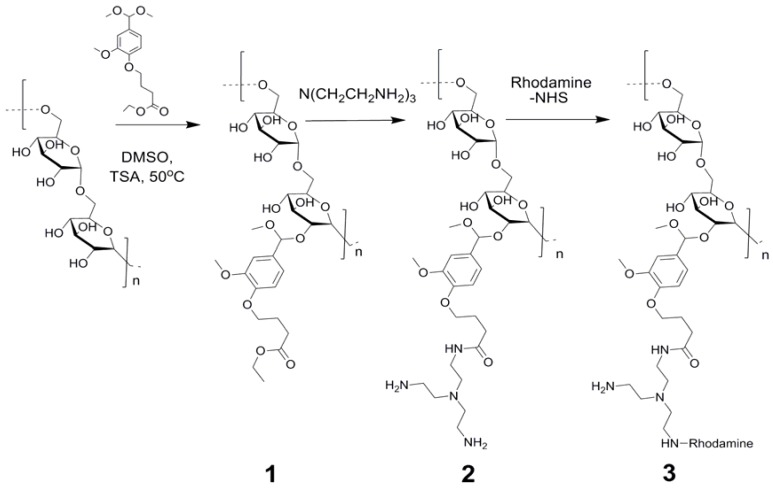
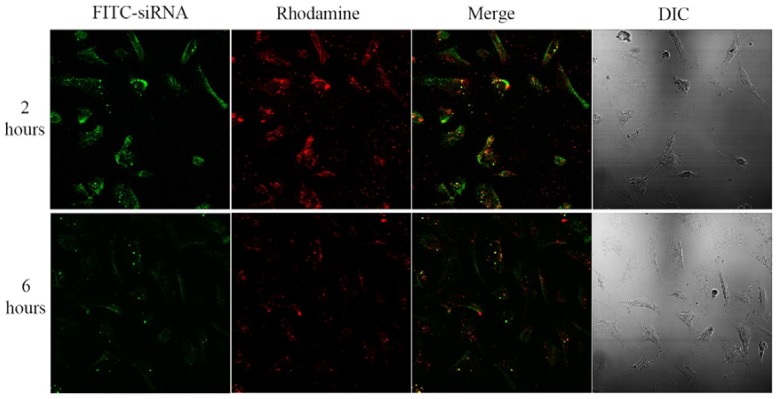
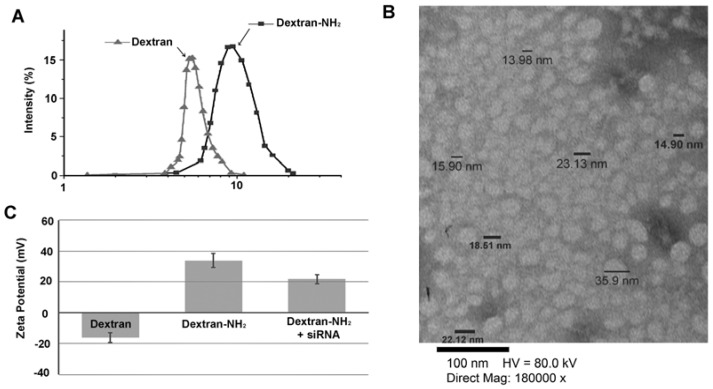
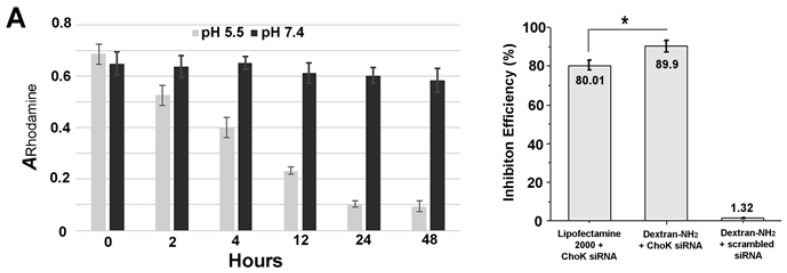
Although small interfering RNA (siRNA) therapy has proven to be a specific and effective treatment in cells, the delivery of siRNA is a challenge for the applications of siRNA therapy. We present a degradable dextran with amine groups as an siRNA nano-carrier. In our nano-carrier, the amine groups are conjugated to the dextran platform through the acetal bonds, which are acid sensitive. Therefore this siRNA carrier is stable in neutral and basic conditions, while the amine groups can be cleaved and released from dextran platform under weak acid conditions (such as in endosomes). The cleavage and release of amine groups can reduce the toxicity of cationic polymer and enhance the transfection efficiency. We successfully applied this nano-carrier to deliver choline kinase (ChoK) siRNA for ChoK inhibition in cells.
尽管小干扰RNA(siRNA)疗法已被证明在细胞中是一种特异性且有效的治疗方法,但siRNA的递送仍是siRNA疗法应用面临的一个挑战。我们提出了一种带有胺基的可降解葡聚糖作为siRNA纳米载体。在我们的纳米载体中,胺基通过酸敏感的缩醛键与葡聚糖平台相连。因此,这种siRNA载体在中性和碱性条件下是稳定的,而胺基在弱酸条件下(如在内体中)可从葡聚糖平台上裂解并释放出来。胺基的裂解和释放可以降低阳离子聚合物的毒性并提高转染效率。我们成功地应用这种纳米载体递送胆碱激酶(ChoK)siRNA以在细胞中抑制ChoK。