Gao Fei, McDaniel Justice, Chen Emily Y, Rockwell Hannah E, Drolet Jeremy, Vishnudas Vivek K, Tolstikov Vladimir, Sarangarajan Rangaprasad, Narain Niven R, Kiebish Michael A
BERG, LLC, 500 Old Connecticut Path, Bldg B, 3rd Floor, Framingham, MA 01701 USA.
Nutr Metab (Lond). 2017 Mar 20;14:28. doi: 10.1186/s12986-017-0182-6. eCollection 2017.
Real-time and dynamic assessment of an individual's lipid homeostatic state in blood is complicated due to the need to collect samples in a clinical environment. In the context of precision medicine and population health, tools that facilitate sample collection and empower the individual to participate in the process are necessary to complement advanced bioanalytical analysis. The dried blood spot (DBS) methodology via finger prick or heel prick is a minimally invasive sample collection method that allows the relative ease and low cost of sample collection as well as transport. However, it has yet to be integrated into broad scale personalized lipidomic analysis. Therefore, in this study we report the development of a novel DBS high resolution MS/MS lipidomics workflow.
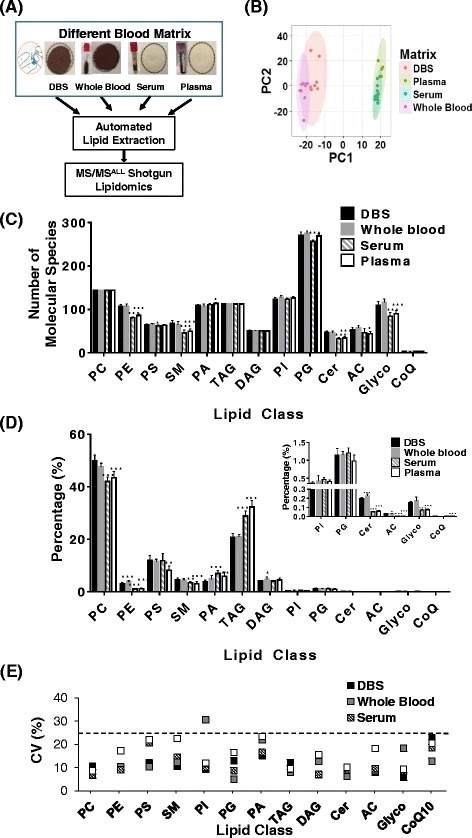
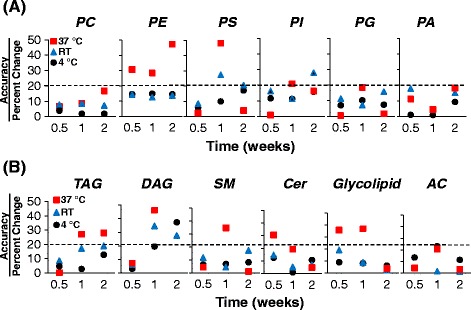
In this report we compared lipidomic analysis of four types of blood sample collection methods (DBS, venous whole blood, serum, and plasma) across several parameters, which include lipidomics coverage of each matrix and the effects of temperature and time on the coverage and stability of different lipid classes and molecular species. The novel DBS-MS/MS lipidomics platform developed in this report was then applied to examine postprandial effects on the blood lipidome and further to explore the temporal fluctuation of the lipidome across hours and days.
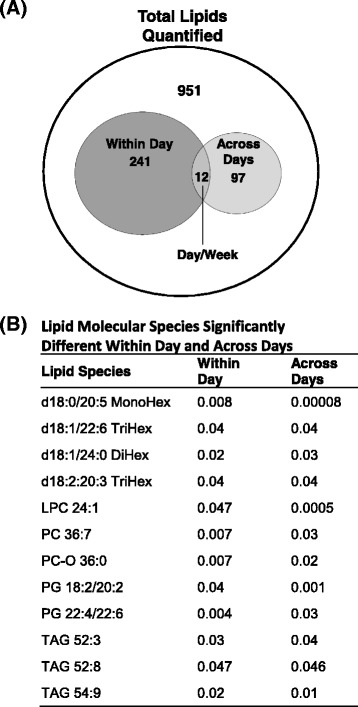
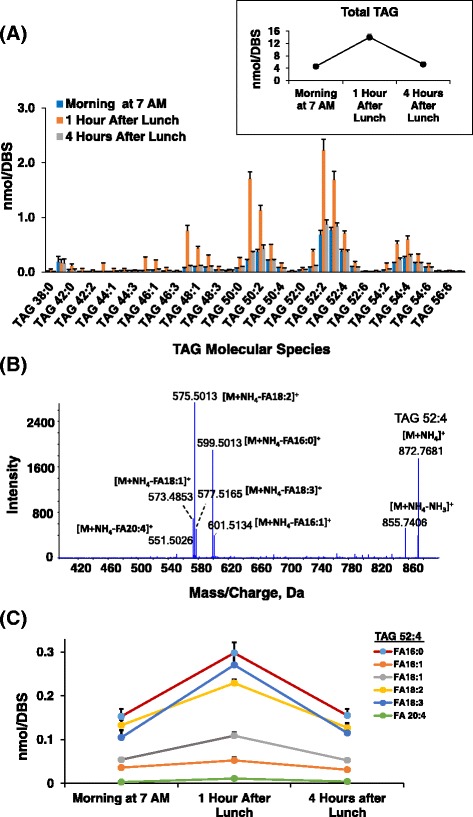
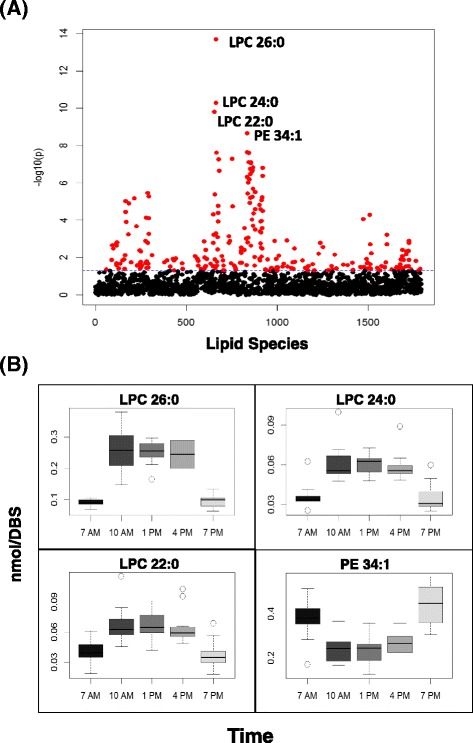
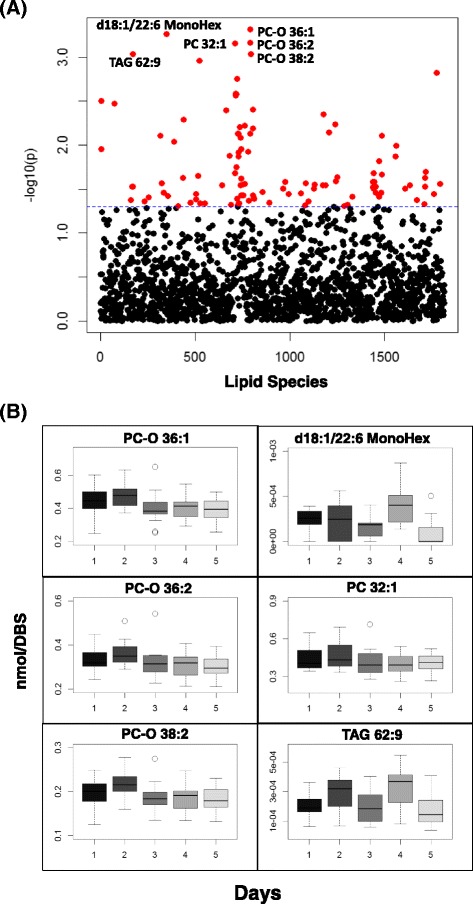
More than 1,200 lipid molecular species from a single DBS sample were identified and quantified. The lipidomics profile of the DBS samples is comparable to whole blood matrix. DBS-MS/MS lipidomic analysis in postprandial experiments revealed significant alterations in triacylglyceride species. Temporal analysis of the lipidome at various times in the day and across days identified several lipid species that fluctuate as a function of time, and a subset of lipid species were identified to be significantly altered across hours within a day and within successive days of the week.
A novel DBS-MS/MS lipidomics method has been established for human blood. The feasibility and application of this method demonstrate the potential utility for lipidomics analysis in both healthy and diverse diseases states. This DBS MS-based lipidomics analysis represents a formidable approach for empowering patients and individuals in the era of precision medicine to uncover novel biomarkers and to monitor lipid homeostasis.
由于需要在临床环境中采集样本,对个体血液中脂质稳态状态进行实时动态评估较为复杂。在精准医学和人群健康的背景下,需要有助于样本采集并让个体能够参与该过程的工具来补充先进的生物分析。通过手指针刺或足跟针刺的干血斑(DBS)方法是一种微创样本采集方法,它使得样本采集和运输相对简便且成本较低。然而,它尚未被整合到大规模的个性化脂质组学分析中。因此,在本研究中,我们报告了一种新型的DBS高分辨率MS/MS脂质组学工作流程的开发。
在本报告中,我们比较了四种血液样本采集方法(DBS、静脉全血、血清和血浆)在几个参数方面的脂质组学分析,这些参数包括每种基质的脂质组学覆盖范围以及温度和时间对不同脂质类别和分子种类的覆盖范围和稳定性的影响。然后,将本报告中开发的新型DBS-MS/MS脂质组学平台应用于检查餐后对血液脂质组的影响,并进一步探索脂质组在数小时和数天内的时间波动。
从单个DBS样本中鉴定并定量了1200多种脂质分子种类。DBS样本的脂质组学图谱与全血基质相当。餐后实验中的DBS-MS/MS脂质组学分析揭示了甘油三酯种类的显著变化。对一天中不同时间和数天内脂质组的时间分析确定了几种随时间波动的脂质种类,并且鉴定出一部分脂质种类在一天内的数小时以及一周内连续的几天中发生了显著变化。
已建立了一种用于人体血液的新型DBS-MS/MS脂质组学方法。该方法的可行性和应用证明了其在健康和多种疾病状态下脂质组学分析中的潜在效用。这种基于DBS MS的脂质组学分析代表了一种强大的方法,可在精准医学时代让患者和个体能够发现新的生物标志物并监测脂质稳态。