Harding Kaitlin A, Mezulis Amy
Seattle Pacific University , Seattle , WA, USA.
Eur J Psychol. 2017 Mar 3;13(1):28-46. doi: 10.5964/ejop.v13i1.1279. eCollection 2017 Mar.
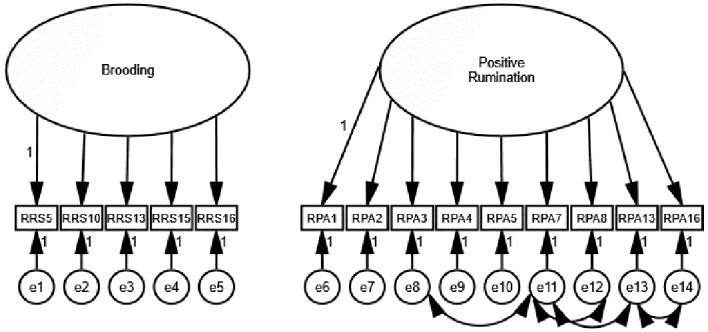
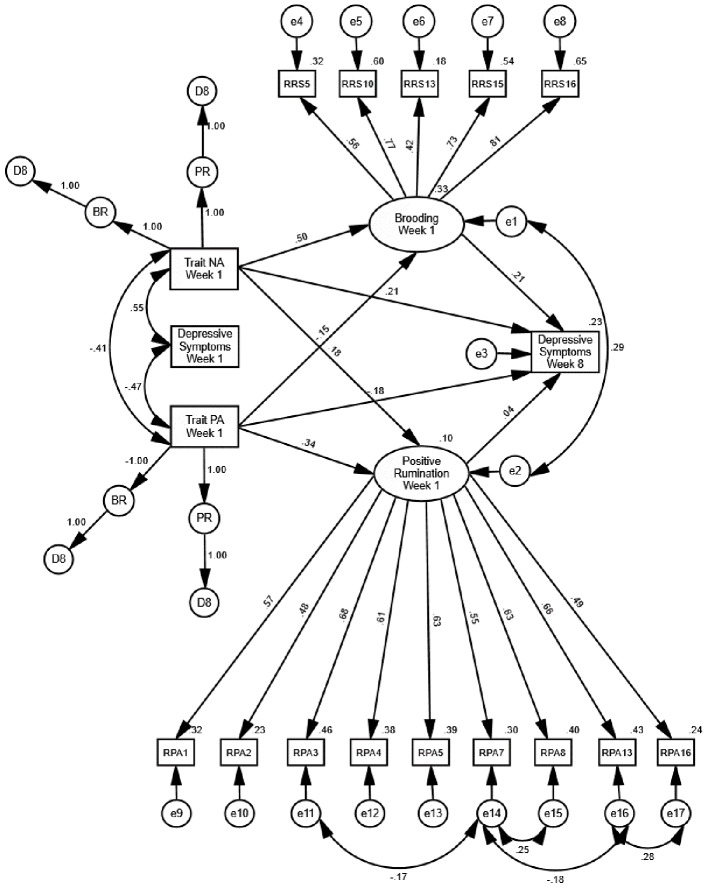
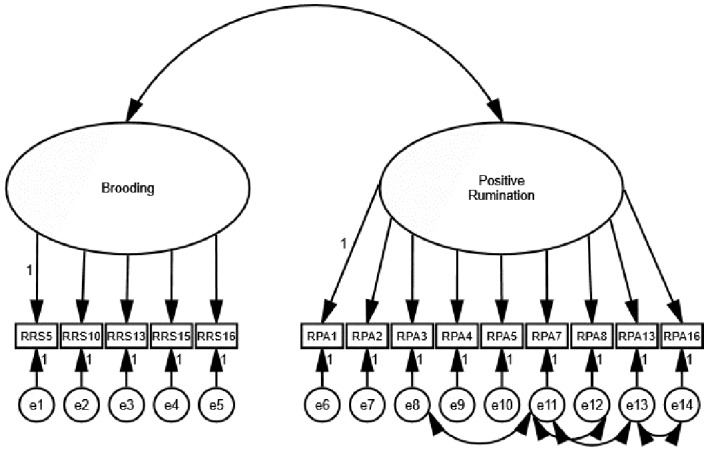
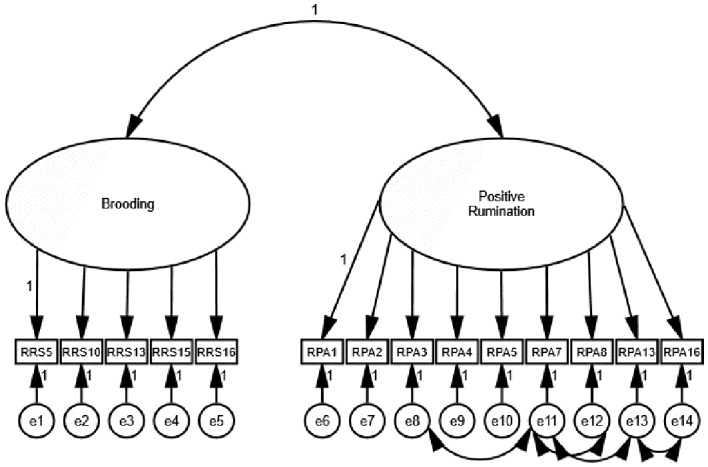
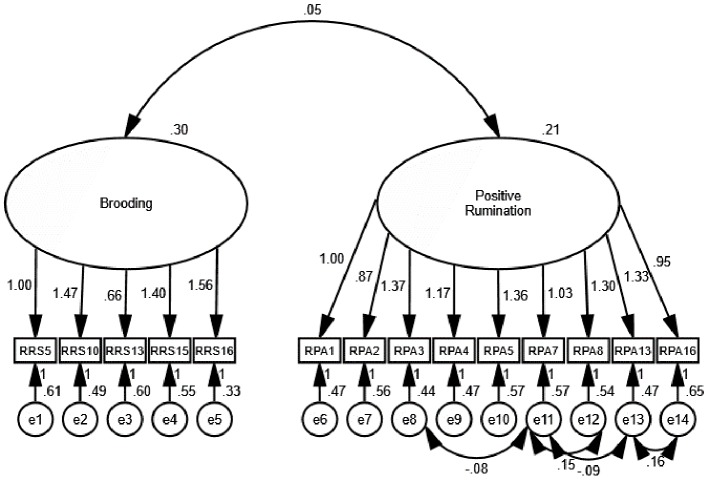
High trait positive affect (PA) protects against depressive symptoms through cognitive responses such as rumination. However, how rumination in response to positive emotions (positive rumination) protects against depressive symptoms while rumination in response to negative emotions (brooding) predicts depressive symptoms is poorly understood. We hypothesized that (a) positive rumination and brooding represent a shared cognitive process of affect amplification on distinct affective content and (b) less brooding and greater positive rumination would distinctly mediate greater trait PA in predicting fewer depressive symptoms. Our prospective design among 321 adults first compared three confirmatory factor analysis models of the relationship between brooding and positive rumination. We then utilized structural equation modeling to examine whether brooding and positive rumination mediated the relationship between trait PA and depressive symptoms, controlling for baseline depressive symptoms, trait negative affect (NA), and the distinct effects of each mediator. Results supported a conceptualization of brooding and positive rumination as distinct but related constructs, represented as a common process of affect amplification to explain how rumination may amplify resilience or risk in predicting depressive symptoms (χ = 195.07, Δχ = 8.78, p < .001, CFI = .91, RMSEA = .07). Furthermore, positive rumination and brooding were distinctly predicted by trait PA, suggesting that trait PA exerts distinct effects on protective and risk forms of rumination. Less brooding mediated the relationship between greater trait PA and fewer depressive symptoms (β = -.04, p = .012), but positive rumination did not (β = .02, p = .517). Rumination may represent a protective and a risk factor, which may better enable individuals who brood to redirect their rumination on positive content and thereby reduce their risk of depressive symptoms.
高特质积极情绪(PA)通过诸如沉思等认知反应来预防抑郁症状。然而,人们对积极情绪引发的沉思(积极沉思)如何预防抑郁症状,而消极情绪引发的沉思(沉思)却预示着抑郁症状,了解甚少。我们假设:(a)积极沉思和沉思代表了对不同情感内容进行情感放大的共同认知过程;(b)较少的沉思和较多的积极沉思在预测较少的抑郁症状时,会显著地调节更高的特质PA。我们对321名成年人进行的前瞻性设计,首先比较了沉思与积极沉思之间关系的三种验证性因素分析模型。然后,我们利用结构方程模型来检验沉思和积极沉思是否介导了特质PA与抑郁症状之间的关系,同时控制基线抑郁症状、特质消极情绪(NA)以及每个中介变量的独特效应。结果支持将沉思和积极沉思概念化为不同但相关的结构,表现为情感放大的共同过程,以解释沉思在预测抑郁症状时如何放大恢复力或风险(χ = 195.07,Δχ = 8.78,p <.001,CFI =.91,RMSEA =.07)。此外,特质PA对积极沉思和沉思有显著的预测作用,并表明特质PA对沉思的保护和风险形式有不同的影响。较少的沉思介导了更高特质PA与更少抑郁症状之间的关系(β = -.04,p =.012),但积极沉思没有(β =.02,p =.517)。沉思可能既是一个保护因素也是一个风险因素,这可能会更好地促使沉思的个体将他们的沉思转向积极内容,从而降低他们出现抑郁症状的风险。