Society for Cave Biology, Tular Cave Laboratory, Oldhamska cesta 8a, 4000 Kranj, Slovenia.
Department of Animal Sciences, Biotechnical Faculty, University of Ljubljana, Groblje 3, 1230 Domžale, Slovenia.
Sci Rep. 2017 Mar 27;7:45054. doi: 10.1038/srep45054.
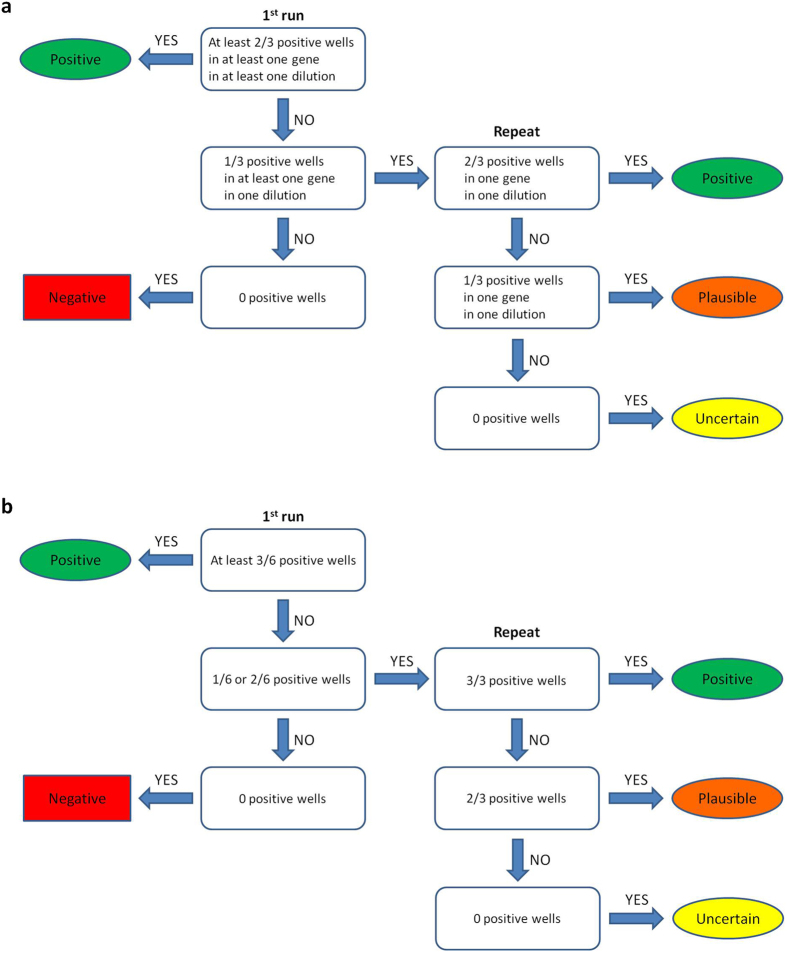
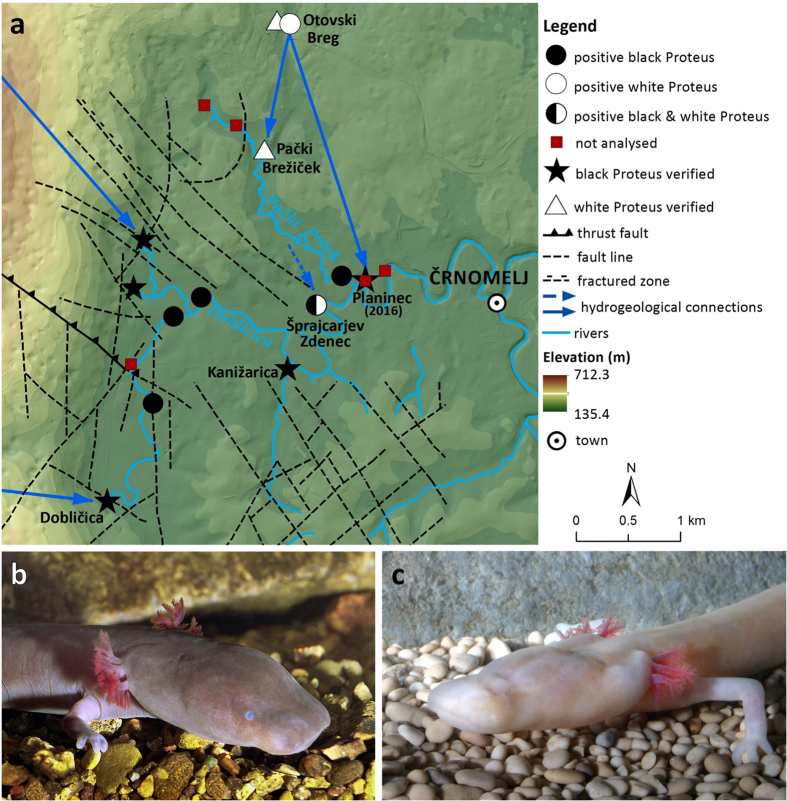
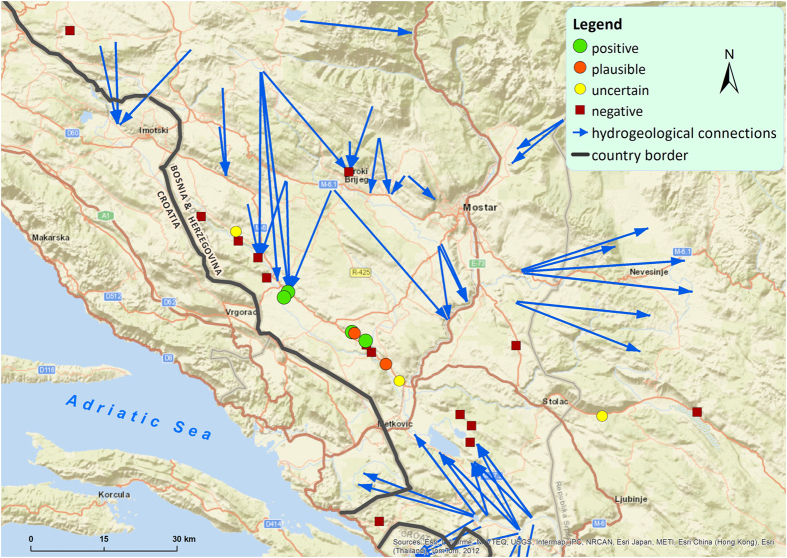
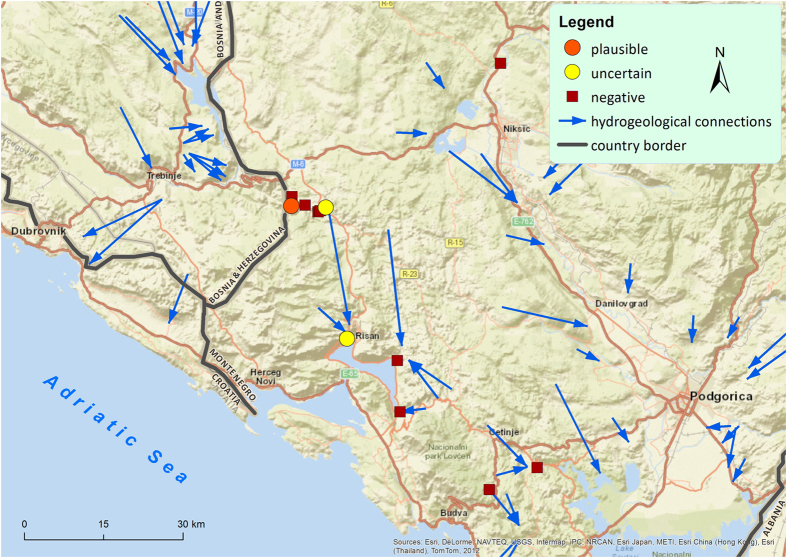
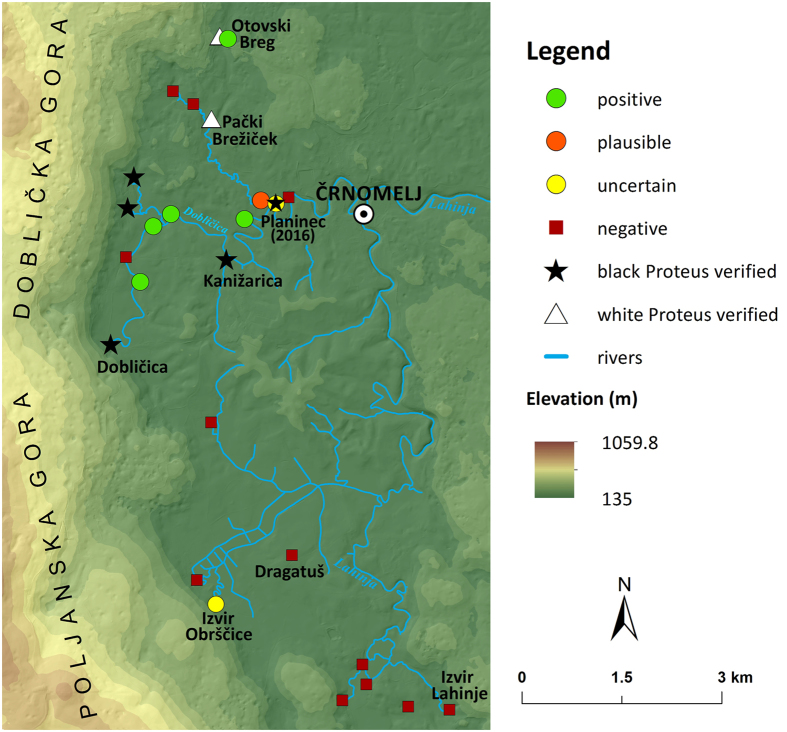
Europe's obligate cave-dwelling amphibian Proteus anguinus inhabits subterranean waters of the north-western Balkan Peninsula. Because only fragments of its habitat are accessible to humans, this endangered salamander's exact distribution has been difficult to establish. Here we introduce a quantitative real time polymerase chain reaction-based environmental DNA (eDNA) approach to detect the presence of Proteus using water samples collected from karst springs, wells or caves. In a survey conducted along the southern limit of its known range, we established a likely presence of Proteus at seven new sites, extending its range to Montenegro. Next, using specific molecular probes to discriminate the rare black morph of Proteus from the closely related white morph, we detected its eDNA at five new sites, thus more than doubling the known number of sites. In one of these we found both black and white Proteus eDNA together. This finding suggests that the two morphs may live in contact with each other in the same body of groundwater and that they may be reproductively isolated species. Our results show that the eDNA approach is suitable and efficient in addressing questions in biogeography, evolution, taxonomy and conservation of the cryptic subterranean fauna.
欧洲专性洞穴两栖动物洞螈 Proteus anguinus 栖息在西北巴尔干半岛的地下水域。由于人类只能进入其栖息地的一小部分,这种濒危蝾螈的确切分布情况很难确定。在这里,我们介绍了一种使用定量实时聚合酶链反应(qPCR)的环境 DNA(eDNA)方法,通过采集来自岩溶泉、水井或洞穴的水样来检测 Proteus 的存在。在对其已知分布范围南部边界的一项调查中,我们在七个新地点确定了 Proteus 的存在,使其分布范围延伸到了黑山。接下来,我们使用特定的分子探针从密切相关的白色形态中区分 Proteus 的稀有黑色形态,在五个新地点检测到了其 eDNA,从而使已知的地点数量增加了一倍以上。在其中一个地点,我们同时发现了黑色和白色的 Proteus eDNA。这一发现表明,这两种形态可能在同一地下水中相互接触,并可能是生殖隔离的物种。我们的研究结果表明,eDNA 方法适用于解决隐生地下动物的生物地理学、进化、分类学和保护问题。