Matsumoto Mitsufumi, Nojima Daisuke, Nonoyama Tomomi, Ikeda Kiichi, Maeda Yoshiaki, Yoshino Tomoko, Tanaka Tsuyoshi
Biotechnology Laboratory, Electric Power Development Co., Ltd., 1, Yanagisaki -machi, Wakamatsu-ku, Kitakyusyu 808-0111, Japan.
Division of Biotechnology and Life Science, Institute of Engineering, Tokyo University of Agriculture and Technology, 2-24-16 Naka-cho, Koganei, Tokyo 184-8588, Japan.
Mar Drugs. 2017 Mar 25;15(4):94. doi: 10.3390/md15040094.
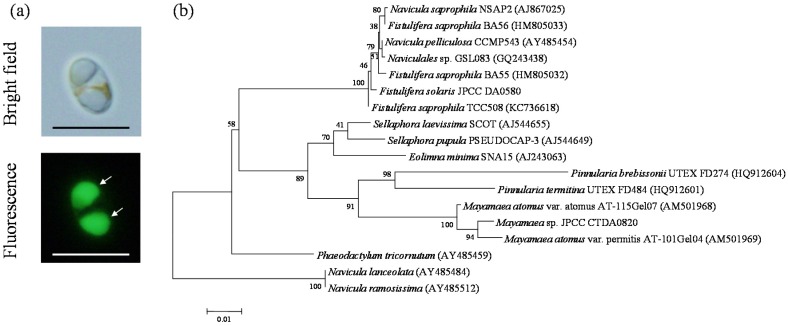
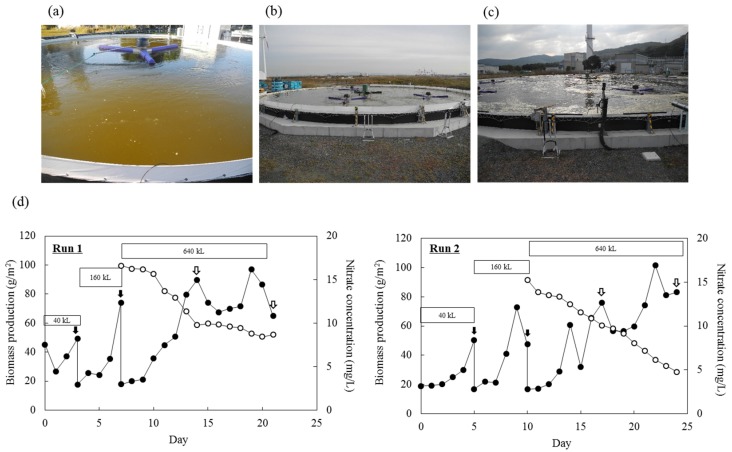
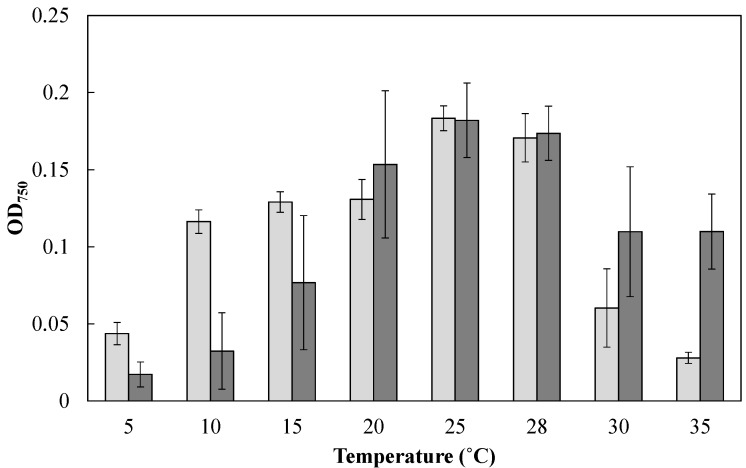
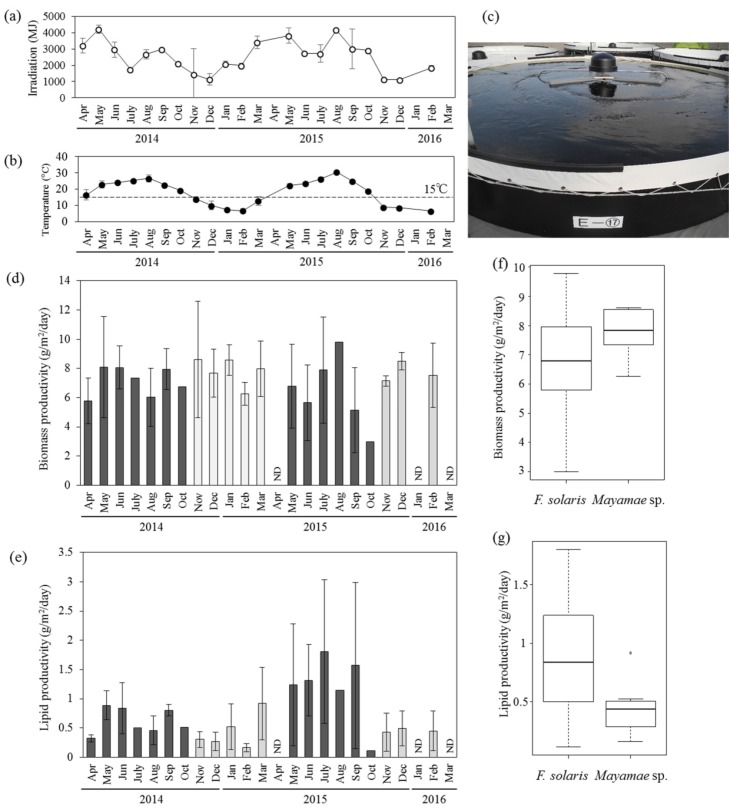
Biofuel production using microalgae is believed to have the advantage of continuous year-round production over crop plants, which have strong seasonality. However, actual year-round production of microalgal lipids using outdoor mass cultivation has rarely been demonstrated. In our previous study, it was demonstrated that the oleaginous diatom, , was culturable in outdoor bioreactors from spring to autumn, whereas biomass and lipid production in winter failed because did not grow below 15 °C. Therefore, another candidate strain that is culturable in winter is required. In this study, a cold-tolerant diatom, sp. JPCC CTDA0820, was selected as a promising candidate for biofuel production in winter. Laboratory-scale characterization revealed that this diatom was culturable at temperatures as low as 10 °C. Subsequently, (April-October) and sp. JPCC CTDA0820 (November-March) were cultured in outdoor open-pond bioreactors, wherein year-round production of diatom lipids was successfully demonstrated. The maximal values of areal productivities of biomass and lipids reached to 9.79 and 1.80 g/(m² day) for , and 8.62 and 0.92 g/(m² day) for sp. JPCC CTDA0820, respectively. With the combined use of these two diatom species, stable year-round production of microalgal lipids became possible.
与具有强烈季节性的农作物相比,利用微藻生产生物燃料被认为具有全年持续生产的优势。然而,使用室外大规模培养实现微藻脂质的实际全年生产鲜有实例。在我们之前的研究中,已证明产油硅藻在春季至秋季可在室外生物反应器中培养,但冬季的生物量和脂质产量不佳,因为该硅藻在15°C以下无法生长。因此,需要另一种可在冬季培养的候选藻种。在本研究中,耐寒硅藻sp. JPCC CTDA0820被选为冬季生物燃料生产的有前景的候选藻种。实验室规模的特性分析表明,这种硅藻在低至10°C的温度下仍可培养。随后,在室外开放式池塘生物反应器中培养(4月至10月)和sp. JPCC CTDA0820(11月至次年3月),成功实现了硅藻脂质的全年生产。对于,生物量和脂质的面积生产率最大值分别达到9.79和1.80 g/(m²·天),对于sp. JPCC CTDA0820,分别为8.62和0.92 g/(m²·天)。通过联合使用这两种硅藻,微藻脂质的全年稳定生产成为可能。