Anjuwon-Foster Brandon R, Tamayo Rita
Department of Microbiology and Immunology, University of North Carolina at Chapel Hill School of Medicine, Chapel Hill, North Carolina, United States of America.
PLoS Genet. 2017 Mar 27;13(3):e1006701. doi: 10.1371/journal.pgen.1006701. eCollection 2017 Mar.
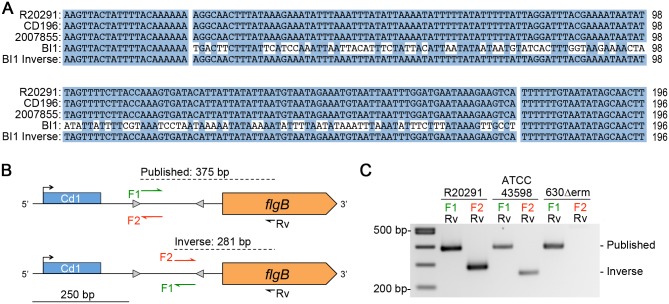
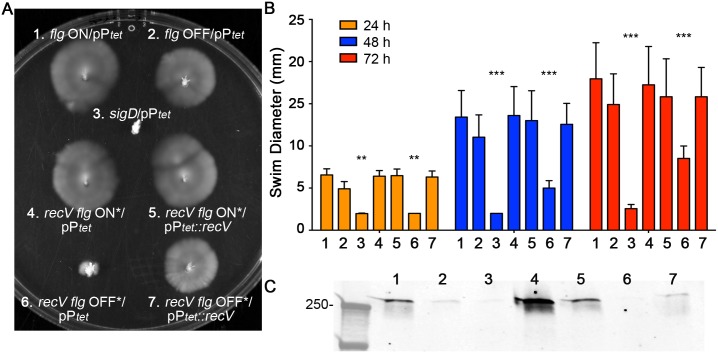
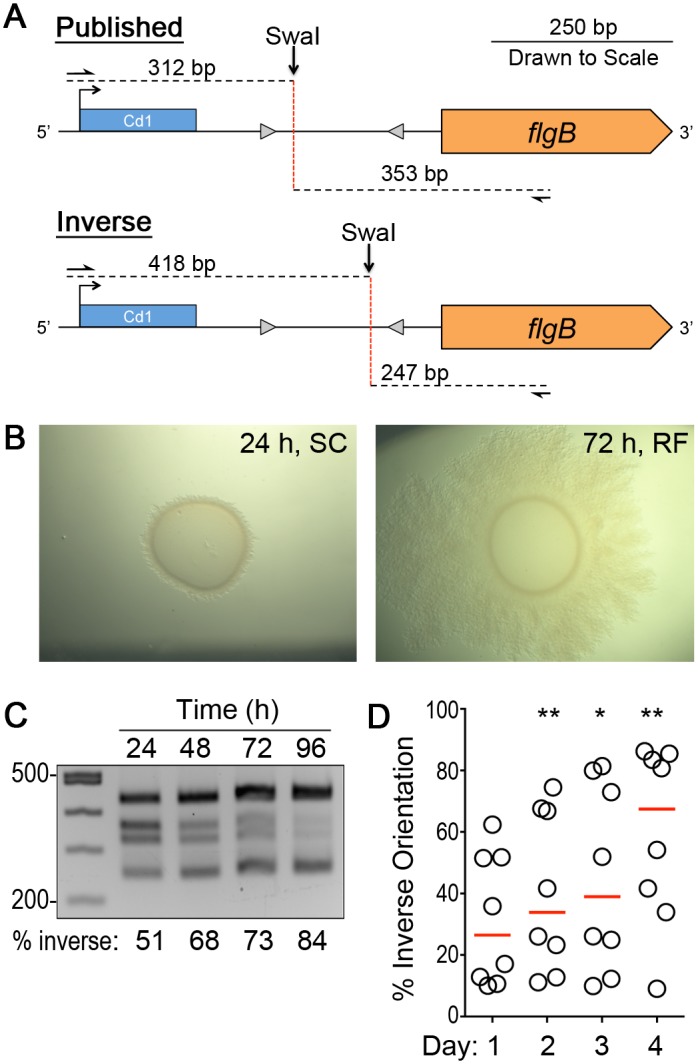
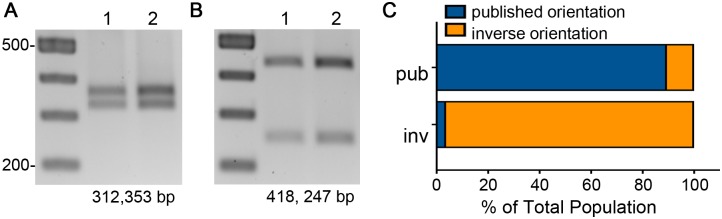
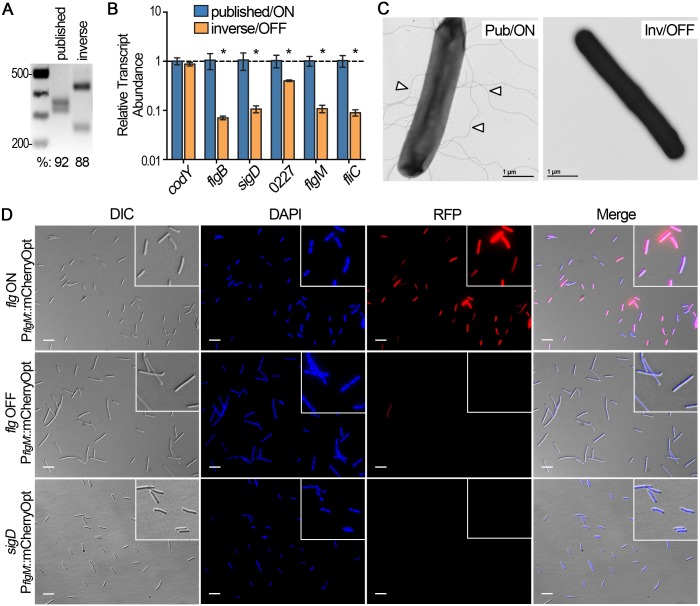
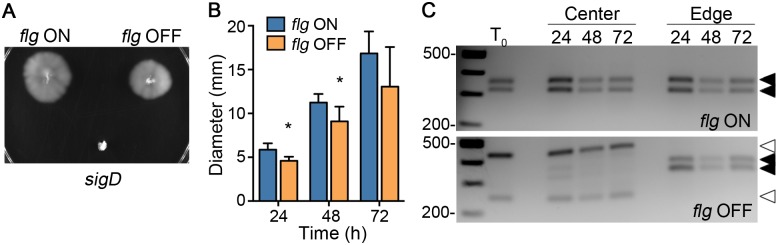
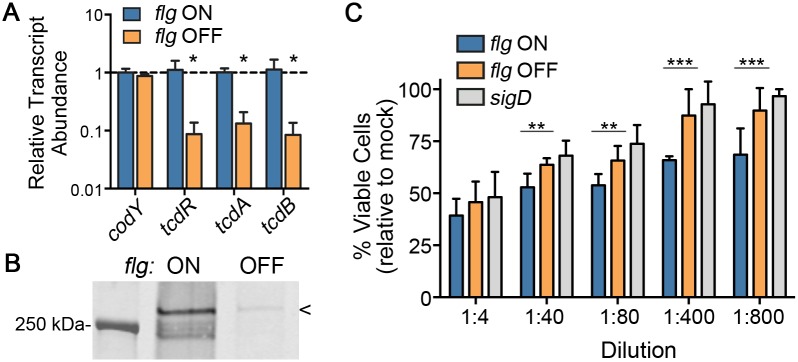
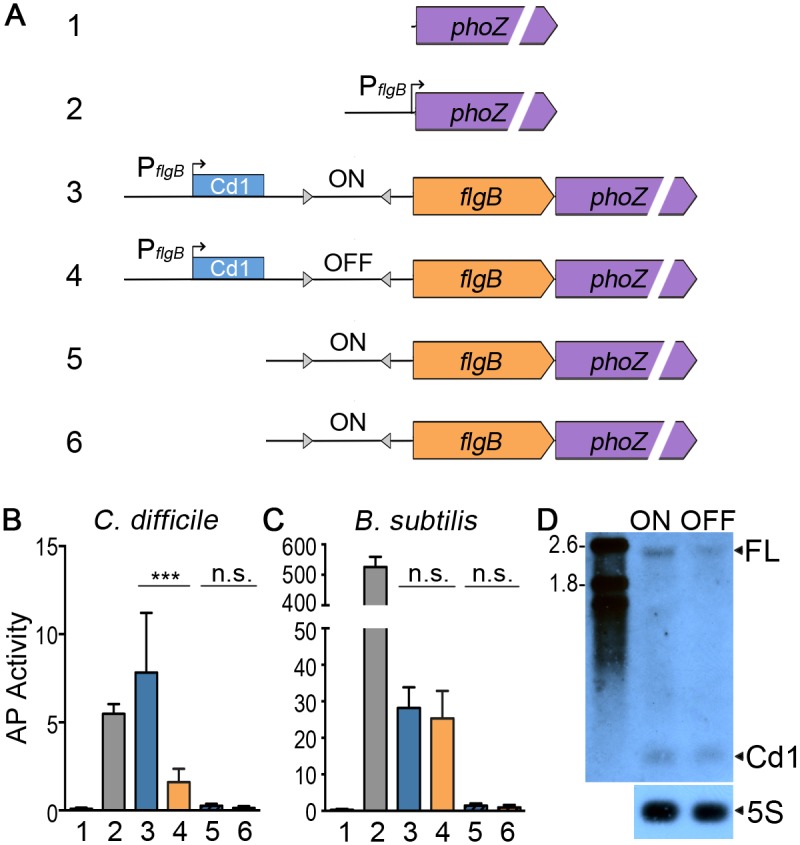
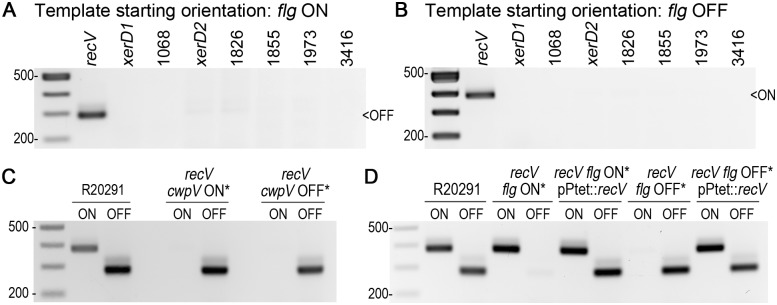
In the human intestinal pathogen Clostridium difficile, flagella promote adherence to intestinal epithelial cells. Flagellar gene expression also indirectly impacts production of the glucosylating toxins, which are essential to diarrheal disease development. Thus, factors that regulate the expression of the flgB operon will likely impact toxin production in addition to flagellar motility. Here, we report the identification a "flagellar switch" that controls the phase variable production of flagella and glucosylating toxins. The flagellar switch, located upstream of the flgB operon containing the early stage flagellar genes, is a 154 bp invertible sequence flanked by 21 bp inverted repeats. Bacteria with the sequence in one orientation expressed flagellum and toxin genes, produced flagella, and secreted the toxins ("flg phase ON"). Bacteria with the sequence in the inverse orientation were attenuated for flagellar and toxin gene expression, were aflagellate, and showed decreased toxin secretion ("flg phase OFF"). The orientation of the flagellar switch is reversible during growth in vitro. We provide evidence that gene regulation via the flagellar switch occurs post-transcription initiation and requires a C. difficile-specific regulatory factor to destabilize or degrade the early flagellar gene mRNA when the flagellar switch is in the OFF orientation. Lastly, through mutagenesis and characterization of flagellar phase locked isolates, we determined that the tyrosine recombinase RecV, which catalyzes inversion at the cwpV switch, is also responsible for inversion at the flagellar switch in both directions. Phase variable flagellar motility and toxin production suggests that these important virulence factors have both advantageous and detrimental effects during the course of infection.
在人类肠道病原体艰难梭菌中,鞭毛促进其对肠道上皮细胞的黏附。鞭毛基因表达还间接影响糖基化毒素的产生,而糖基化毒素对腹泻病的发展至关重要。因此,调节flgB操纵子表达的因素除了影响鞭毛运动性外,还可能影响毒素的产生。在此,我们报告鉴定出一种“鞭毛开关”,它控制鞭毛和糖基化毒素的相变可变产生。该鞭毛开关位于包含早期鞭毛基因的flgB操纵子上游,是一个154 bp的可逆序列,两侧为21 bp的反向重复序列。序列处于一种方向的细菌表达鞭毛和毒素基因,产生鞭毛,并分泌毒素(“flg相开启”)。序列处于反向的细菌鞭毛和毒素基因表达减弱,无鞭毛,且毒素分泌减少(“flg相关闭”)。在体外生长过程中,鞭毛开关的方向是可逆的。我们提供的证据表明,通过鞭毛开关进行的基因调控发生在转录起始后,并且当鞭毛开关处于关闭方向时,需要一种艰难梭菌特异性调节因子来使早期鞭毛基因mRNA不稳定或降解。最后,通过对鞭毛相锁定分离株的诱变和表征,我们确定催化cwpV开关处倒位的酪氨酸重组酶RecV也负责鞭毛开关两侧的双向倒位。相变可变的鞭毛运动性和毒素产生表明,这些重要的毒力因子在感染过程中既有有利影响也有不利影响。