Su Eric Wen, Sanger Todd M
Advanced Analytics Hub, Eli Lilly and Company , Indianapolis , IN , United States of America.
PeerJ. 2017 Mar 23;5:e3154. doi: 10.7717/peerj.3154. eCollection 2017.
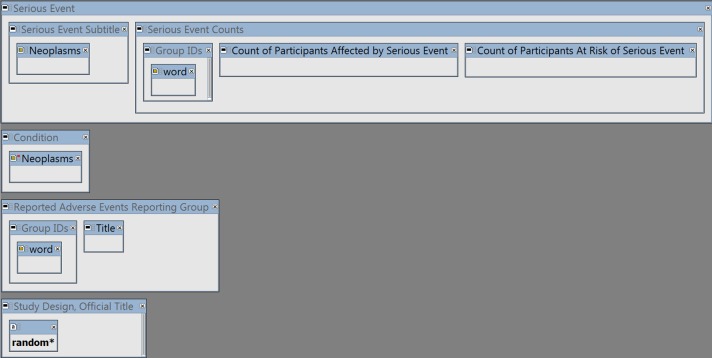
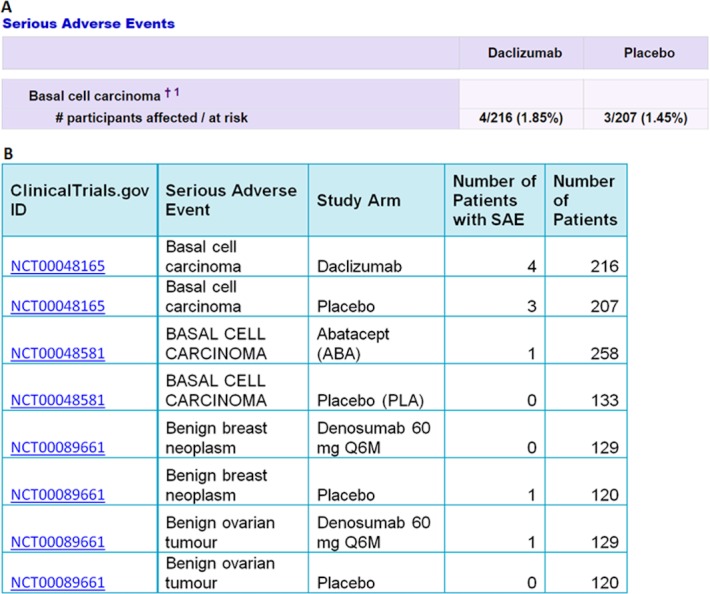
Drug repositioning (i.e., drug repurposing) is the process of discovering new uses for marketed drugs. Historically, such discoveries were serendipitous. However, the rapid growth in electronic clinical data and text mining tools makes it feasible to systematically identify drugs with the potential to be repurposed. Described here is a novel method of drug repositioning by mining ClinicalTrials.gov. The text mining tools I2E (Linguamatics) and PolyAnalyst (Megaputer) were utilized. An I2E query extracts "Serious Adverse Events" (SAE) data from randomized trials in ClinicalTrials.gov. Through a statistical algorithm, a PolyAnalyst workflow ranks the drugs where the treatment arm has fewer predefined SAEs than the control arm, indicating that potentially the drug is reducing the level of SAE. Hypotheses could then be generated for the new use of these drugs based on the predefined SAE that is indicative of disease (for example, cancer).
药物重新定位(即药物再利用)是指发现已上市药物新用途的过程。从历史上看,此类发现是偶然的。然而,电子临床数据和文本挖掘工具的快速发展使得系统地识别具有重新定位潜力的药物成为可能。本文介绍了一种通过挖掘ClinicalTrials.gov进行药物重新定位的新方法。使用了文本挖掘工具I2E(Linguamatics公司)和PolyAnalyst(Megaputer公司)。一个I2E查询从ClinicalTrials.gov的随机试验中提取“严重不良事件”(SAE)数据。通过一种统计算法,一个PolyAnalyst工作流程对治疗组比对照组具有更少预定义SAE的药物进行排名,这表明该药物可能正在降低SAE水平。然后可以基于指示疾病(例如癌症)的预定义SAE为这些药物的新用途生成假设。