
饮食限制可预防与年龄相关的DNA甲基化,并诱导脂质代谢的表观遗传重编程。
Dietary restriction protects from age-associated DNA methylation and induces epigenetic reprogramming of lipid metabolism.
作者信息
Hahn Oliver, Grönke Sebastian, Stubbs Thomas M, Ficz Gabriella, Hendrich Oliver, Krueger Felix, Andrews Simon, Zhang Qifeng, Wakelam Michael J, Beyer Andreas, Reik Wolf, Partridge Linda
机构信息
Max Planck Institute for Biology of Ageing, 50931, Cologne, Germany.
Cellular Networks and Systems Biology, CECAD, University of Cologne, Joseph-Stelzmann-Str. 26, Cologne, 50931, Germany.
出版信息
Genome Biol. 2017 Mar 28;18(1):56. doi: 10.1186/s13059-017-1187-1.
BACKGROUND
Dietary restriction (DR), a reduction in food intake without malnutrition, increases most aspects of health during aging and extends lifespan in diverse species, including rodents. However, the mechanisms by which DR interacts with the aging process to improve health in old age are poorly understood. DNA methylation could play an important role in mediating the effects of DR because it is sensitive to the effects of nutrition and can affect gene expression memory over time.
RESULTS
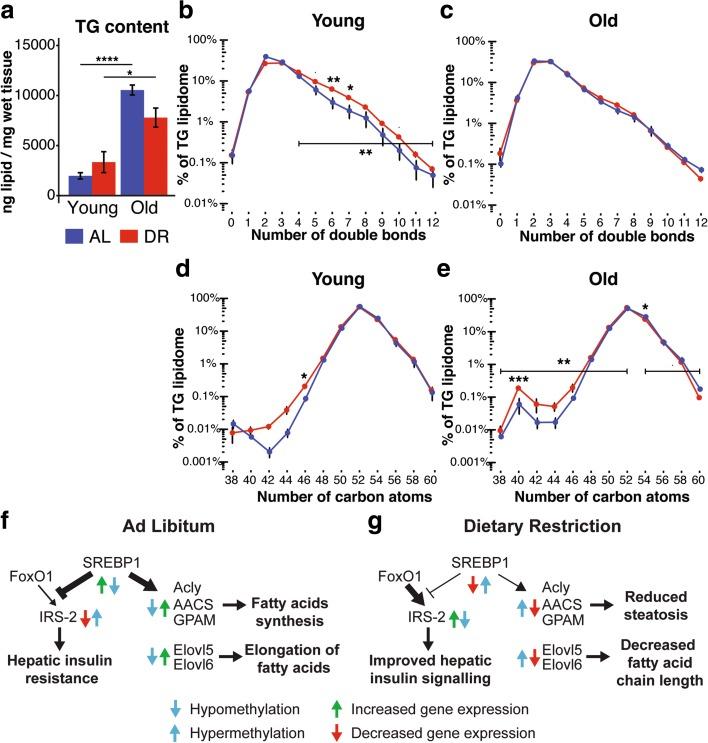
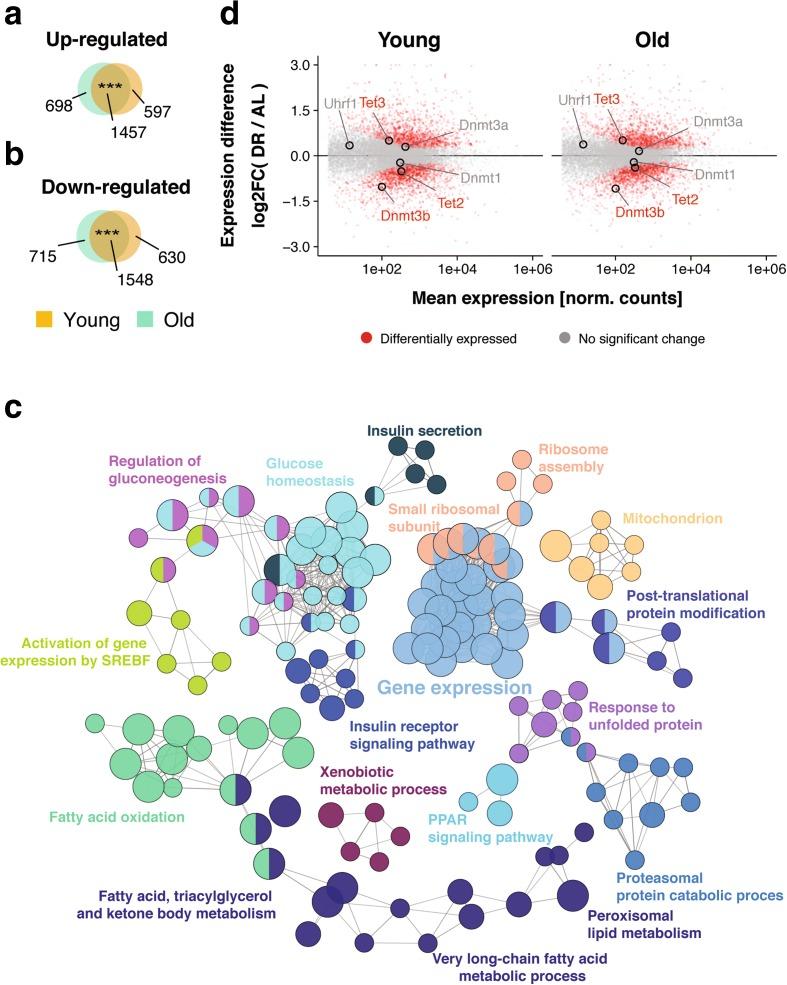
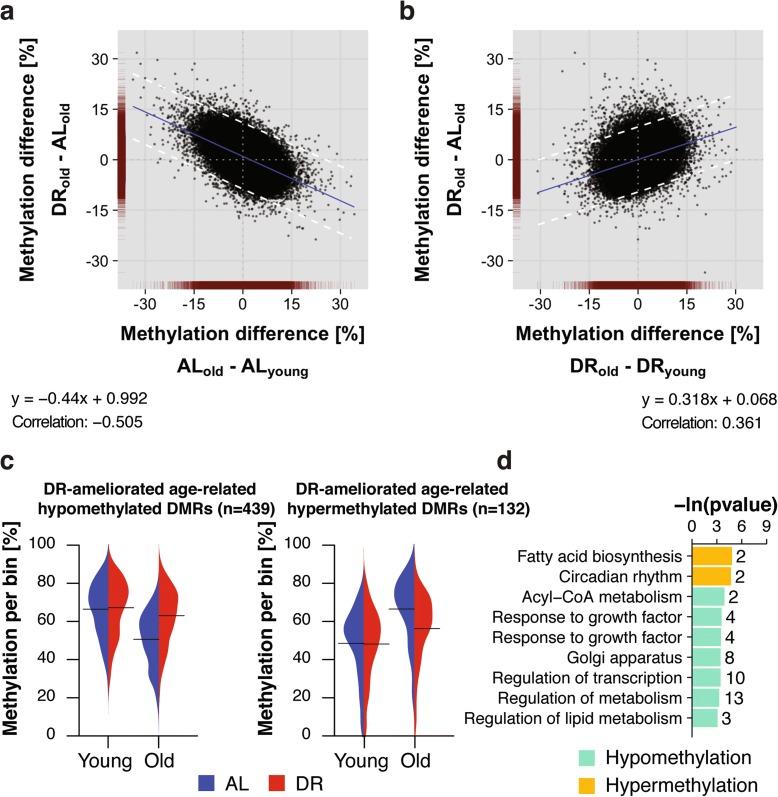
Here, we profile genome-wide changes in DNA methylation, gene expression and lipidomics in response to DR and aging in female mouse liver. DR is generally strongly protective against age-related changes in DNA methylation. During aging with DR, DNA methylation becomes targeted to gene bodies and is associated with reduced gene expression, particularly of genes involved in lipid metabolism. The lipid profile of the livers of DR mice is correspondingly shifted towards lowered triglyceride content and shorter chain length of triglyceride-associated fatty acids, and these effects become more pronounced with age.
CONCLUSIONS
Our results indicate that DR remodels genome-wide patterns of DNA methylation so that age-related changes are profoundly delayed, while changes at loci involved in lipid metabolism affect gene expression and the resulting lipid profile.
背景
饮食限制(DR),即在不造成营养不良的情况下减少食物摄入量,可改善衰老过程中的大多数健康状况,并延长包括啮齿动物在内的多种物种的寿命。然而,饮食限制与衰老过程相互作用以改善老年健康的机制尚不清楚。DNA甲基化可能在介导饮食限制的作用中发挥重要作用,因为它对营养作用敏感,并且随着时间的推移会影响基因表达记忆。
结果
在此,我们分析了雌性小鼠肝脏中响应饮食限制和衰老的全基因组DNA甲基化、基因表达和脂质组学的变化。饮食限制通常对与年龄相关的DNA甲基化变化具有很强的保护作用。在饮食限制的衰老过程中,DNA甲基化靶向基因体,并与基因表达降低相关,尤其是参与脂质代谢的基因。饮食限制小鼠肝脏的脂质谱相应地向甘油三酯含量降低和甘油三酯相关脂肪酸链长度缩短的方向转变,并且这些影响随着年龄的增长而更加明显。
结论
我们的结果表明,饮食限制重塑了全基因组DNA甲基化模式,从而显著延迟了与年龄相关的变化,而参与脂质代谢的基因座的变化影响基因表达和由此产生的脂质谱。


 Zotero 插件