Quach Hélène, Quintana-Murci Lluis
Human Evolutionary Genetics Unit, Department of Genomes and Genetics, Institut Pasteur, 75015 Paris, France.
Center of Bioinformatics, Biostatistics and Integrative Biology, Institut Pasteur, 75015 Paris, France.
J Exp Med. 2017 Apr 3;214(4):877-894. doi: 10.1084/jem.20161942. Epub 2017 Mar 28.
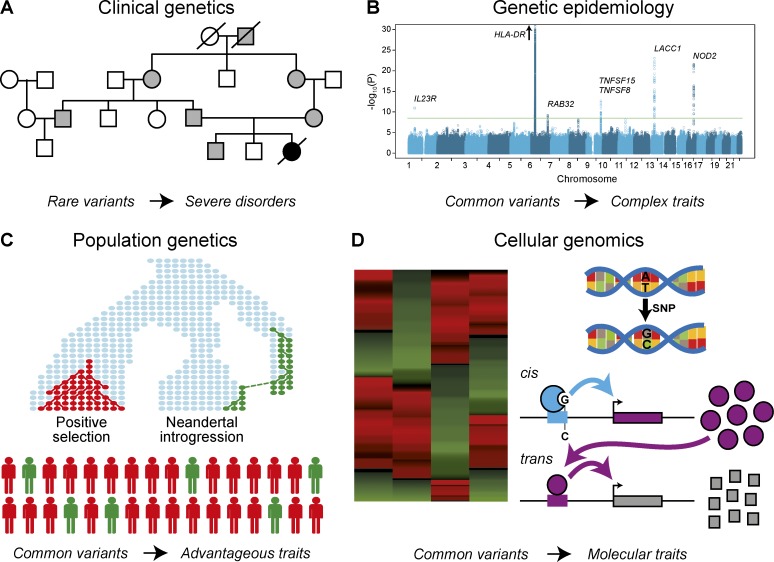
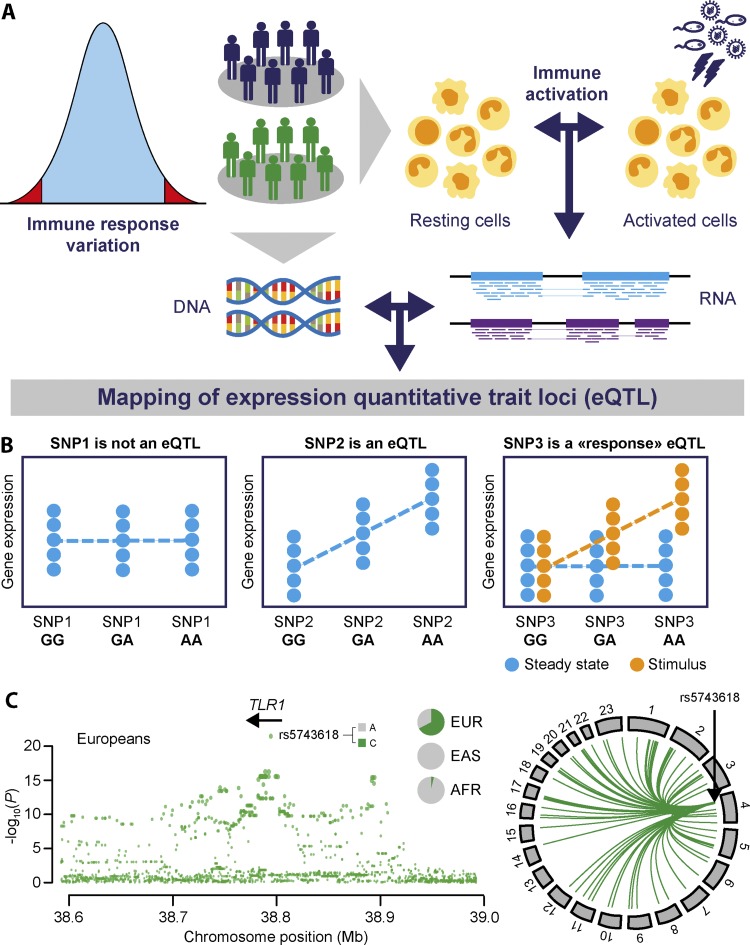
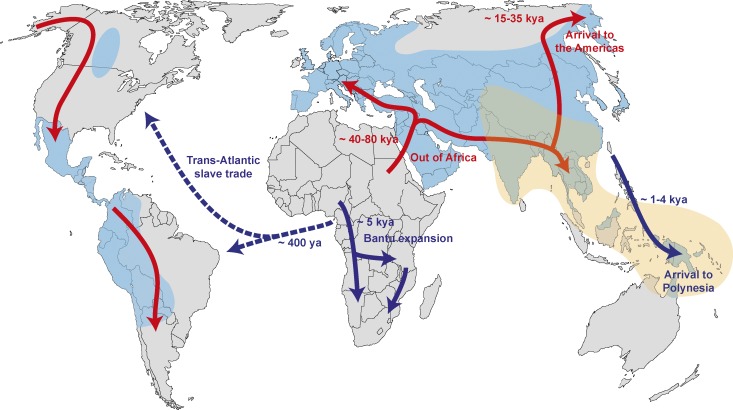
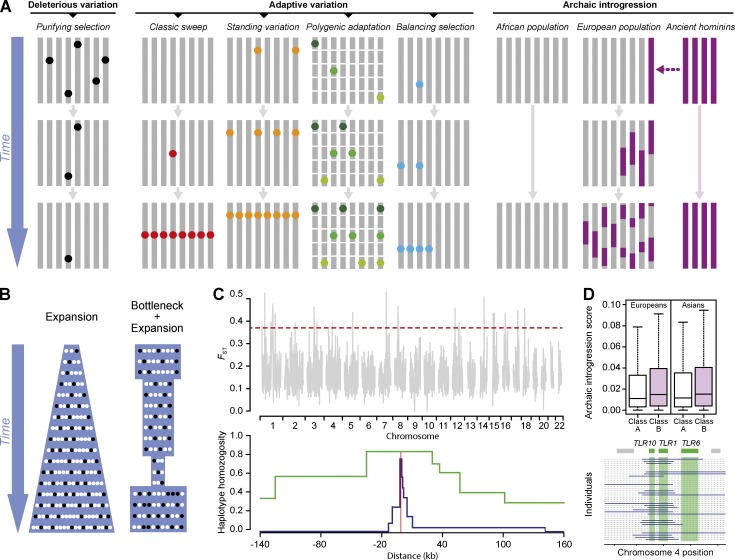
More than a decade after the sequencing of the human genome, a deluge of genome-wide population data are generating a portrait of human genetic diversity at an unprecedented level of resolution. Genomic studies have provided new insight into the demographic and adaptive history of our species, , including its interbreeding with other hominins, such as Neanderthals, and the ways in which natural selection, in its various guises, has shaped genome diversity. These studies, combined with functional genomic approaches, such as the mapping of expression quantitative trait loci, have helped to identify genes, functions, and mechanisms of prime importance for host survival and involved in phenotypic variation and differences in disease risk. This review summarizes new findings in this rapidly developing field, focusing on the human immune response. We discuss the importance of defining the genetic and evolutionary determinants driving immune response variation, and highlight the added value of population genomic approaches in settings relevant to immunity and infection.
人类基因组测序完成十多年后,大量全基因组群体数据正以前所未有的分辨率描绘人类遗传多样性的图景。基因组研究为我们这个物种的人口统计学和适应性历史提供了新的见解,包括与其他古人类(如尼安德特人)的杂交,以及自然选择以各种形式塑造基因组多样性的方式。这些研究与功能基因组学方法(如表达数量性状位点的定位)相结合,有助于识别对宿主生存至关重要、参与表型变异和疾病风险差异的基因、功能和机制。本综述总结了这一快速发展领域的新发现,重点关注人类免疫反应。我们讨论了确定驱动免疫反应变异的遗传和进化决定因素的重要性,并强调了群体基因组学方法在与免疫和感染相关背景下的附加价值。