Deng Linghui, Wang Yue, Lu Wenbin, Liu Qian, Wu Jie, Jin Jianhua
Department of Oncology, Wujin People's Hospital, Affiliated to Jiangsu University, Changzhou, People's Republic of China.
Onco Targets Ther. 2017 Mar 13;10:1521-1525. doi: 10.2147/OTT.S126471. eCollection 2017.
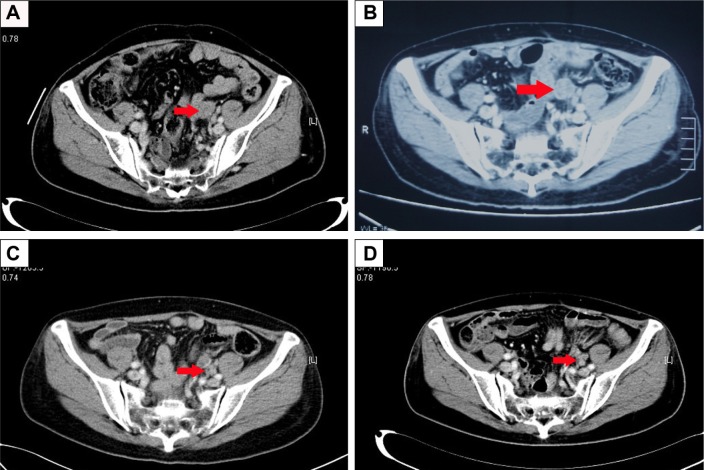
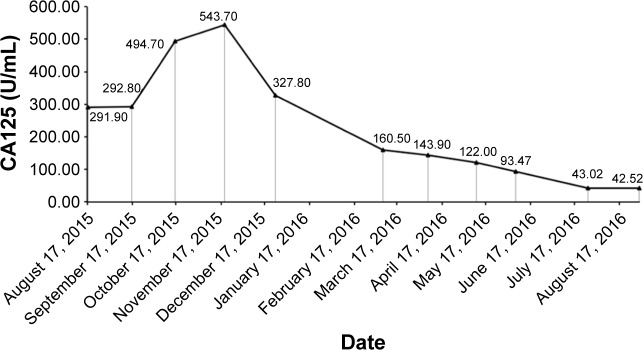
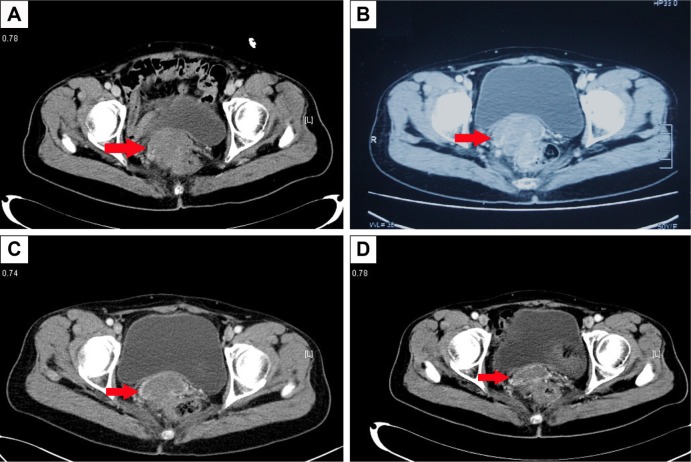
Apatinib is a novel oral tyrosine kinase inhibitor targeting vascular endothelial growth factor receptor-2, which has been proved by clinical trials to be effective and safe for patients with chemotherapy-refractory gastric cancer. To date, there is no study or case report on apatinib treatment for patients with ovarian cancer. Here, we present the case of a 50-year-old Chinese woman with advanced ovarian cancer, who received apatinib at a daily dose of 500 mg for 28 days per cycle after failure of fourth-line chemotherapy. Favorable oncologic outcome was achieved in this case after treatment with apatinib. The patient's progression-free survival is now 11.3 months, and she is taking apatinib and capecitabine as maintenance treatment. The common side effect of apatinib was fatigue; however, the toxicity of apatinib was controllable and tolerable. Thus, apatinib may be an option for chemotherapy-refractory advanced epithelial ovarian cancer, but this still warrants further investigation.
阿帕替尼是一种新型口服酪氨酸激酶抑制剂,靶向血管内皮生长因子受体-2,临床试验已证明其对化疗难治性胃癌患者有效且安全。迄今为止,尚无关于阿帕替尼治疗卵巢癌患者的研究或病例报告。在此,我们报告一例50岁中国晚期卵巢癌女性患者,在四线化疗失败后,接受阿帕替尼治疗,每日剂量500 mg,每周期用药28天。经阿帕替尼治疗后,该病例取得了良好的肿瘤学疗效。患者的无进展生存期目前为11.3个月,她正在服用阿帕替尼和卡培他滨进行维持治疗。阿帕替尼的常见副作用是疲劳;然而,阿帕替尼的毒性是可控且可耐受的。因此,阿帕替尼可能是化疗难治性晚期上皮性卵巢癌的一种选择,但这仍需进一步研究。