Saha Chaitrali, Das Mrinmoy, Patil Veerupaxagouda, Stephen-Victor Emmanuel, Sharma Meenu, Wymann Sandra, Jordi Monika, Vonarburg Cédric, Kaveri Srini V, Bayry Jagadeesh
Institut National de la Santé et de la Recherche Médicale , Paris , France.
Institut National de la Santé et de la Recherche Médicale, Paris, France; Sorbonne Universités, UPMC Univ Paris 06, Centre de Recherche des Cordeliers, Paris, France.
Front Immunol. 2017 Mar 14;8:275. doi: 10.3389/fimmu.2017.00275. eCollection 2017.
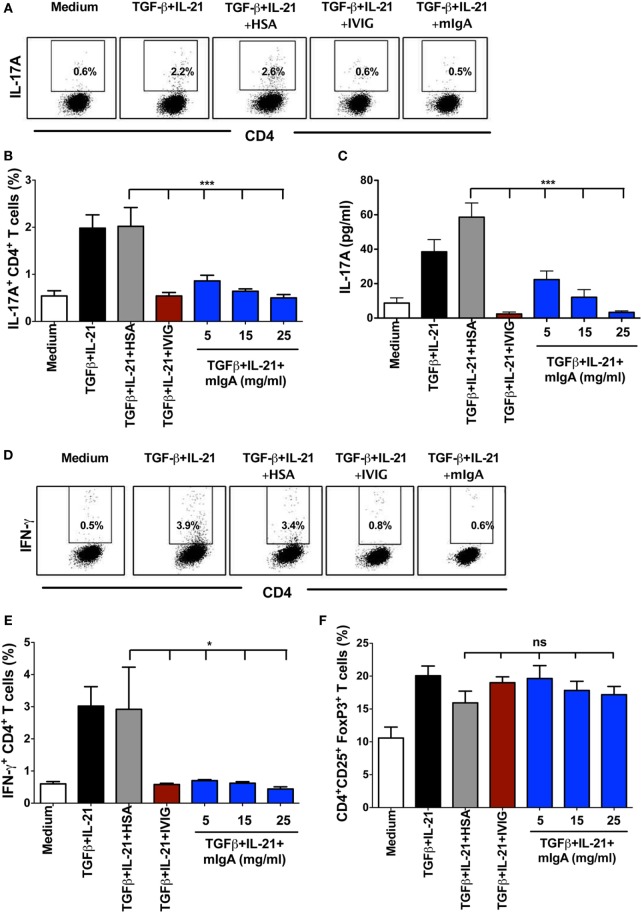
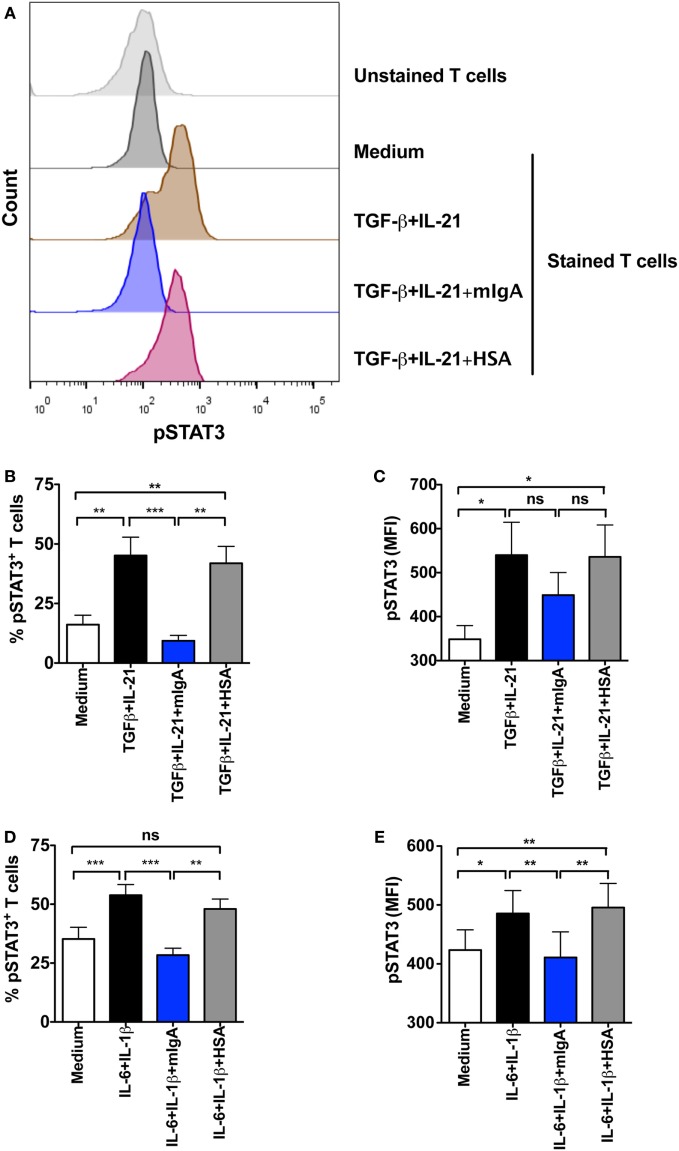
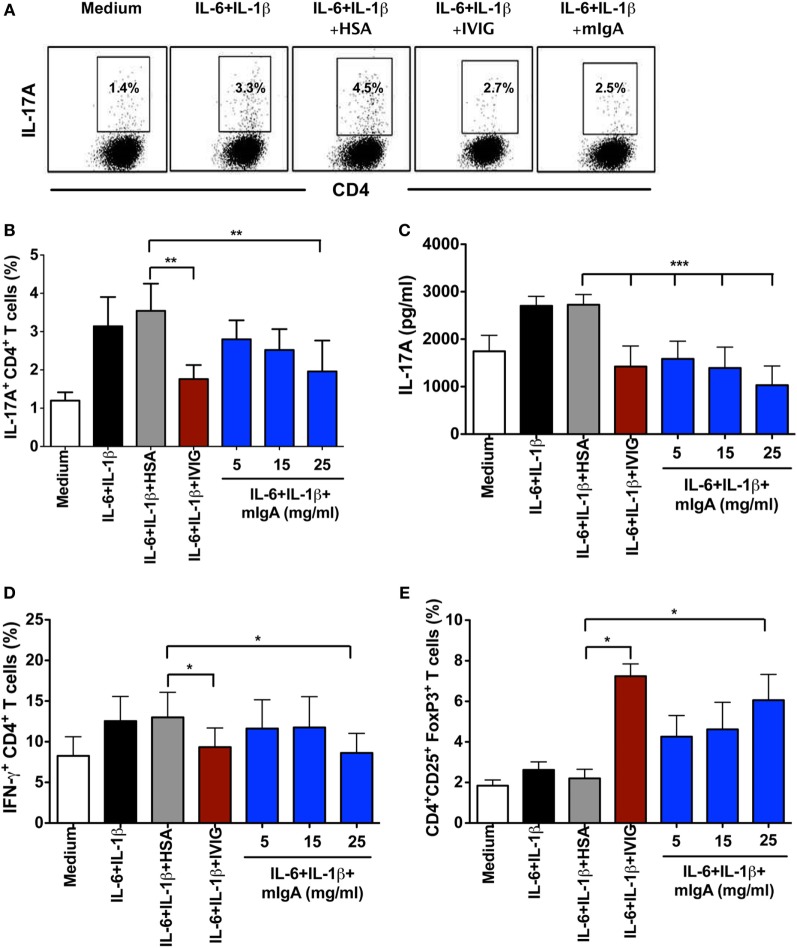
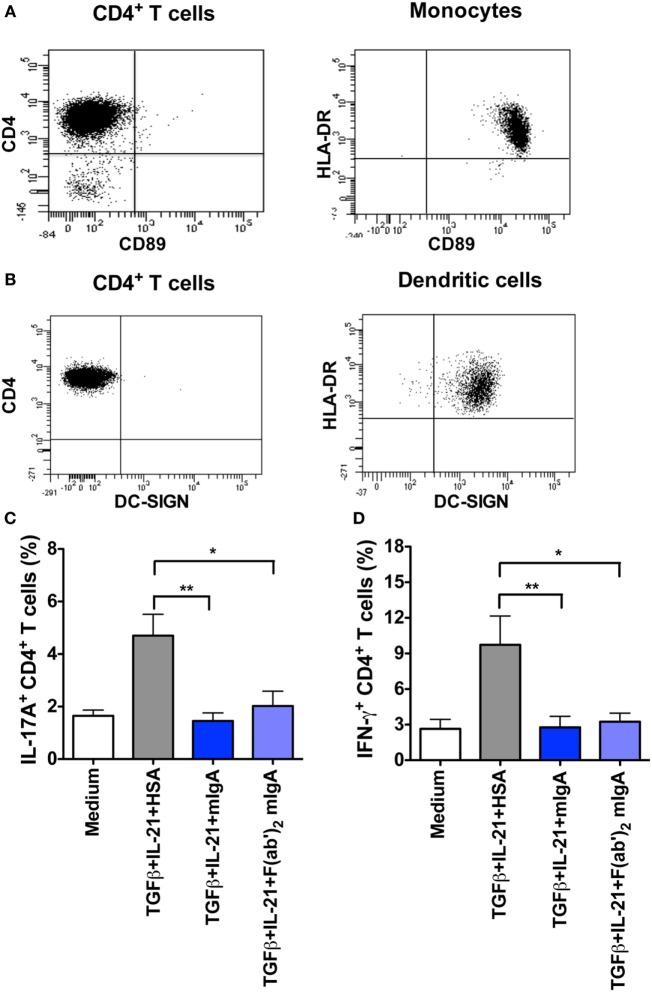
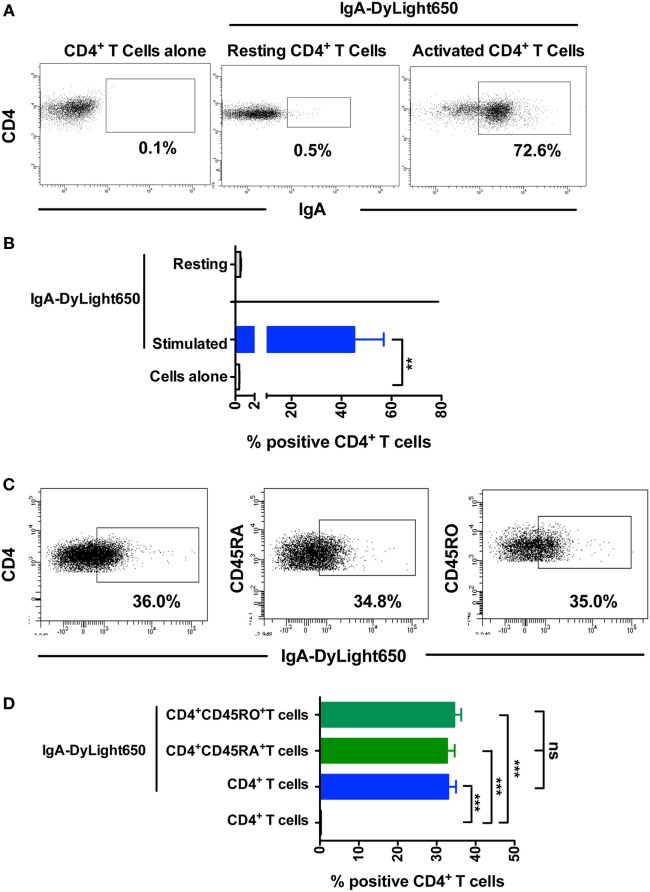
Circulating immunoglobulins including immunoglobulin G (IgG) and IgM play a critical role in the immune homeostasis by modulating functions of immune cells. These functions are mediated in part by natural antibodies. However, despite being second most abundant antibody in the circulation, the immunoregulatory function of IgA is relatively unexplored. As Th17 cells are the key mediators of a variety of autoimmune, inflammatory, and allergic diseases, we investigated the ability of monomeric IgA (mIgA) isolated from pooled plasma of healthy donors to modulate human Th17 cells. We show that mIgA inhibits differentiation and amplification of human Th17 cells and the production of their effector cytokine IL-17A. mIgA also suppresses IFN-γ responses under these experimental conditions. Suppressive effect of mIgA on Th17 responses is associated with reciprocal expansion of FoxP3-positive regulatory T cells. The effect of mIgA on Th17 cells is dependent on F(ab') fragments and independent of FcαRI (CD89) and DC-SIGN. Mechanistically, the modulatory effect of mIgA on Th17 cells implicates suppression of phosphorylation of signal transducer and activator of transcription 3. Furthermore, mIgA binds to CD4 T cells and recognizes in a dose-dependent manner the receptors for cytokines (IL-6Rα and IL-1RI) that mediate Th17 responses. Our findings thus reveal novel anti-inflammatory functions of IgA and suggest potential therapeutic utility of mIgA in autoimmune and inflammatory diseases that implicate Th17 cells.
包括免疫球蛋白G(IgG)和IgM在内的循环免疫球蛋白通过调节免疫细胞的功能在免疫稳态中发挥关键作用。这些功能部分由天然抗体介导。然而,尽管IgA是循环中第二丰富的抗体,但其免疫调节功能相对未被充分研究。由于Th17细胞是多种自身免疫性、炎症性和过敏性疾病的关键介质,我们研究了从健康供体的混合血浆中分离出的单体IgA(mIgA)调节人Th17细胞的能力。我们发现mIgA抑制人Th17细胞的分化和扩增及其效应细胞因子IL-17A的产生。在这些实验条件下,mIgA还抑制IFN-γ反应。mIgA对Th17反应的抑制作用与FoxP3阳性调节性T细胞的相互扩增有关。mIgA对Th17细胞的作用依赖于F(ab')片段,且独立于FcαRI(CD89)和DC-SIGN。从机制上讲,mIgA对Th17细胞的调节作用涉及抑制信号转导和转录激活因子3的磷酸化。此外,mIgA与CD4 T细胞结合,并以剂量依赖的方式识别介导Th17反应的细胞因子受体(IL-6Rα和IL-1RI)。因此,我们的研究结果揭示了IgA的新型抗炎功能,并表明mIgA在涉及Th17细胞的自身免疫性和炎症性疾病中具有潜在的治疗用途。