Chen Ping, Li Xiwen, Sang Lili, Huang Jiangfa
Department of Orthopedics, The 2nd Affiliated Hospital of Guangzhou University of Chinese Medicine Guangzhou University of Chinese Medicine, Guangzhou Department of Orthopedic, Traditional Chinese Medicine Hospital of Zhongshan, Zhongshan, Guangdong, China.
Medicine (Baltimore). 2017 Mar;96(13):e6382. doi: 10.1097/MD.0000000000006382.
This meta-analysis aimed to demonstrate the efficacy and safety of intravenous glucocorticoids for reducing pain intensity and postoperative nausea and vomiting (PONV) in patients undergoing total joint arthroplasty (TJA).
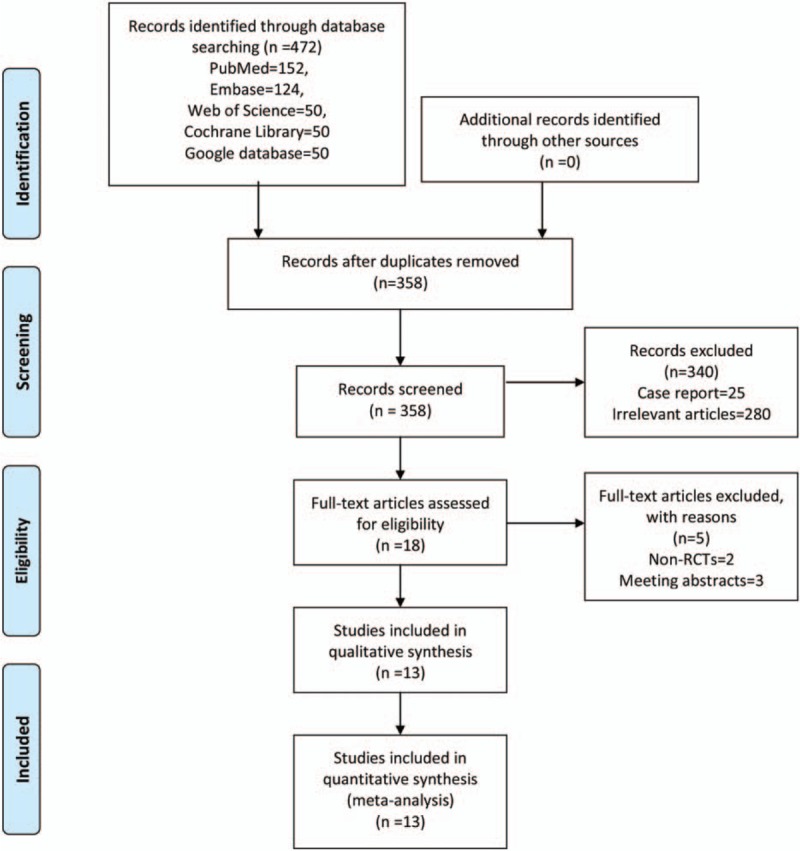
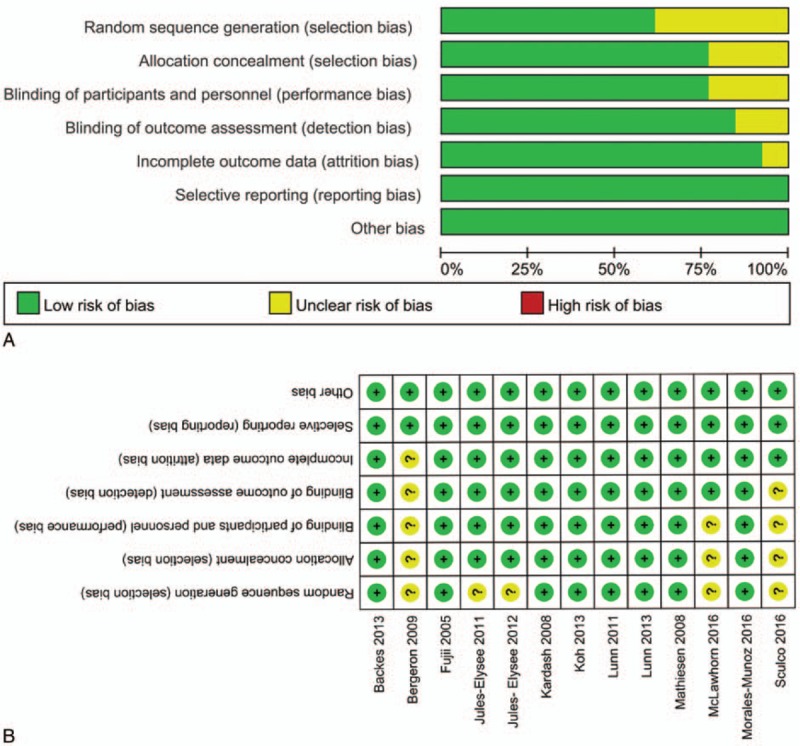
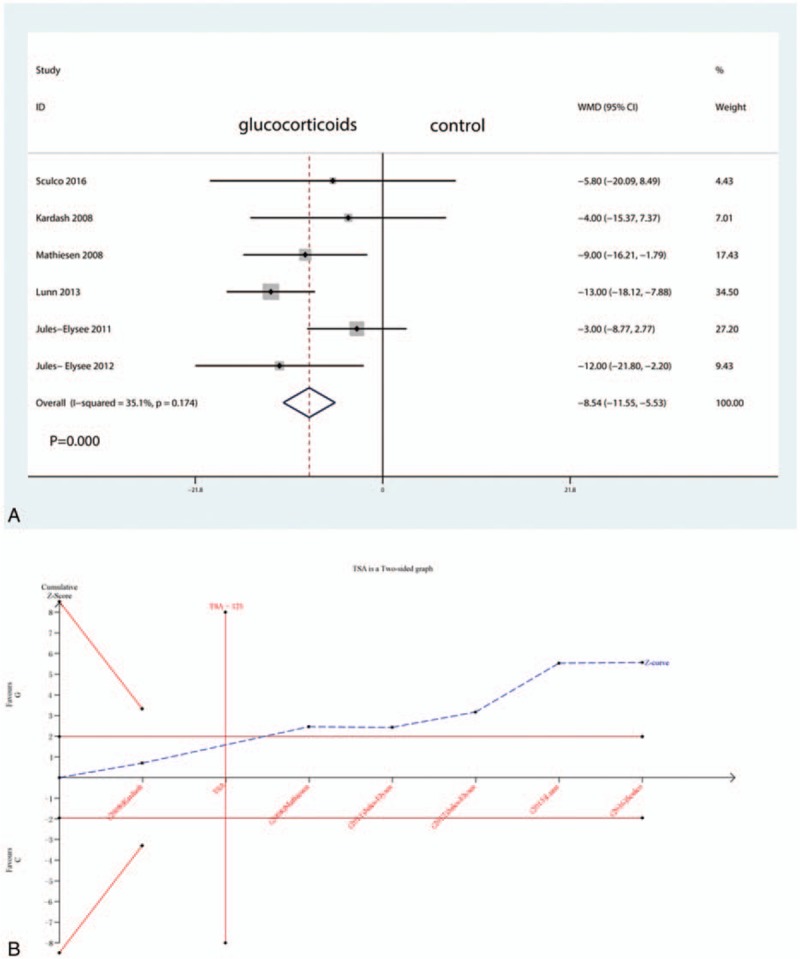
PubMed, Embase, the Cochrane Central Register of Controlled Trials (CENTRAL), Web of Science, and Google databases were searched for randomized controlled trials (RCTs) comparing intravenous glucocorticoids versus no intravenous glucocorticoids or sham for patients undergoing TJA. Outcomes included visual analogue scale (VAS) pain at 12, 24, and 48 hours; the occurrence of PONV; length of hospital stay; the occurrence of infection; and blood glucose levels after surgery. We calculated risk ratios (RR) with a 95% confidence interval (CI) for dichotomous outcomes and the weighted mean difference (WMD) with a 95% CI for continuous outcomes. Trial sequential analysis was also used to verify the pooled results.
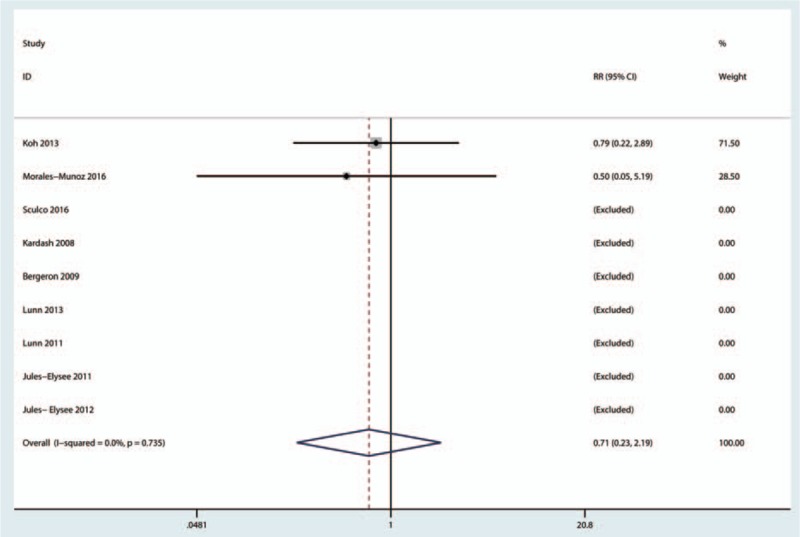
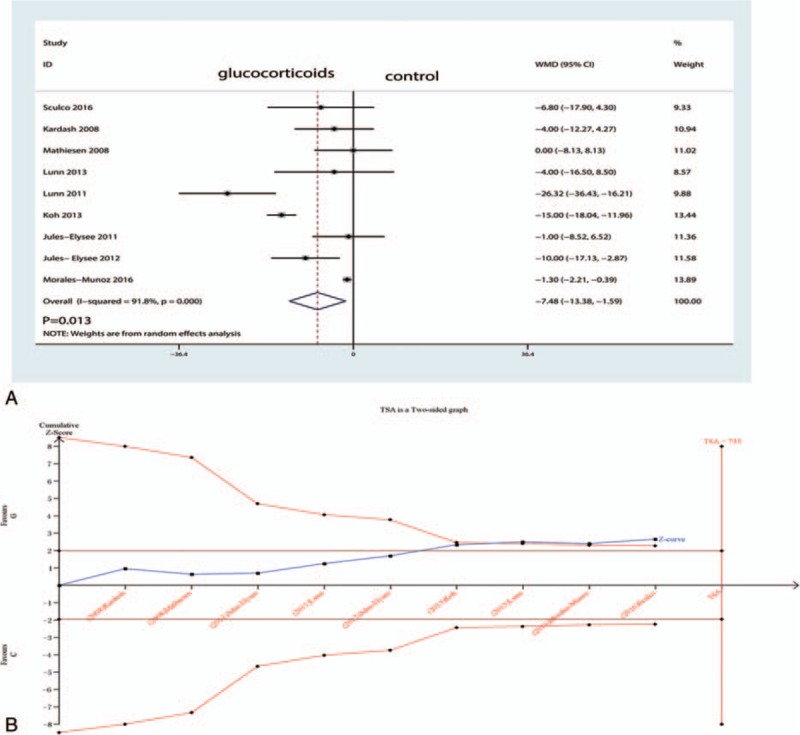
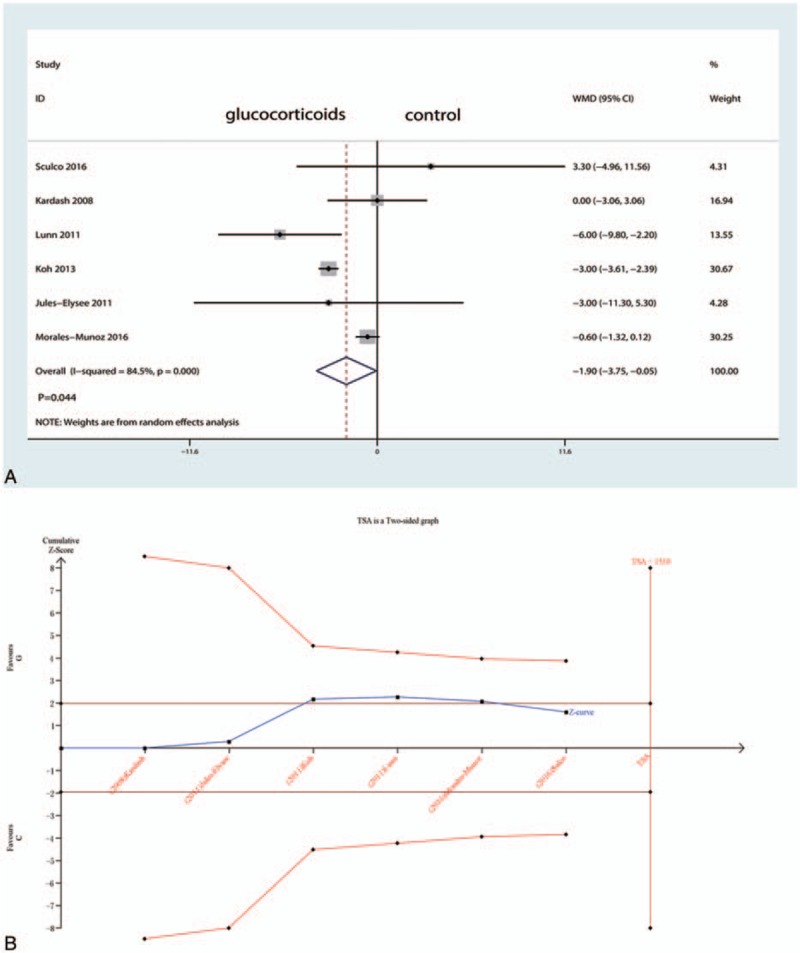
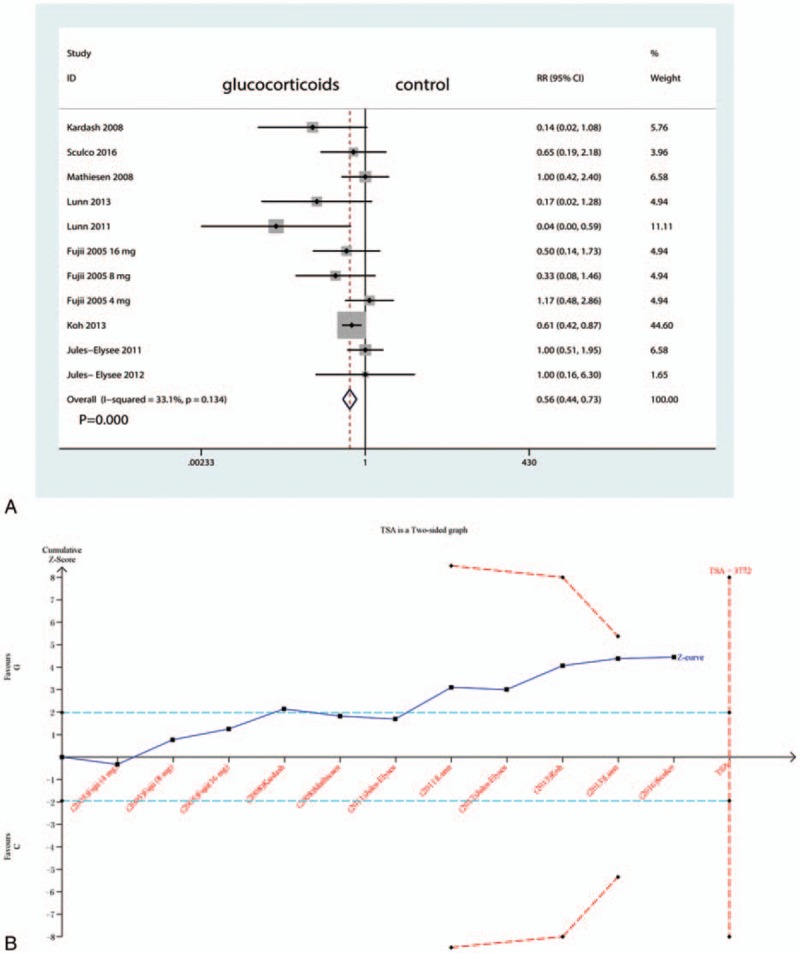
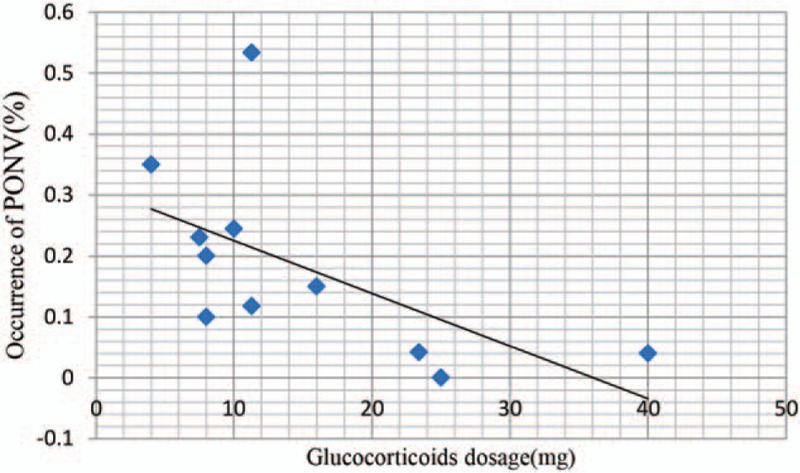
Thirteen clinical trials involving 821 patients were ultimately included in this meta-analysis. The pooled results indicated that intravenous steroids can decrease VAS at 12 hours (WMD = -8.54, 95% CI -11.55 to -5.53, P = 0.000; I = 35.1%), 24 hours (WMD = -7.48, 95% CI -13.38 to -1.59, P = 0.013; I = 91.8%), and 48 hours (WMD = -1.90, 95% CI -3.75 to -0.05, P = 0.044; I = 84.5%). Intravenous steroids can decrease the occurrence of PONV (RR = 0.56, 95% CI 0.44-0.73, P = 0.000; I = 33.1%). There was no significant difference in the length of hospital stay, occurrence of infection, and blood glucose levels after surgery.
Intravenous glucocorticoids not only alleviate early pain intensity but also decrease PONV after TJA. More high-quality RCTs are required to determine the safety of glucocorticoids before making final recommendations.
本荟萃分析旨在证明静脉注射糖皮质激素在降低全关节置换术(TJA)患者疼痛强度及术后恶心呕吐(PONV)方面的有效性和安全性。
检索了PubMed、Embase、Cochrane对照试验中央注册库(CENTRAL)、科学网和谷歌数据库,以查找比较静脉注射糖皮质激素与未注射或假注射糖皮质激素的TJA患者的随机对照试验(RCT)。结局指标包括术后12、24和48小时的视觉模拟评分(VAS)疼痛;PONV的发生情况;住院时间;感染的发生情况;以及术后血糖水平。对于二分结局,我们计算了风险比(RR)及95%置信区间(CI),对于连续结局,计算了加权平均差(WMD)及95%CI。还采用了试验序贯分析来验证汇总结果。
本荟萃分析最终纳入了13项涉及821例患者的临床试验。汇总结果表明,静脉注射类固醇可降低术后12小时(WMD = -8.54,95%CI -11.55至-5.53,P = 0.000;I² = 35.1%)、24小时(WMD = -7.48,95%CI -13.38至-1.59,P = 0.013;I² = 91.8%)和48小时(WMD = -1.90,95%CI -3.75至-0.05,P = 0.044;I² = 84.5%)的VAS疼痛评分。静脉注射类固醇可降低PONV的发生率(RR = 0.56,95%CI 0.44 - 0.73,P = 0.000;I² = 33.1%)。住院时间、感染发生率及术后血糖水平无显著差异。
静脉注射糖皮质激素不仅可减轻TJA术后早期的疼痛强度,还可降低PONV的发生率。在做出最终推荐之前,需要更多高质量的RCT来确定糖皮质激素的安全性。