Hong Eun Pyo, Go Min Jin, Kim Hyung-Lae, Park Ji Wan
Department of Medical Genetics, College of Medicine, Hallym University, Chuncheon-si, Ganwon-do, Republic of Korea.
Center for Genome Science, National Institute of Health, Cheongju-si, Chungcheongbuk-do, Republic of Korea.
PLoS One. 2017 Mar 29;12(3):e0174642. doi: 10.1371/journal.pone.0174642. eCollection 2017.
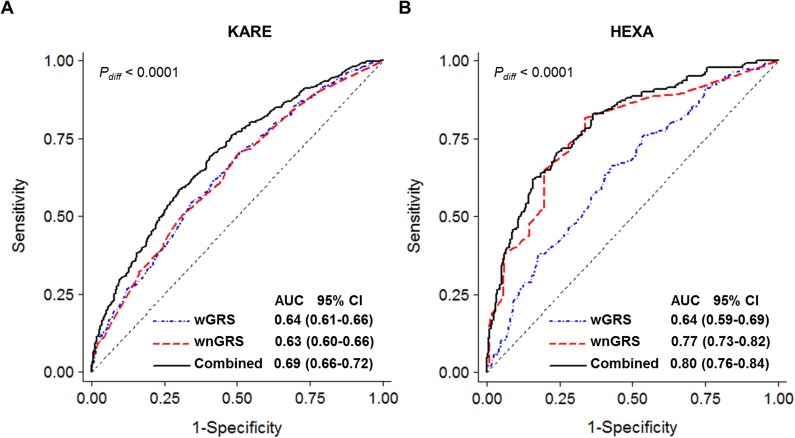
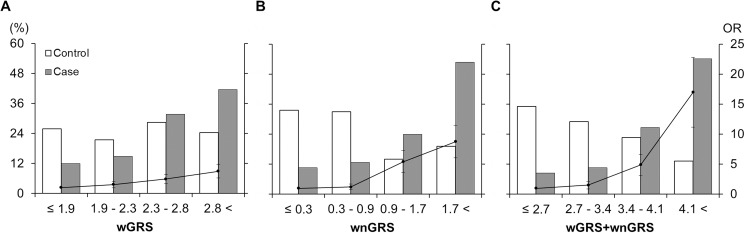
A complex interplay among host, pathogen, and environmental factors is believed to contribute to the risk of developing pulmonary tuberculosis (PTB). The lack of replication of published genome-wide association study (GWAS) findings limits the clinical utility of reported single nucleotide polymorphisms (SNPs). We conducted a GWAS using 467 PTB cases and 1,313 healthy controls obtained from two community-based cohorts in Korea. We evaluated the performance of PTB risk models based on different combinations of genetic and nongenetic factors and validated the results in an independent Korean population comprised of 179 PTB cases and 500 healthy controls. We demonstrated the polygenic nature of PTB and nongenetic factors such as age, sex, and body mass index (BMI) were strongly associated with PTB risk. None of the SNPs achieved genome-wide significance; instead, we were able to replicate the associations between PTB and ten SNPs near or in the genes, CDCA7, GBE1, GADL1, SPATA16, C6orf118, KIAA1432, DMRT2, CTR9, CCDC67, and CDH13, which may play roles in the immune and inflammatory pathways. Among the replicated SNPs, an intergenic SNP, rs9365798, located downstream of the C6orf118 gene showed the most significant association under the dominant model (OR = 1.59, 95% CI 1.32-1.92, P = 2.1×10⁻⁶). The performance of a risk model combining the effects of ten replicated SNPs and six nongenetic factors (i.e., age, sex, BMI, cigarette smoking, systolic blood pressure, and hemoglobin) were validated in the replication set (AUC = 0.80, 95% CI 0.76-0.84). The strategy of combining genetic and nongenetic risk factors ultimately resulted in better risk prediction for PTB in the adult Korean population.
宿主、病原体和环境因素之间复杂的相互作用被认为会增加患肺结核(PTB)的风险。已发表的全基因组关联研究(GWAS)结果缺乏重复性,限制了所报道的单核苷酸多态性(SNP)的临床应用价值。我们利用从韩国两个社区队列中获取的467例PTB病例和1313名健康对照进行了一项GWAS。我们评估了基于遗传和非遗传因素不同组合的PTB风险模型的性能,并在一个由179例PTB病例和500名健康对照组成的独立韩国人群中验证了结果。我们证明了PTB的多基因性质,并且年龄、性别和体重指数(BMI)等非遗传因素与PTB风险密切相关。没有一个SNP达到全基因组显著性水平;相反,我们能够重复PTB与基因CDCA7、GBE1、GADL1、SPATA16、C6orf118、KIAA1432、DMRT2、CTR9、CCDC67和CDH13附近或内部的10个SNP之间的关联,这些基因可能在免疫和炎症途径中发挥作用。在重复的SNP中,位于C6orf118基因下游的一个基因间SNP rs9365798在显性模型下显示出最显著的关联(OR = 1.59,95% CI 1.32 - 1.92,P = 2.1×10⁻⁶)。在验证集中验证了结合10个重复SNP和6个非遗传因素(即年龄、性别、BMI、吸烟、收缩压和血红蛋白)效应的风险模型的性能(AUC = )。将遗传和非遗传风险因素相结合的策略最终在成年韩国人群中对PTB产生了更好的风险预测效果。 (注:原文中“95% CI 0.76 - 0.84”后的“AUC = ”表述不完整,译文保留原文状态)