Simonneau Gérald, Torbicki Adam, Dorfmüller Peter, Kim Nick
Assistance Publique-Hôpitaux de Paris, Service de Pneumologie, Hôpital Bicêtre, Le Kremlin-Bicêtre, Hôpital Marie Lannelongue, Paris Sud University, Paris, France
Dept of Pulmonary Circulation and Thromboembolic Diseases, Centre of Postgraduate Medical Education, Europejskie Centrum Zdrowia Otwock, Otwock, Poland.
Eur Respir Rev. 2017 Mar 29;26(143). doi: 10.1183/16000617.0112-2016. Print 2017 Mar 31.
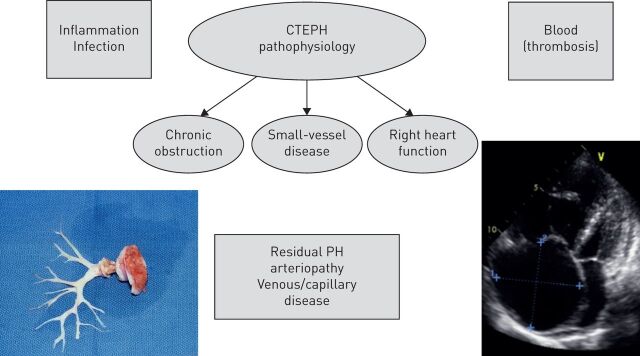
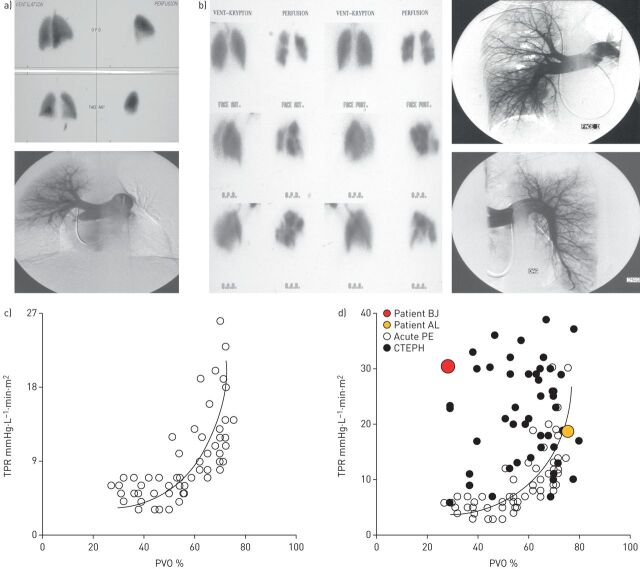
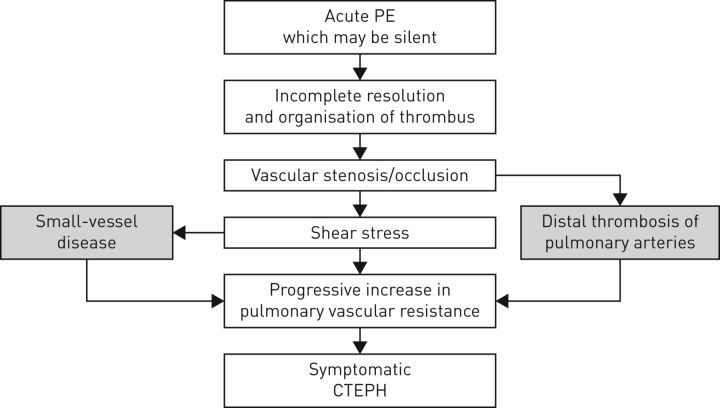
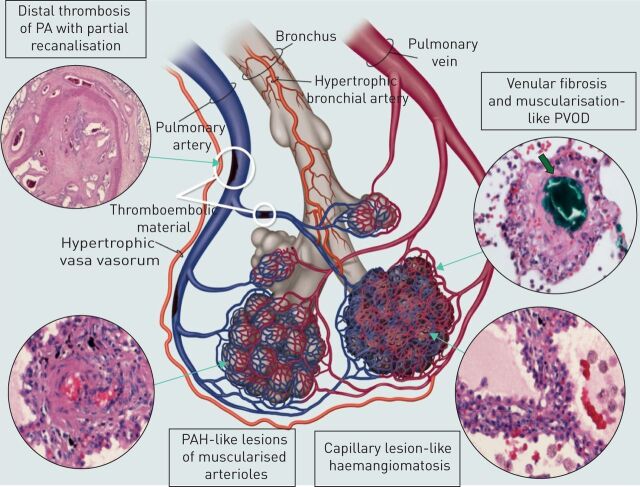
Chronic thromboembolic pulmonary hypertension (CTEPH) is a rare, progressive pulmonary vascular disease that is usually a consequence of prior acute pulmonary embolism. CTEPH usually begins with persistent obstruction of large and/or middle-sized pulmonary arteries by organised thrombi. Failure of thrombi to resolve may be related to abnormal fibrinolysis or underlying haematological or autoimmune disorders. It is now known that small-vessel abnormalities also contribute to haemodynamic compromise, functional impairment and disease progression in CTEPH. Small-vessel disease can occur in obstructed areas, possibly triggered by unresolved thrombotic material, and downstream from occlusions, possibly because of excessive collateral blood supply from high-pressure bronchial and systemic arteries. The molecular processes underlying small-vessel disease are not completely understood and further research is needed in this area. The degree of small-vessel disease has a substantial impact on the severity of CTEPH and postsurgical outcomes. Interventional and medical treatment of CTEPH should aim to restore normal flow distribution within the pulmonary vasculature, unload the right ventricle and prevent or treat small-vessel disease. It requires early, reliable identification of patients with CTEPH and use of optimal treatment modalities in expert centres.
慢性血栓栓塞性肺动脉高压(CTEPH)是一种罕见的、进行性的肺血管疾病,通常是既往急性肺栓塞的后果。CTEPH通常始于机化血栓对大、中肺动脉的持续性阻塞。血栓未能溶解可能与异常纤维蛋白溶解或潜在的血液系统或自身免疫性疾病有关。现在已知小血管异常也会导致CTEPH的血流动力学损害、功能障碍和疾病进展。小血管疾病可发生在阻塞区域,可能由未溶解的血栓物质触发,也可发生在闭塞下游,可能是由于高压支气管动脉和体循环动脉的过度侧支供血所致。小血管疾病的分子机制尚未完全明确,该领域需要进一步研究。小血管疾病的程度对CTEPH的严重程度和术后结果有重大影响。CTEPH的介入和药物治疗应旨在恢复肺血管内的正常血流分布,减轻右心室负荷,并预防或治疗小血管疾病。这需要早期、可靠地识别CTEPH患者,并在专家中心使用最佳治疗方式。