Lin Yen Ting, Chang Eugene T Y, Eatock Julie, Galla Tobias, Clayton Richard H
Theoretical Physics Division, School of Physics and Astronomy, University of Manchester, Manchester, UK.
Department of Computer Science and INSIGNEO Institute for in silico Medicine, University of Sheffield, Sheffield, UK.
J R Soc Interface. 2017 Mar;14(128). doi: 10.1098/rsif.2016.0968.
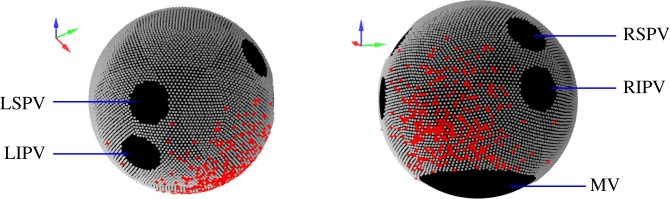
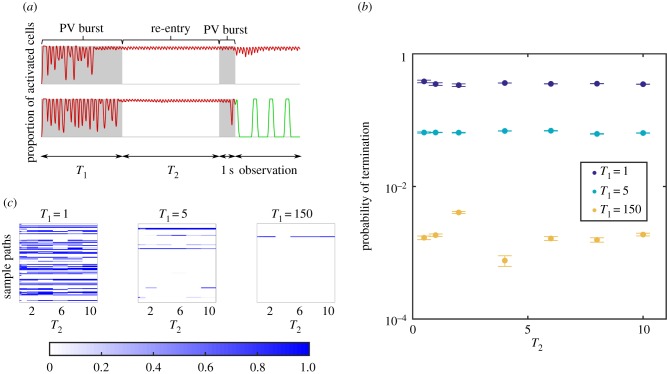
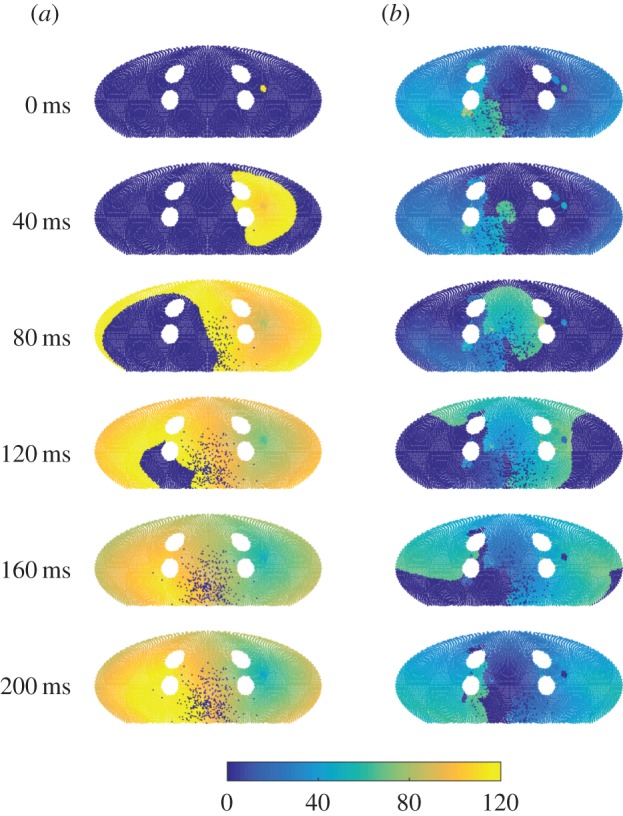
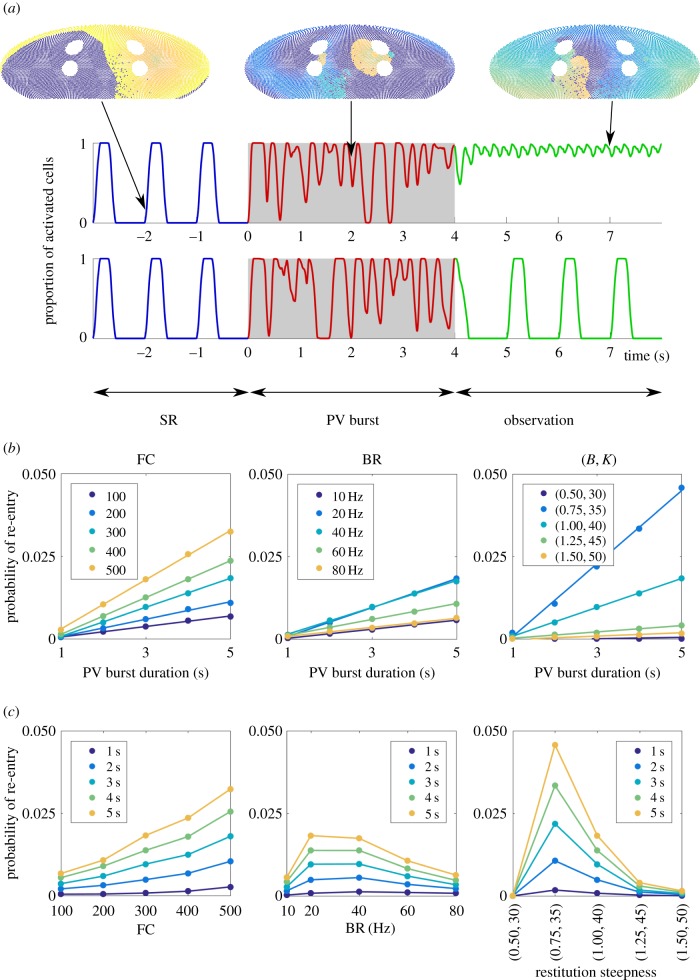
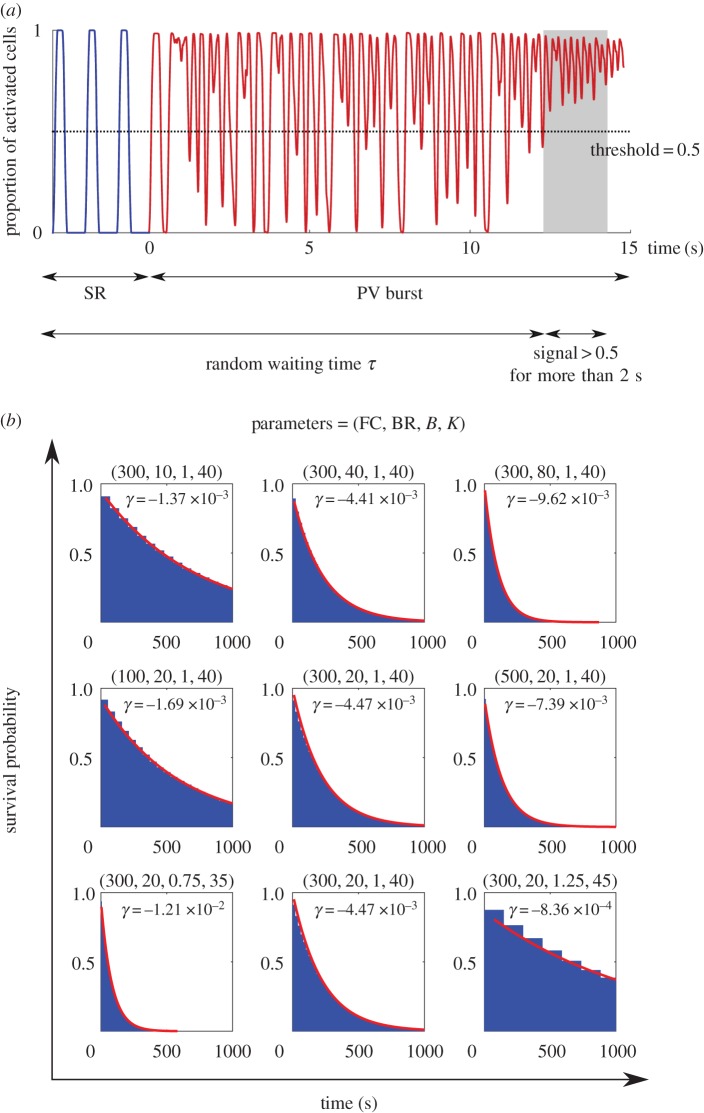
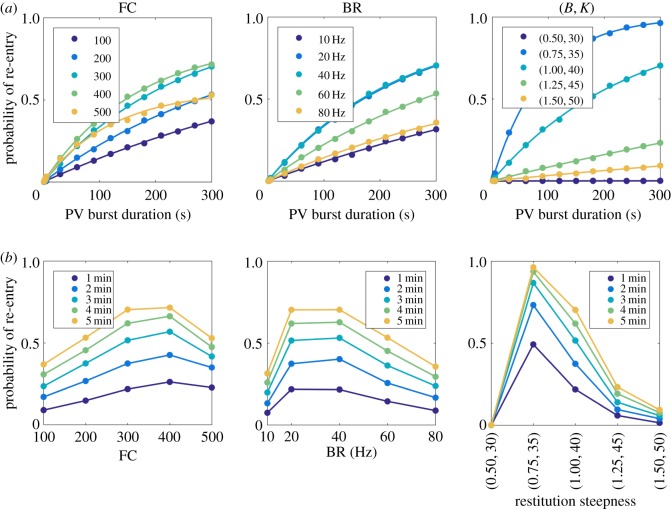
Mathematical models of cardiac electrical excitation are increasingly complex, with multiscale models seeking to represent and bridge physiological behaviours across temporal and spatial scales. The increasing complexity of these models makes it computationally expensive to both evaluate long term (more than 60 s) behaviour and determine sensitivity of model outputs to inputs. This is particularly relevant in models of atrial fibrillation (AF), where individual episodes last from seconds to days, and interepisode waiting times can be minutes to months. Potential mechanisms of transition between sinus rhythm and AF have been identified but are not well understood, and it is difficult to simulate AF for long periods of time using state-of-the-art models. In this study, we implemented a Moe-type cellular automaton on a novel, topologically equivalent surface geometry of the left atrium. We used the model to simulate stochastic initiation and spontaneous termination of AF, arising from bursts of spontaneous activation near pulmonary veins. The simplified representation of atrial electrical activity reduced computational cost, and so permitted us to investigate AF mechanisms in a probabilistic setting. We computed large numbers (approx. 10) of sample paths of the model, to infer stochastic initiation and termination rates of AF episodes using different model parameters. By generating statistical distributions of model outputs, we demonstrated how to propagate uncertainties of inputs within our microscopic level model up to a macroscopic level. Lastly, we investigated spontaneous termination in the model and found a complex dependence on its past AF trajectory, the mechanism of which merits future investigation.
心脏电兴奋的数学模型日益复杂,多尺度模型试图在时间和空间尺度上表征和衔接生理行为。这些模型复杂性的增加使得评估长期(超过60秒)行为以及确定模型输出对输入的敏感性在计算上变得昂贵。这在心房颤动(AF)模型中尤为相关,其中单个发作持续数秒至数天,发作间期等待时间可能为数分钟至数月。窦性心律与AF之间转变的潜在机制已被识别但尚未完全理解,并且使用最先进的模型长时间模拟AF很困难。在本研究中,我们在左心房的一种新颖的拓扑等效表面几何结构上实现了一种莫厄型细胞自动机。我们使用该模型模拟由肺静脉附近的自发激活爆发引起的AF的随机起始和自发终止。心房电活动的简化表示降低了计算成本,因此使我们能够在概率环境中研究AF机制。我们计算了大量(约10个)模型的样本路径,以使用不同的模型参数推断AF发作的随机起始和终止速率。通过生成模型输出的统计分布,我们展示了如何将微观层面模型中输入的不确定性传播到宏观层面。最后,我们研究了模型中的自发终止,发现其对过去的AF轨迹存在复杂的依赖性,其机制值得未来研究。