Filos Dimitrios, Tachmatzidis Dimitrios, Maglaveras Nicos, Vassilikos Vassilios, Chouvarda Ioanna
Lab of Computing, Medical Informatics and Biomedical Imaging Technologies, School of Medicine, Aristotle University of Thessaloniki, Thessaloniki, Greece.
3rd Cardiology Department, Aristotle University of Thessaloniki, Thessaloniki, Greece.
Front Physiol. 2019 Jun 18;10:742. doi: 10.3389/fphys.2019.00742. eCollection 2019.
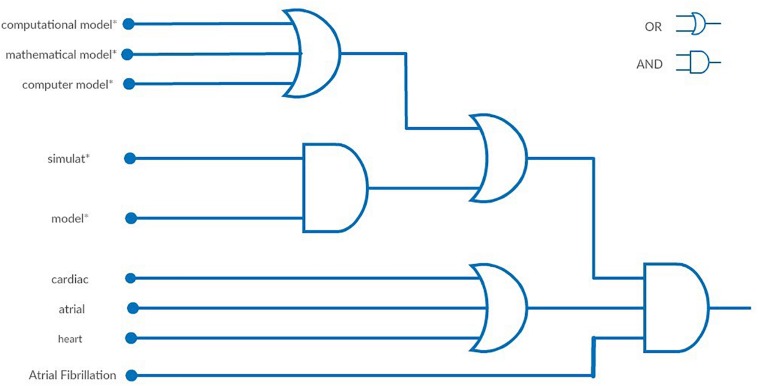
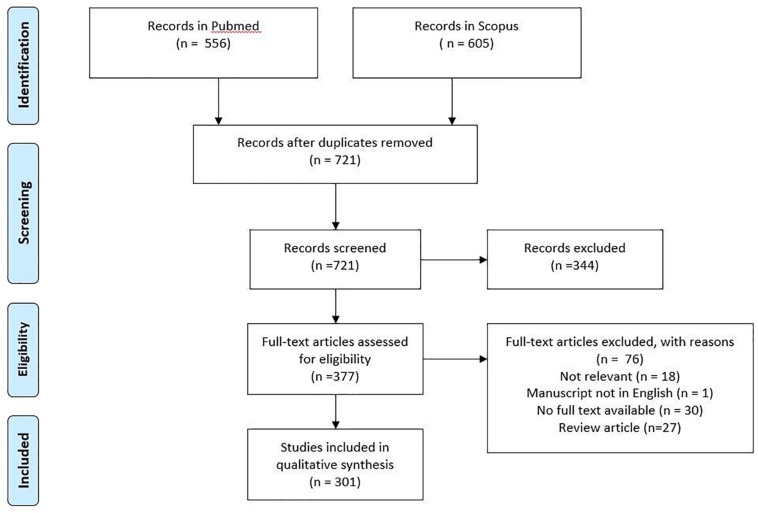
The remarkable advances in high-performance computing and the resulting increase of the computational power have the potential to leverage computational cardiology toward improving our understanding of the pathophysiological mechanisms of arrhythmias, such as Atrial Fibrillation (AF). In AF, a complex interaction between various triggers and the atrial substrate is considered to be the leading cause of AF initiation and perpetuation. In electrocardiography (ECG), P-wave is supposed to reflect atrial depolarization. It has been found that even during sinus rhythm (SR), multiple P-wave morphologies are present in AF patients with a history of AF, suggesting a higher dispersion of the conduction route in this population. In this scoping review, we focused on the mechanisms which modify the electrical substrate of the atria in AF patients, while investigating the existence of computational models that simulate the propagation of the electrical signal through different routes. The adopted review methodology is based on a structured analytical framework which includes the extraction of the keywords based on an initial limited bibliographic search, the extensive literature search and finally the identification of relevant articles based on the reference list of the studies. The leading mechanisms identified were classified according to their scale, spanning from mechanisms in the cell, tissue or organ level, and the produced outputs. The computational modeling approaches for each of the factors that influence the initiation and the perpetuation of AF are presented here to provide a clear overview of the existing literature. Several levels of categorization were adopted while the studies which aim to translate their findings to ECG phenotyping are highlighted. The results denote the availability of multiple models, which are appropriate under specific conditions. However, the consideration of complex scenarios taking into account multiple spatiotemporal scales, personalization of electrophysiological and anatomical models and the reproducibility in terms of ECG phenotyping has only partially been tackled so far.
高性能计算的显著进步以及由此带来的计算能力的提升,有可能推动计算心脏病学发展,以增进我们对心律失常(如心房颤动,简称房颤)病理生理机制的理解。在房颤中,各种触发因素与心房基质之间的复杂相互作用被认为是房颤起始和持续的主要原因。在心电图(ECG)中,P波被认为反映心房去极化。研究发现,即使在窦性心律(SR)期间,有房颤病史的患者中也存在多种P波形态,这表明该人群的传导路径离散度更高。在本综述中,我们聚焦于改变房颤患者心房电基质的机制,同时研究模拟电信号在不同路径中传播的计算模型的存在情况。所采用的综述方法基于一个结构化分析框架,该框架包括基于初步有限的文献检索提取关键词、广泛的文献搜索,最后根据研究的参考文献列表识别相关文章。所确定的主要机制根据其规模进行分类,涵盖细胞、组织或器官层面的机制以及产生的输出。本文介绍了影响房颤起始和持续的每个因素的计算建模方法,以清晰概述现有文献。采用了多个分类层次,同时突出了旨在将其研究结果转化为心电图表型分析的研究。结果表明有多种模型可供使用,这些模型在特定条件下是合适的。然而,考虑到多个时空尺度的复杂情况、电生理和解剖模型的个性化以及心电图表型分析方面的可重复性,目前仅部分得到解决。