Loilome Watcharin, Kadsanit Sasithorn, Muisook Kanha, Yongvanit Puangrat, Namwat Nisana, Techasen Anchalee, Puapairoj Anucha, Khuntikeo Narong, Phonjit Pichai
Department of Biochemistry, Faculty of Medicine, Khon Kaen University, Khon Kaen 40002, Thailand; Liver Fluke and Cholangiocarcinoma Research Center, Khon Kaen University, Khon Kaen 40002, Thailand.
Department of Forensics Science, Faculty of Medicine, Khon Kaen University, Khon Kaen 40002, Thailand.
Oncol Lett. 2017 Feb;13(2):639-646. doi: 10.3892/ol.2016.5477. Epub 2016 Dec 8.
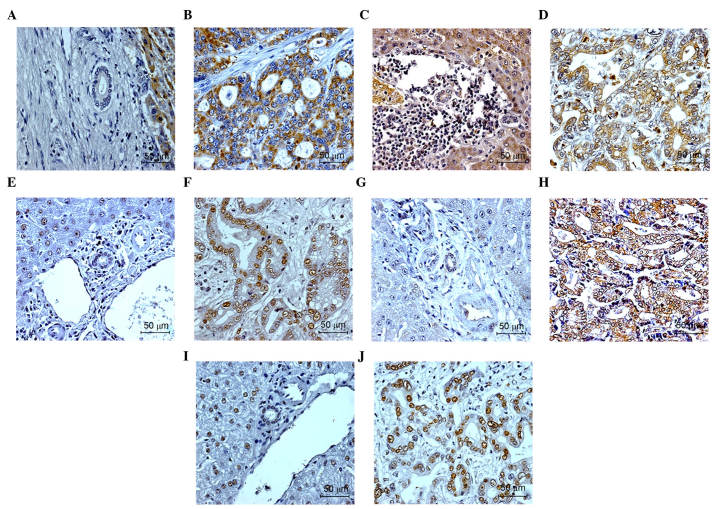
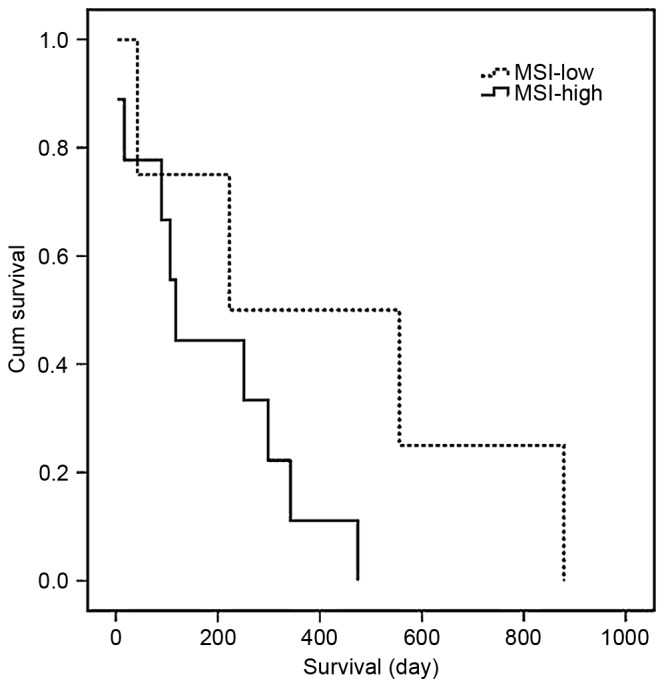
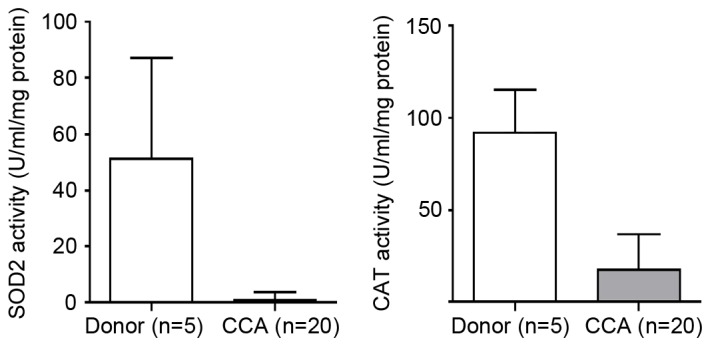
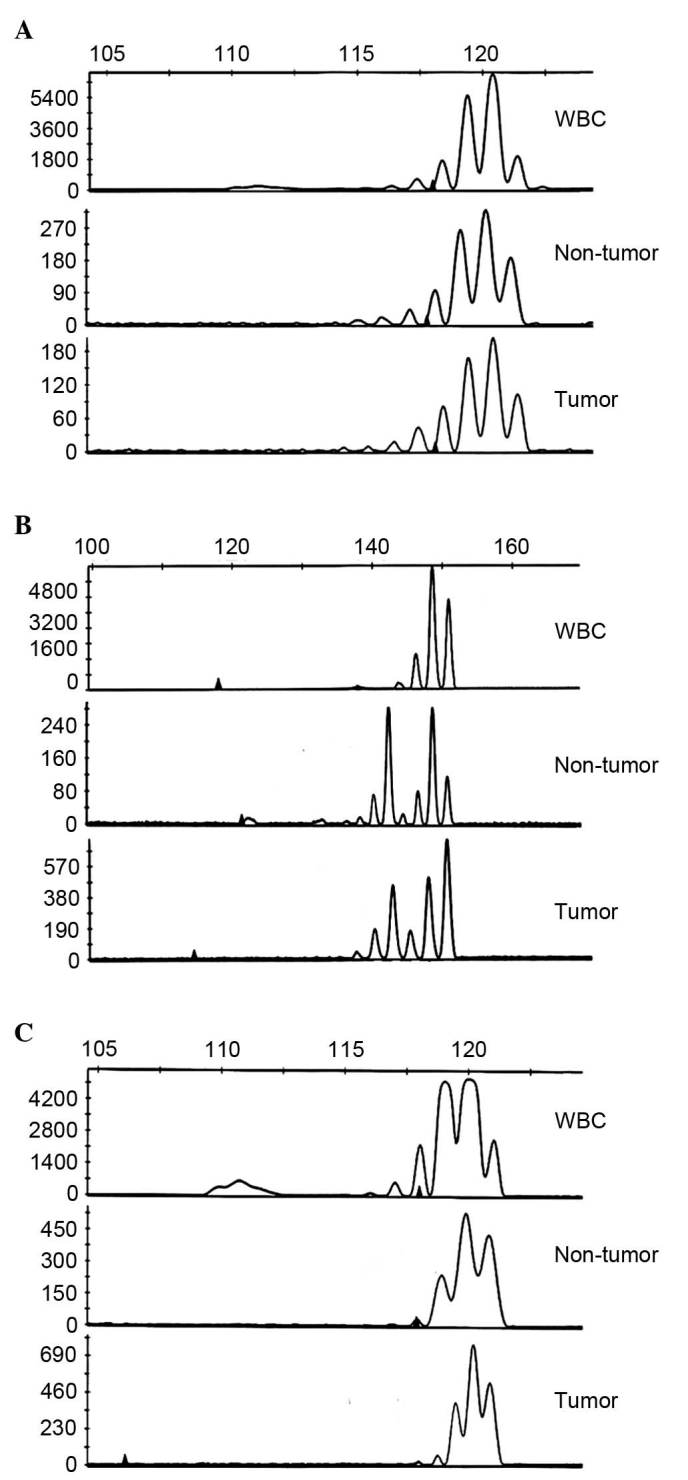
The adaptive response of the genome protection mechanism occurs in cells when exposed to genotoxic stress due to the overproduction of free radicals via inflammation and infection. In such circumstances, cells attempt to maintain health via several genome protection mechanisms. However, evidence is increasing that this adaptive response may have deleterious effect; a reduction of antioxidant enzymes and/or imbalance in the DNA repair system generates microsatellite instability (MSI), which has procarcinogenic implications. Therefore, the present study hypothesized that MSI caused by imbalanced responses of antioxidant enzymes and/or DNA repair enzymes as a result of oxidative/nitrative stress arising from the inflammatory response is involved in liver fluke-associated cholangiocarcinogenesis. The present study investigated this hypothesis by identifying the expression patterns of antioxidant enzymes, including superoxide dismutase 2 (SOD2) and catalase (CAT), and DNA repair enzymes, including alkyladenine DNA glycosylase (AAG), apurinic endonuclease (APE) and DNA polymerase β (DNA pol β). In addition, the activities of the antioxidant enzymes, SOD2 and CAT, were examined in human cholangiocarcinoma (CCA) tissues using immunohistochemical staining. MSI was also analyzed in human CCA tissues. The resulting data demonstrated that the expression levels of the SOD2 and CAT enzymes decreased. The activities of SOD2 and CAT decreased significantly in the CCA tissues, compared with the hepatic tissue of cadaveric donors. In the DNA repairing enzymes, it was found that the expression levels of AAG and DNA pol β enzymes increased, whereas the expression of APE decreased. In addition, it was found that MSI-high was present in 69% of patients, whereas MSI-low was present in 31% of patients, with no patients classified as having microsatellite stability. In the patients, a MSI-high was correlated with poor prognosis, indicated by a shorter survival rate. These results indicated that the reduction of antioxidant enzymes and adaptive imbalance of base excision repair enzymes in human CCA caused MSI, and may be associated with the progression of cancer.
当细胞因炎症和感染导致自由基过量产生而受到基因毒性应激时,基因组保护机制会发生适应性反应。在这种情况下,细胞试图通过多种基因组保护机制来维持健康。然而,越来越多的证据表明这种适应性反应可能具有有害影响;抗氧化酶的减少和/或DNA修复系统的失衡会产生微卫星不稳定性(MSI),这具有促癌作用。因此,本研究假设,由炎症反应引起的氧化/硝化应激导致抗氧化酶和/或DNA修复酶反应失衡所引起的MSI与肝吸虫相关的胆管癌发生有关。本研究通过鉴定抗氧化酶(包括超氧化物歧化酶2(SOD2)和过氧化氢酶(CAT))以及DNA修复酶(包括烷基腺嘌呤DNA糖基化酶(AAG)、脱嘌呤内切酶(APE)和DNA聚合酶β(DNA polβ))的表达模式来研究这一假设。此外,使用免疫组织化学染色在人胆管癌(CCA)组织中检测了抗氧化酶SOD2和CAT的活性。还对人CCA组织中的MSI进行了分析。所得数据表明,SOD2和CAT酶的表达水平降低。与尸体供体的肝组织相比,CCA组织中SOD2和CAT的活性显著降低。在DNA修复酶中,发现AAG和DNA polβ酶的表达水平升高,而APE的表达降低。此外,发现69%的患者存在高微卫星不稳定性(MSI-high),31%的患者存在低微卫星不稳定性(MSI-low),没有患者被归类为具有微卫星稳定性。在这些患者中,MSI-high与预后不良相关,表现为生存率较低。这些结果表明,人CCA中抗氧化酶的减少和碱基切除修复酶的适应性失衡导致了MSI,并且可能与癌症进展有关。