Maki Teruya, Kurosaki Yasunori, Onishi Kazunari, Lee Kevin C, Pointing Stephen B, Jugder Dulam, Yamanaka Norikazu, Hasegawa Hiroshi, Shinoda Masato
College of Science and Engineering, Kanazawa University, Kakumamachi, Kanazawa, Ishikawa 920-1192 Japan.
Arid Land Research Center, Tottori University, 1390 Hamasaka, Tottori, 680-0001 Japan.
Air Qual Atmos Health. 2017;10(3):249-260. doi: 10.1007/s11869-016-0430-3. Epub 2016 Aug 26.
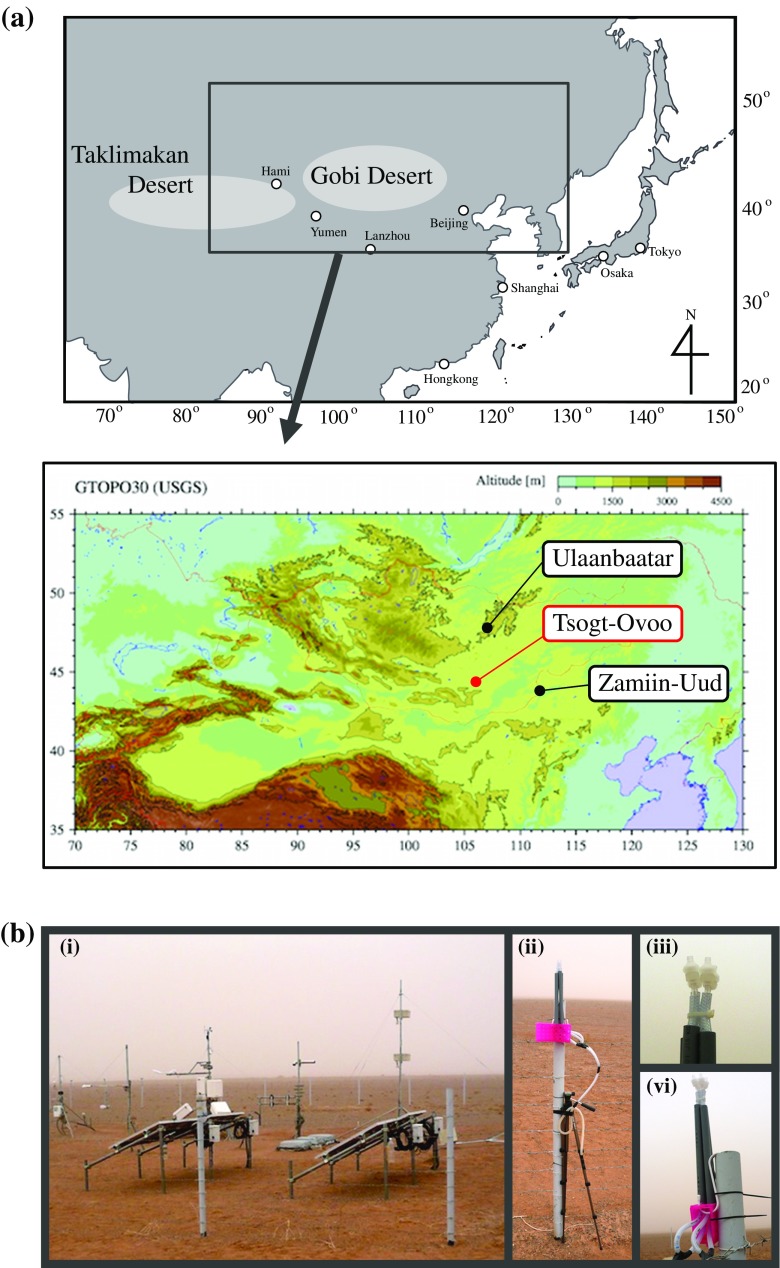
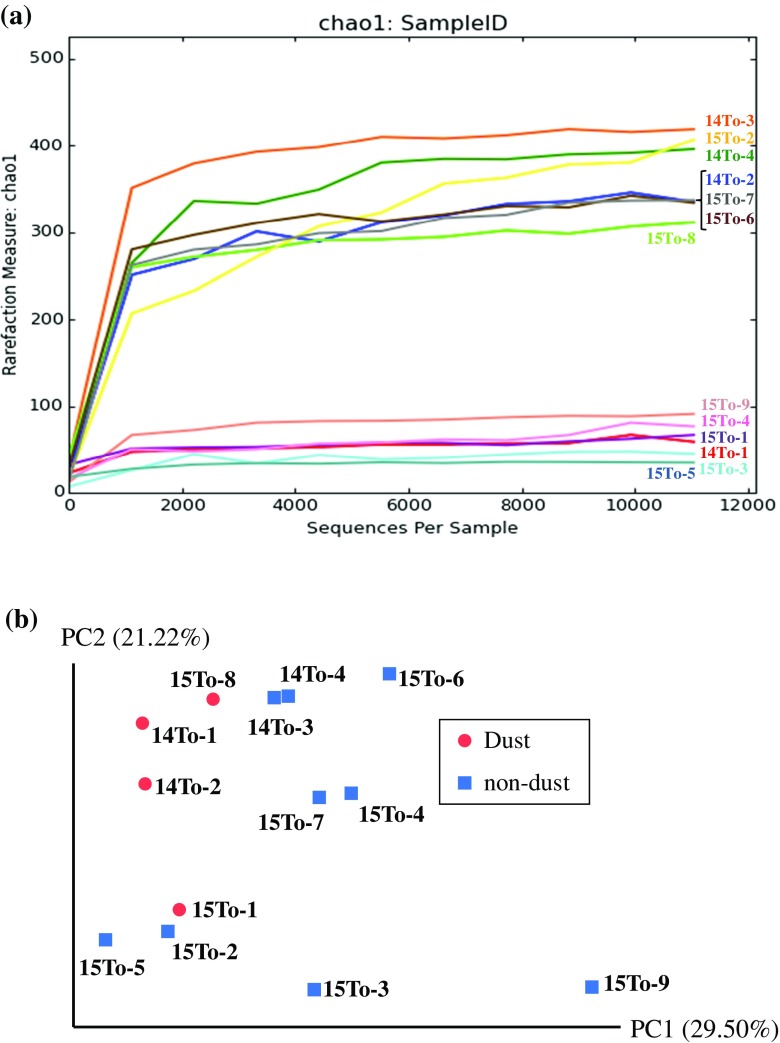
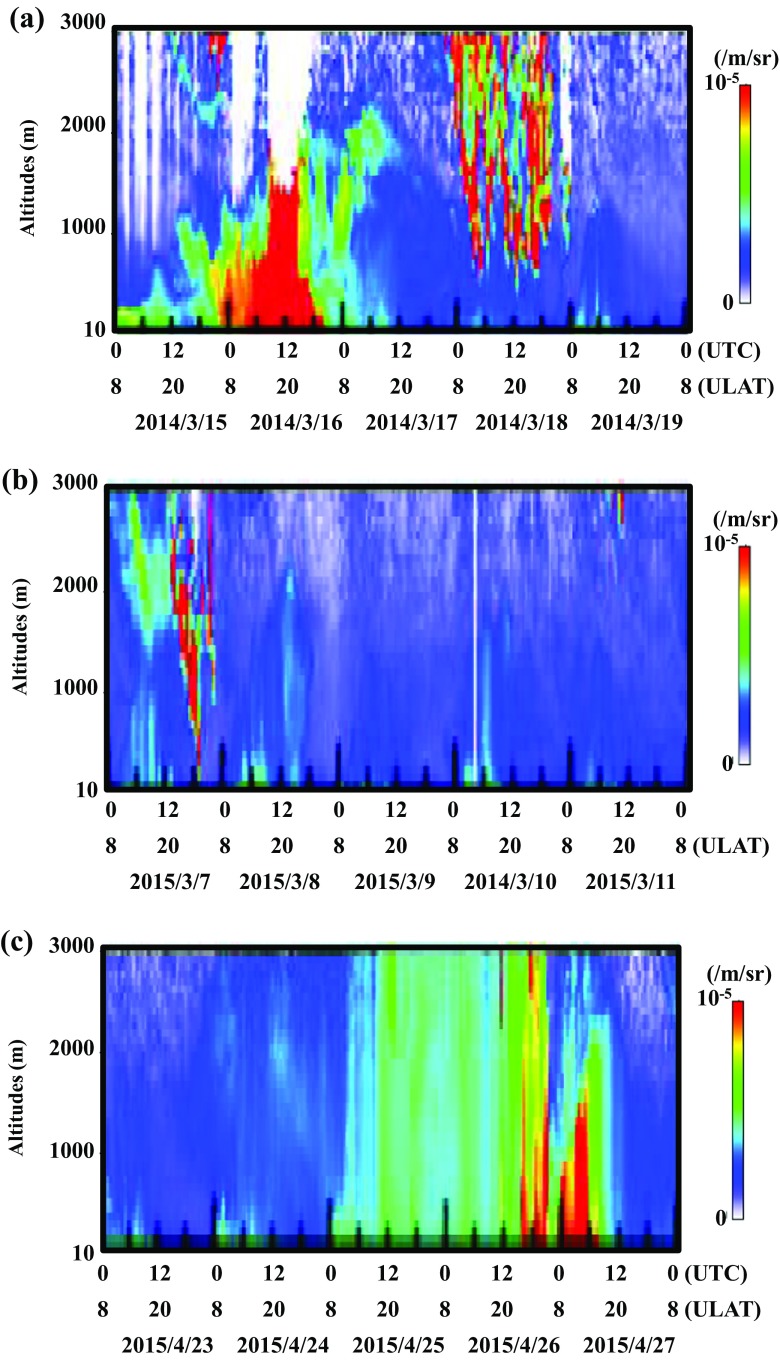
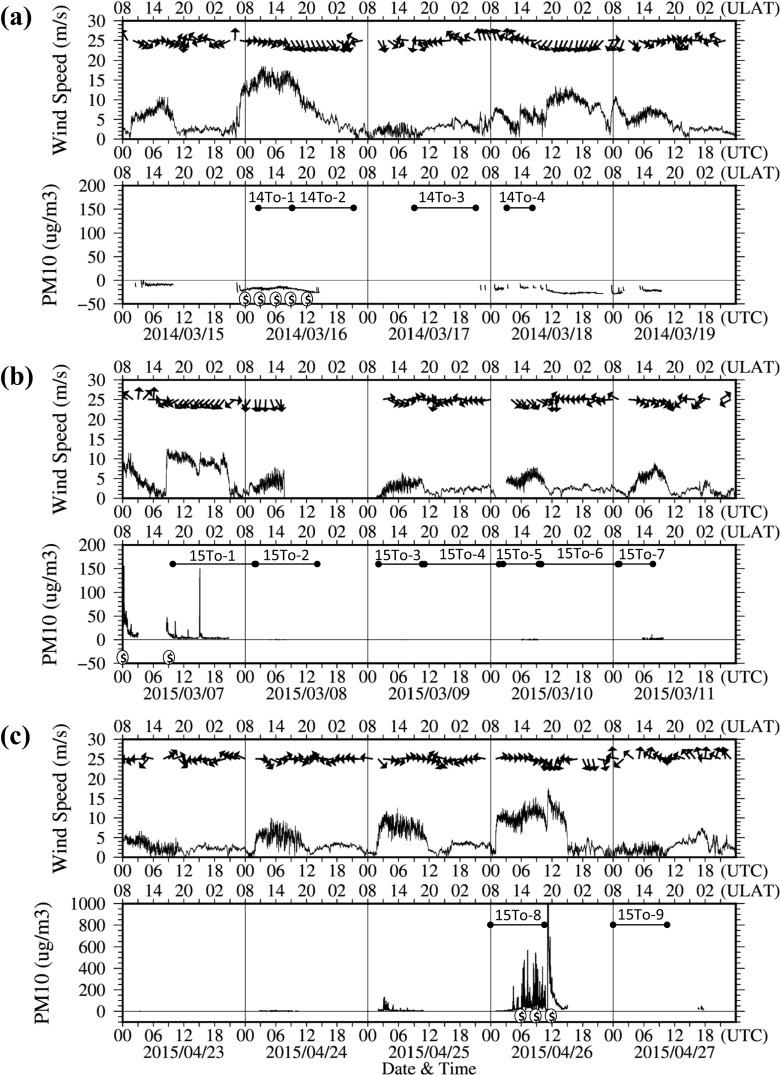
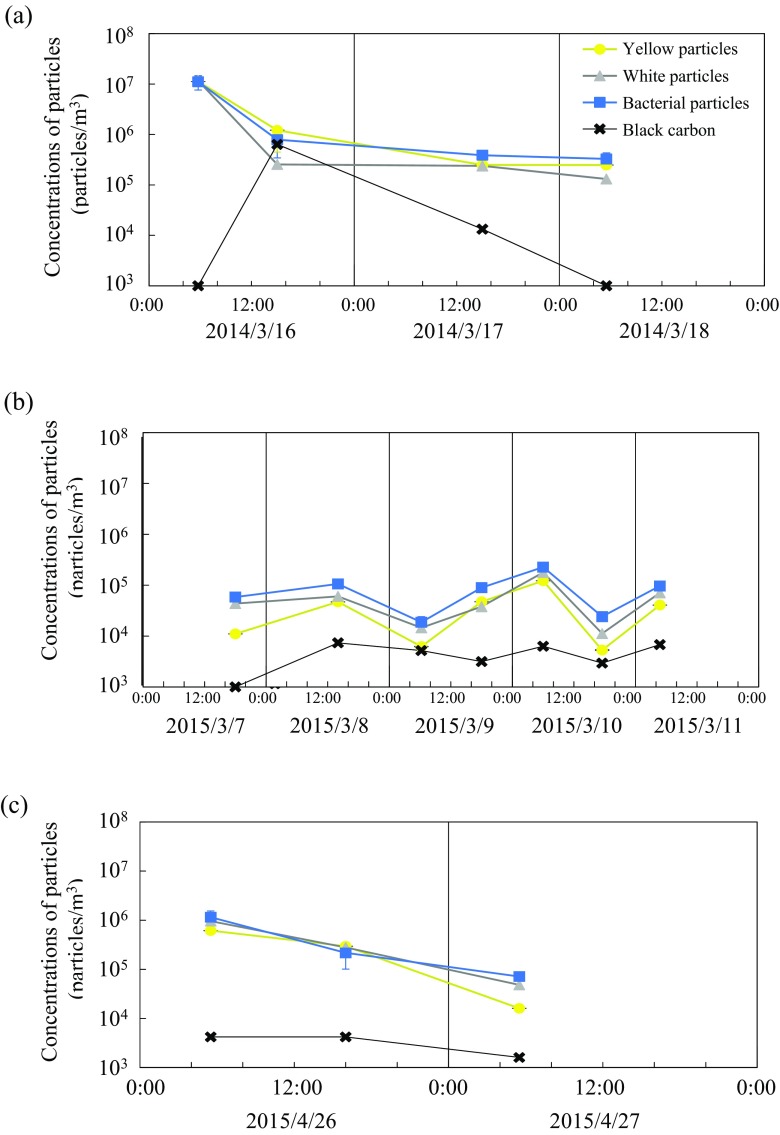
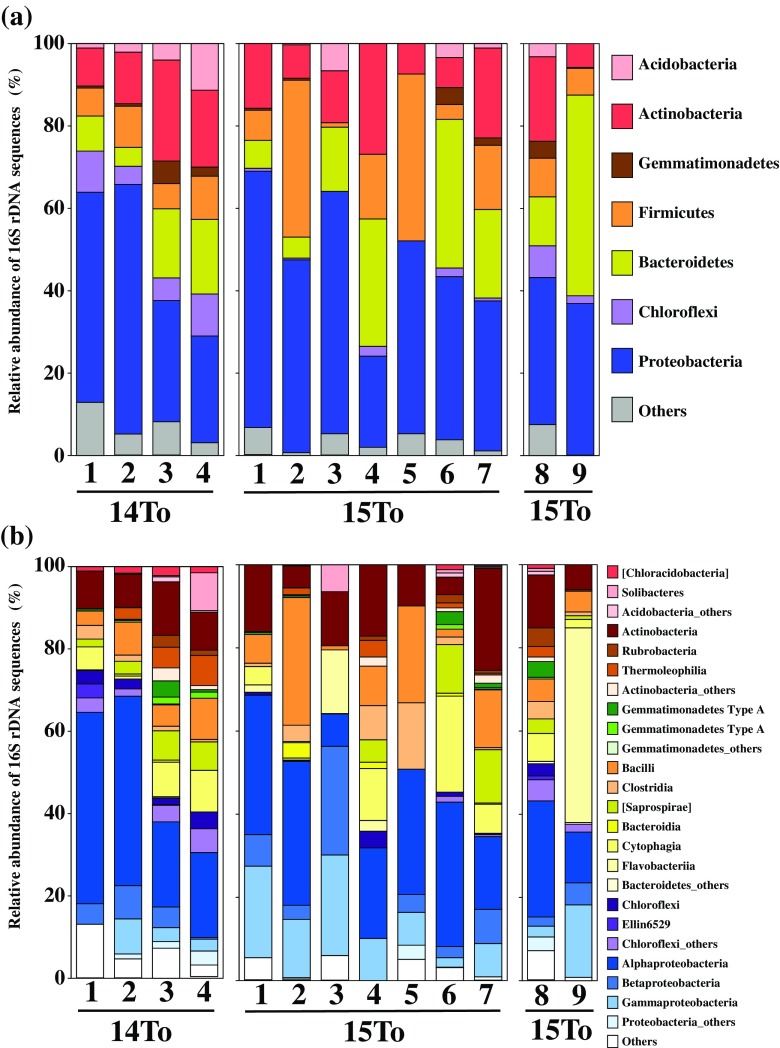
Asian dust events transport the airborne bacteria in Chinese desert regions as well as mineral particles and influence downwind area varying biological ecosystems and climate changes. However, the airborne bacterial dynamics were rarely investigated in the Gobi desert area, where dust events are highly frequent. In this study, air samplings were sequentially performed at a 2-m high above the ground at the sampling site located in desert area (Tsogt-Ovoo of Gobi desert; Mongolia 44.2304°N, 105.1700°E). During the dust event days, the bacterial cells and mineral particles increased to more than tenfold of concentrations. MiSeq sequencing targeting 16S ribosomal DNA revealed that the airborne bacteria in desert area mainly belonged to the classes , , , , , , , and The bacterial community structures were different between dust events and non-dust events. The air samples collected at the dust events indicated high abundance rates of , which were reported to dominate on the leaf surfaces of plants or in the saline lake environments. After the dust events, the members of () and , which are known to form endospore and attach with coarse particles, respectively, increased their relative abundances in the air samples. Presumably, the bacterial compositions and diversities in atmosphere significantly vary during dust events, which carry some particles from grassland (phyllo-sphere), dry lake, and sand surfaces, as well as some bacterial populations such as and maintain in the atmosphere for longer time.
亚洲沙尘事件会传输中国沙漠地区的空气传播细菌以及矿物颗粒,并影响下风区域,改变生物生态系统和气候变化。然而,在沙尘事件频繁发生的戈壁沙漠地区,空气传播细菌的动态变化很少被研究。在本研究中,在位于沙漠地区(蒙古戈壁沙漠的Tsogt - Ovoo;北纬44.2304°,东经105.1700°)的采样点,于离地面2米高处依次进行空气采样。在沙尘事件发生的日子里,细菌细胞和矿物颗粒的浓度增加到了十倍以上。针对16S核糖体DNA的MiSeq测序显示,沙漠地区的空气传播细菌主要属于 、 、 、 、 、 、 和 纲。沙尘事件和非沙尘事件期间的细菌群落结构不同。在沙尘事件期间采集的空气样本显示 的丰度很高,据报道该菌在植物叶面或盐湖环境中占主导地位。沙尘事件过后,已知分别能形成芽孢和附着在粗颗粒上的 () 和 的成员在空气样本中的相对丰度增加。据推测,沙尘事件期间大气中的细菌组成和多样性会显著变化,沙尘事件会携带来自草原(叶际)、干涸湖泊和沙地表面的一些颗粒,以及一些细菌种群,如 和 会在大气中维持较长时间。