
灵芝破壁孢子水提取物对结直肠癌的体内外抗癌作用
Anticarcinogenic effects of water extract of sporoderm-broken spores of Ganoderma lucidum on colorectal cancer in vitro and in vivo.
作者信息
Na Kun, Li Kang, Sang Tingting, Wu Kaikai, Wang Ying, Wang Xingya
机构信息
College of Pharmaceutical Sciences, Zhejiang Chinese Medical University, Hangzhou, Zhejiang 310053, P.R. China.
出版信息
Int J Oncol. 2017 May;50(5):1541-1554. doi: 10.3892/ijo.2017.3939. Epub 2017 Mar 29.
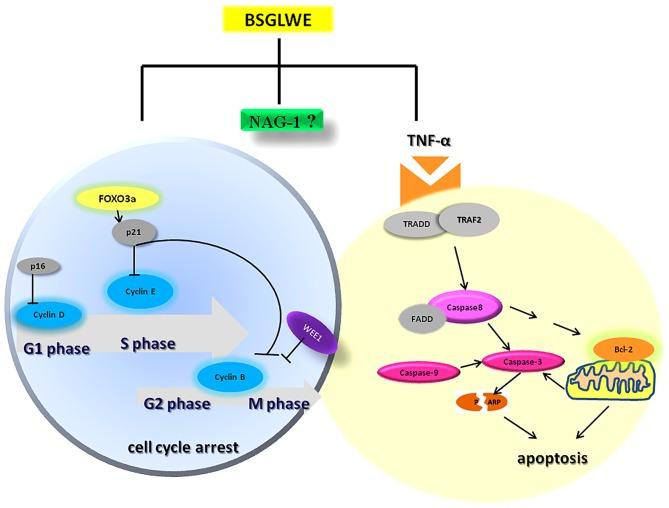
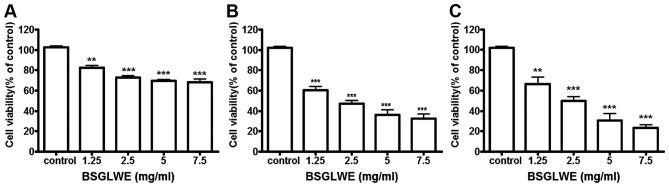
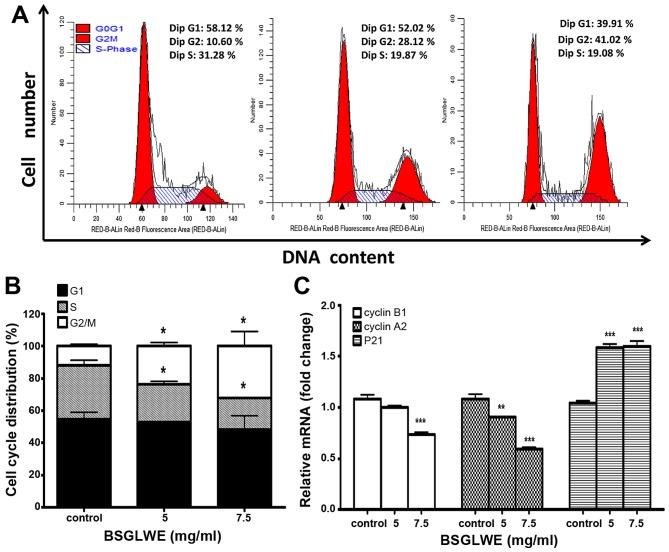
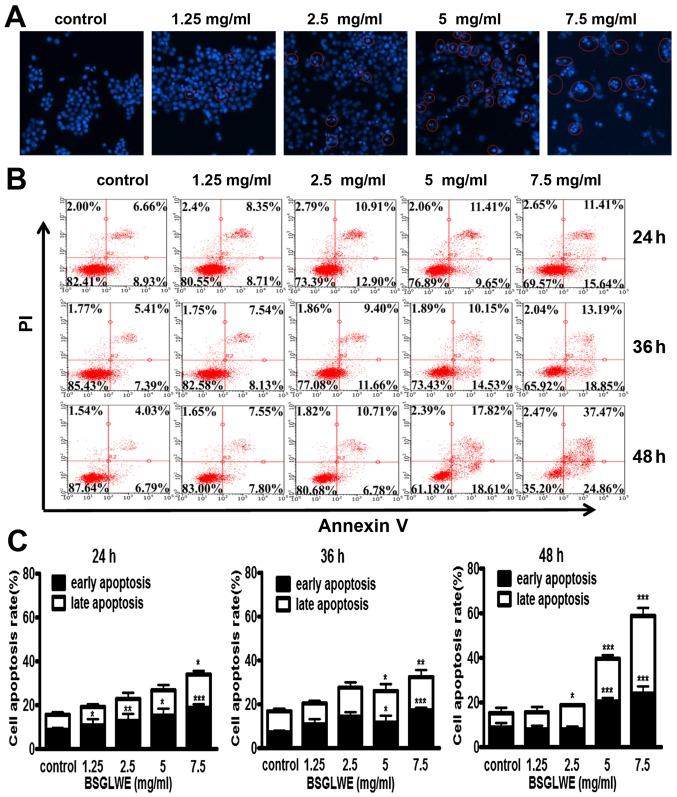
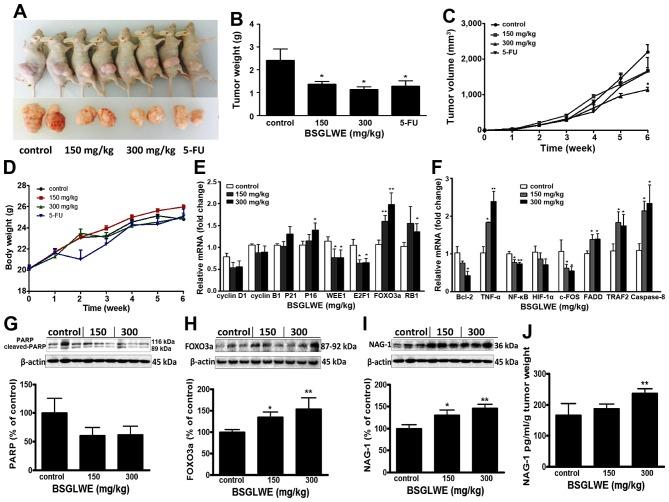
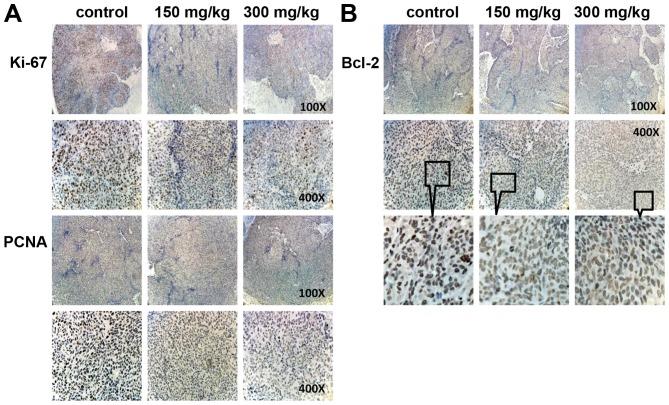
Ganoderma lucidum (G. lucidum) polysaccharides (GLPs) have been used as traditional Chinese medicine for cancer prevention for many years. However, the mechanism by which GLP exerts its chemopreventive activities remains elusive. In addition, it is unclear whether sporoderm-broken spores of G. lucidum water extract (BSGLWE), which contains mainly GLPs, has anticancer effects on colorectal cancer. The present study investigated the anticancer effects and potential mechanisms of BSGLWE on colorectal cancer in vivo and in vitro. Our results showed that BSGLWE significantly inhibited colorectal cancer HCT116 cell viability in a time- and dose-dependent manner. Flow cytometry analysis indicated that BSGLWE disrupted cell cycle progression at G2/M phase via downregulation of cyclin B1 and cyclin A2, and upregulation of P21 at mRNA levels. Moreover, BSGLWE induced apoptosis by decreasing Bcl-2 and survivin at mRNA levels, and reduced Bcl-2, PARP, pro-caspase-3 and pro-caspase-9 at protein levels. Furthermore, BSGLWE suppressed tumor growth in vivo by regulating the expression of genes and proteins associated with cell cycle and apoptosis, which was further confirmed by a reduction of Ki67, PCNA, and Bcl-2 expression as determined by immunohistochemistry staining. NSAID activated gene-1 (NAG-1), a pro-apoptotic gene, was significantly upregulated in vivo and in vitro upon BSGLWE treatment at both mRNA and protein levels. In addition, the relative amounts of secreted NAG-1 in cell culture medium or serum of nude mice were all upregulated upon BSGLWE treatments, suggesting a role of NAG-1 in BSGLWE-induced anticolorectal cancer activity. This is the first study to show that BSGLWE inhibits colorectal cancer carcinogenesis through regulating genes responsible for cell proliferation, cell cycle and apoptosis cascades. These findings indicate that BSGLWE possesses chemopreventive potential in colorectal cancer which may serve as a promising anticancer agent for clinical applications.
灵芝多糖(GLPs)作为预防癌症的传统中药已应用多年。然而,GLP发挥化学预防作用的机制仍不清楚。此外,主要含有GLPs的灵芝破壁孢子水提取物(BSGLWE)对结直肠癌是否具有抗癌作用尚不清楚。本研究在体内和体外研究了BSGLWE对结直肠癌的抗癌作用及其潜在机制。我们的结果表明,BSGLWE以时间和剂量依赖性方式显著抑制结直肠癌HCT116细胞活力。流式细胞术分析表明,BSGLWE通过下调细胞周期蛋白B1和细胞周期蛋白A2以及在mRNA水平上调P21来扰乱细胞周期进程,使其停滞在G2/M期。此外,BSGLWE通过在mRNA水平降低Bcl-2和survivin以及在蛋白质水平降低Bcl-2、PARP、前体半胱天冬酶-3和前体半胱天冬酶-9来诱导细胞凋亡。此外,BSGLWE通过调节与细胞周期和凋亡相关的基因和蛋白质的表达来抑制体内肿瘤生长,免疫组织化学染色显示Ki67, PCNA和Bcl-2表达降低进一步证实了这一点。非甾体抗炎药激活基因-1(NAG-1)是一种促凋亡基因,在体内和体外经BSGLWE处理后,其mRNA和蛋白质水平均显著上调。此外,BSGLWE处理后,细胞培养基或裸鼠血清中分泌的NAG-1的相对含量均上调,表明NAG-1在BSGLWE诱导的抗结直肠癌活性中发挥作用。这是第一项表明BSGLWE通过调节负责细胞增殖、细胞周期和凋亡级联反应的基因来抑制结直肠癌发生的研究。这些发现表明,BSGLWE在结直肠癌中具有化学预防潜力,可能成为一种有前途的临床抗癌药物。
 Zotero 插件