Dasgupta Atreyi, Nomura Motonari, Shuck Ryan, Yustein Jason
Department of Pediatrics, Texas Children's Cancer and Hematology Centers, Baylor College of Medicine, Houston, TX 77030, USA.
Integrative Molecular and Biomedical Sciences, Baylor College of Medicine, Houston, TX 77030, USA.
Int J Mol Sci. 2016 Dec 23;18(1):23. doi: 10.3390/ijms18010023.
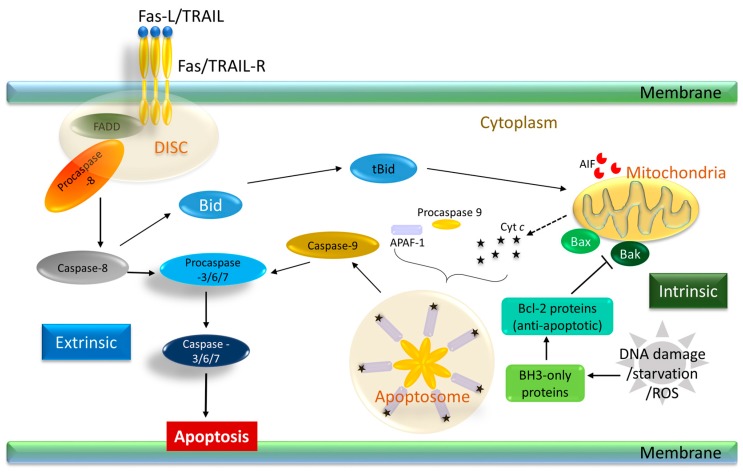
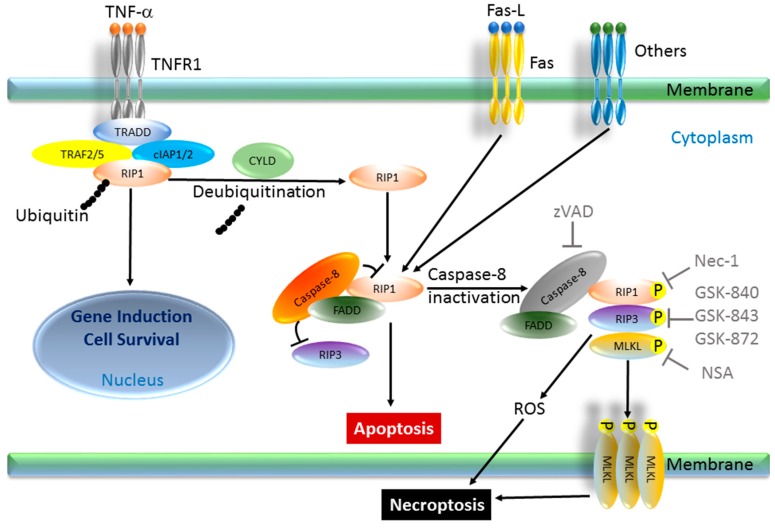
Apoptosis, and the more recently discovered necroptosis, are two avenues of programmed cell death. Cancer cells survive by evading these two programs, driven by oncogenes and tumor suppressor genes. While traditional therapy using small molecular inhibitors and chemotherapy are continuously being utilized, a new and exciting approach is actively underway by identifying and using synergistic relationship between driver and rescue genes in a cancer cell. Through these synthetic lethal relationships, we are gaining tremendous insights into tumor vulnerabilities and specific molecular avenues for induction of programmed cell death. In this review, we briefly discuss the two cell death processes and cite examples of such synergistic manipulations for therapeutic purposes.
凋亡以及最近发现的坏死性凋亡,是程序性细胞死亡的两种途径。癌细胞通过逃避由癌基因和肿瘤抑制基因驱动的这两种程序而存活。虽然使用小分子抑制剂和化疗的传统疗法仍在持续应用,但一种新的、令人兴奋的方法正在积极开展,即识别并利用癌细胞中驱动基因和挽救基因之间的协同关系。通过这些合成致死关系,我们对肿瘤易感性以及诱导程序性细胞死亡的特定分子途径有了深刻的认识。在本综述中,我们简要讨论这两种细胞死亡过程,并列举此类用于治疗目的的协同操作实例。