Martinez-Jimenez Celia Pilar, Eling Nils, Chen Hung-Chang, Vallejos Catalina A, Kolodziejczyk Aleksandra A, Connor Frances, Stojic Lovorka, Rayner Timothy F, Stubbington Michael J T, Teichmann Sarah A, de la Roche Maike, Marioni John C, Odom Duncan T
University of Cambridge, Cancer Research UK Cambridge Institute, Robinson Way, Cambridge, CB2 0RE, UK.
Wellcome Trust Sanger Institute, Wellcome Trust Genome Campus, Hinxton, Cambridge CB10 1SA, UK.
Science. 2017 Mar 31;355(6332):1433-1436. doi: 10.1126/science.aah4115.
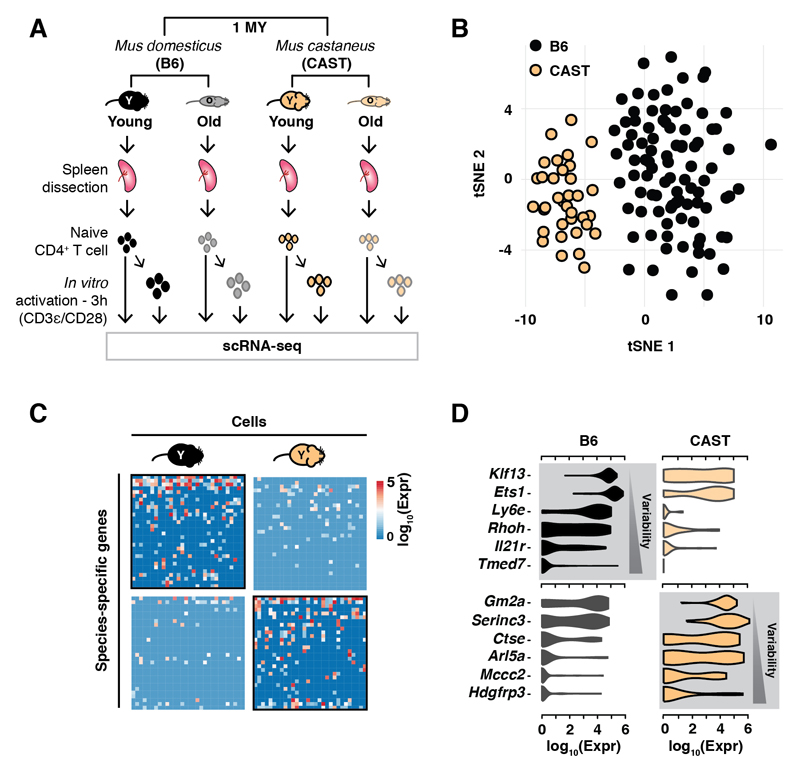
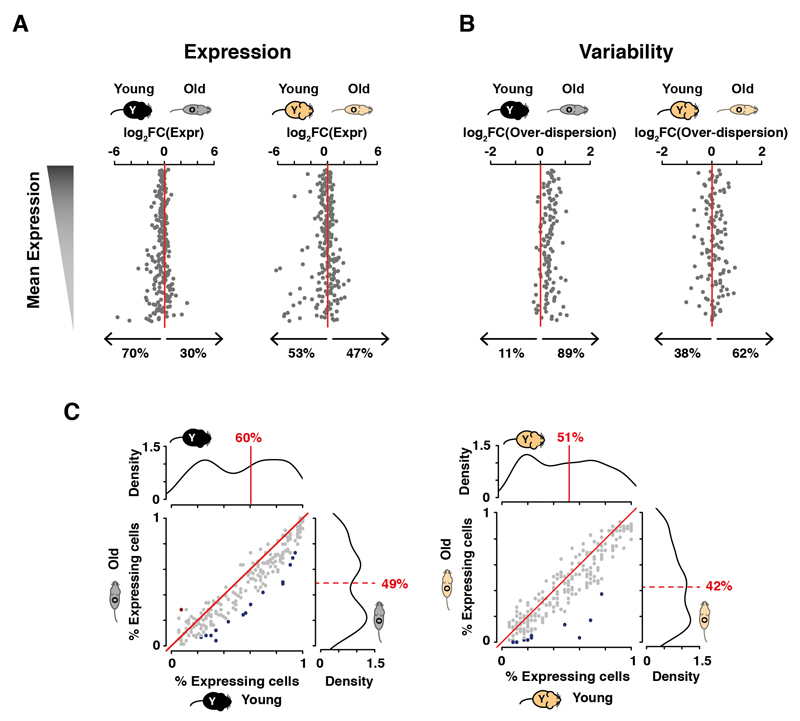
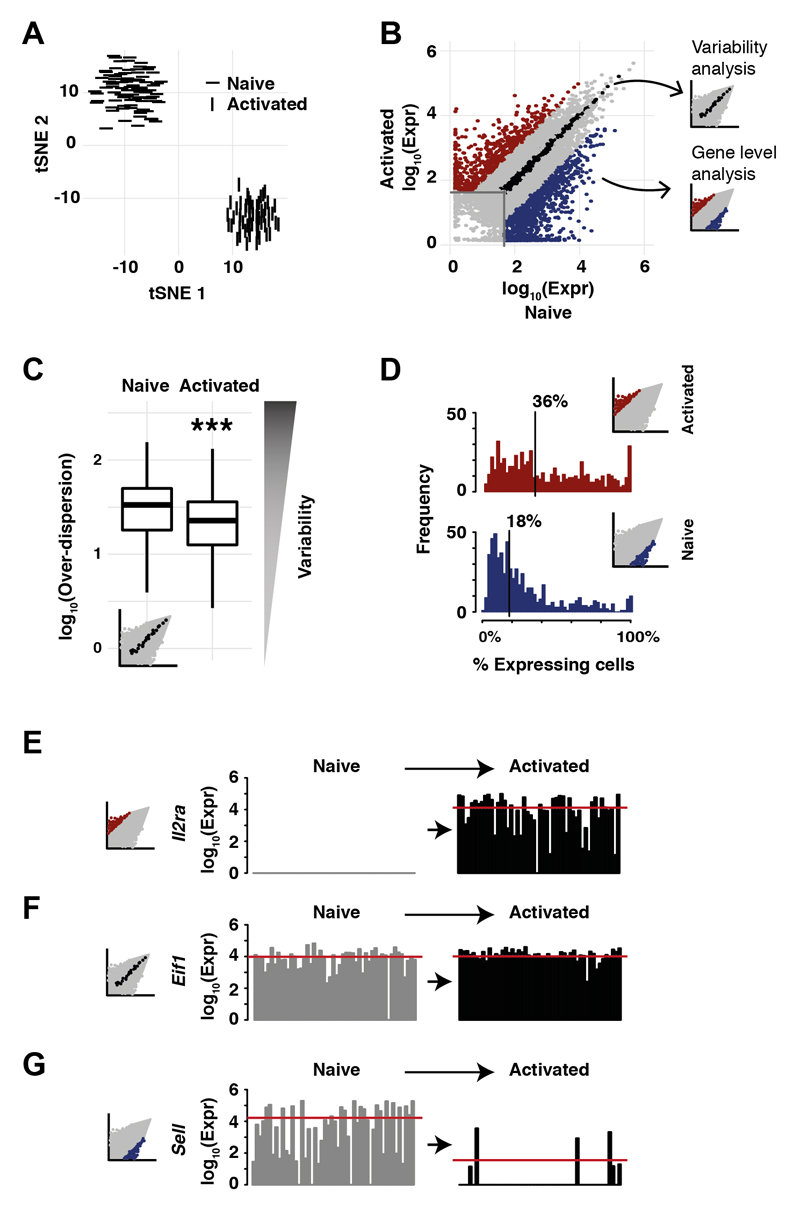
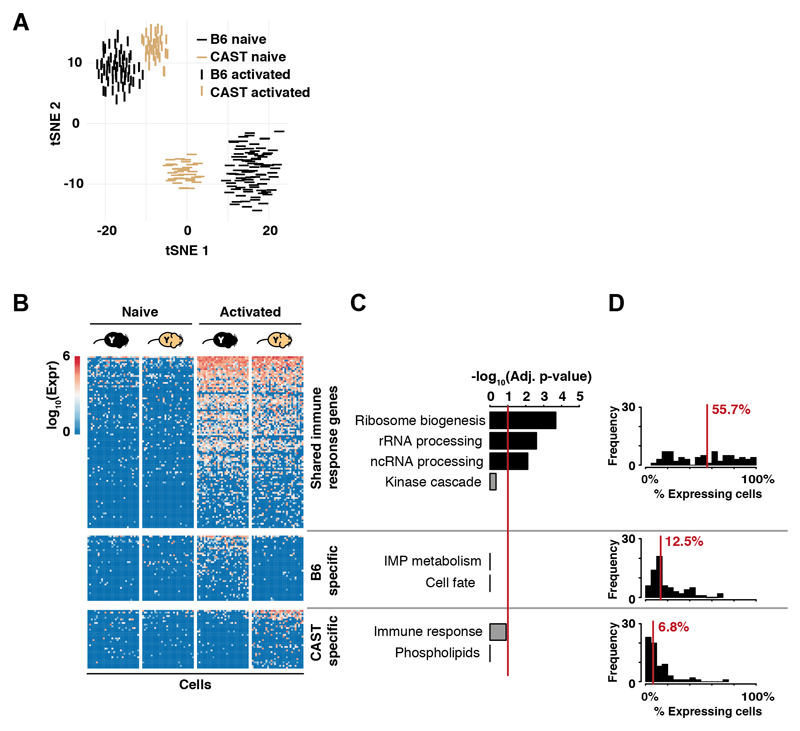
Aging is characterized by progressive loss of physiological and cellular functions, but the molecular basis of this decline remains unclear. We explored how aging affects transcriptional dynamics using single-cell RNA sequencing of unstimulated and stimulated naïve and effector memory CD4 T cells from young and old mice from two divergent species. In young animals, immunological activation drives a conserved transcriptomic switch, resulting in tightly controlled gene expression characterized by a strong up-regulation of a core activation program, coupled with a decrease in cell-to-cell variability. Aging perturbed the activation of this core program and increased expression heterogeneity across populations of cells in both species. These discoveries suggest that increased cell-to-cell transcriptional variability will be a hallmark feature of aging across most, if not all, mammalian tissues.
衰老的特征是生理和细胞功能的逐渐丧失,但其衰退的分子基础仍不清楚。我们利用来自两个不同物种的年轻和年老小鼠的未刺激和刺激的初始及效应记忆CD4 T细胞的单细胞RNA测序,探索了衰老如何影响转录动力学。在年轻动物中,免疫激活驱动一个保守的转录组转换,导致基因表达受到严格控制,其特征是核心激活程序强烈上调,同时细胞间变异性降低。衰老扰乱了这个核心程序的激活,并增加了两个物种细胞群体中的表达异质性。这些发现表明,细胞间转录变异性增加将是大多数(如果不是全部)哺乳动物组织衰老的一个标志性特征。