Centre for Biomarker Research and Department of Pharmacy, School of Applied Sciences, University of Huddersfield, Huddersfield, HD1 3DH, UK.
Pharmacology and Therapeutics, National University of Ireland, Galway, Ireland.
Mol Neurobiol. 2018 Mar;55(3):2420-2430. doi: 10.1007/s12035-017-0492-8. Epub 2017 Mar 30.
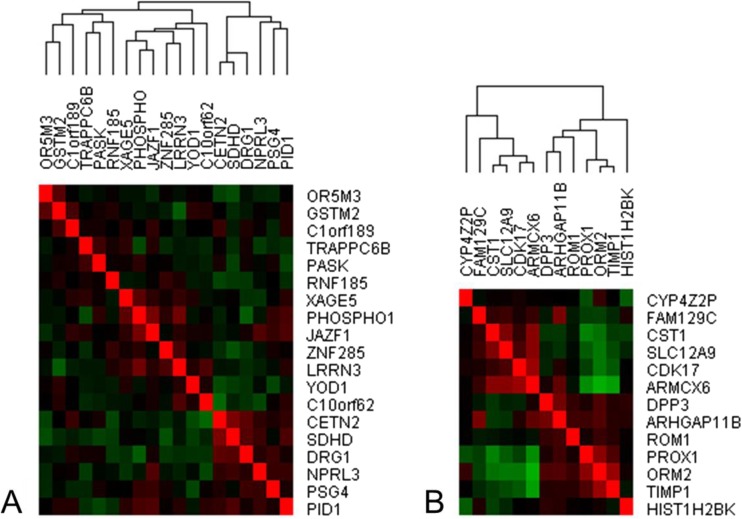
Chronic neuropathic pain (CNP) is one of the most significant unmet clinical needs in modern medicine. Alongside the lack of effective treatments, there is a great deficit in the availability of objective diagnostic methods to reliably facilitate an accurate diagnosis. We therefore aimed to determine the feasibility of a simple diagnostic test by analysing differentially expressed genes in the blood of patients diagnosed with CNP of the lower back and compared to healthy human controls. Refinement of microarray expression data was performed using correlation analysis with 3900 human 2-colour microarray experiments. Selected genes were analysed in the dorsal horn of Sprague-Dawley rats after L5 spinal nerve ligation (SNL), using qRT-PCR and ddPCR, to determine possible associations with pathophysiological mechanisms underpinning CNP and whether they represent translational biomarkers of CNP. We found that of the 15 potential biomarkers identified, tissue inhibitor of matrix metalloproteinase-1 (TIMP1) gene expression was upregulated in chronic neuropathic lower back pain (CNBP) (p = 0.0049) which positively correlated (R = 0.68, p = ≤0.05) with increased plasma TIMP1 levels in this group (p = 0.0433). Moreover, plasma TIMP1 was also significantly upregulated in CNBP than chronic inflammatory lower back pain (p = 0.0272). In the SNL model, upregulation of the Timp1 gene was also observed (p = 0.0058) alongside a strong trend for the upregulation of melanocortin 1 receptor (p = 0.0847). Our data therefore highlights several genes that warrant further investigation, and of these, TIMP1 shows the greatest potential as an accessible and translational CNP biomarker.
慢性神经性疼痛(CNP)是现代医学中未满足的最重要临床需求之一。除了缺乏有效治疗方法外,缺乏可靠地促进准确诊断的客观诊断方法也是一个巨大的缺陷。因此,我们旨在通过分析诊断为慢性神经性下腰痛(CNBP)的患者的血液中差异表达的基因,确定一种简单诊断测试的可行性,并将其与健康人类对照进行比较。使用与 3900 个人类双色微阵列实验的相关分析来改进微阵列表达数据。使用 qRT-PCR 和 ddPCR 分析 L5 脊神经结扎(SNL)后 Sprague-Dawley 大鼠背角中选定的基因,以确定它们与 CNP 潜在病理生理机制的可能关联,以及它们是否代表 CNP 的转化生物标志物。我们发现,在 15 个潜在的生物标志物中,基质金属蛋白酶组织抑制剂 1(TIMP1)基因的表达在慢性神经性下腰痛(CNBP)中上调(p=0.0049),这与该组中血浆 TIMP1 水平的升高呈正相关(R=0.68,p≤0.05)(p=0.0433)。此外,CNBP 中的血浆 TIMP1 也明显高于慢性炎症性下腰痛(p=0.0272)。在 SNL 模型中,Timp1 基因的上调也观察到(p=0.0058),同时黑素皮质素 1 受体(p=0.0847)也有上调的强烈趋势。因此,我们的数据突出了几个值得进一步研究的基因,其中 TIMP1 作为一种可及性和转化性 CNP 生物标志物显示出最大的潜力。