Physics Department "Ettore Pancini", University of Naples Federico II, Naples, Italy.
DIEI, University of Cassino and Southern Lazio, Cassino, Italy.
Sci Rep. 2017 Mar 31;7:45299. doi: 10.1038/srep45299.
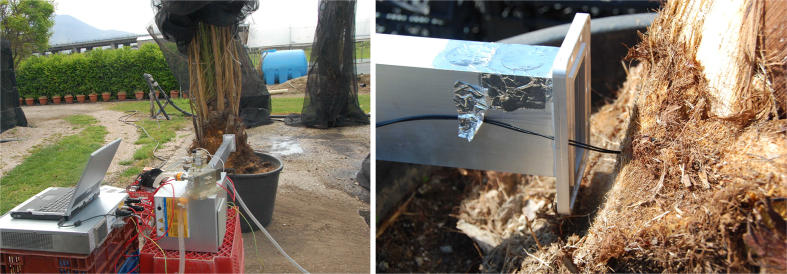
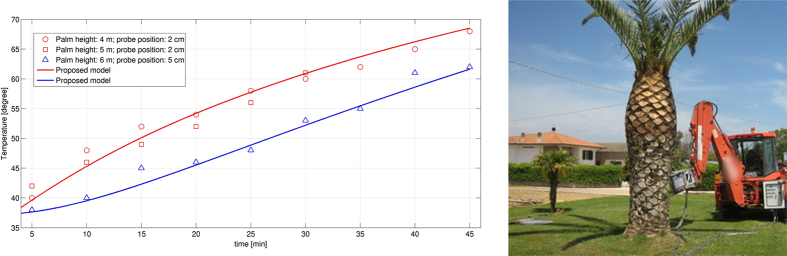
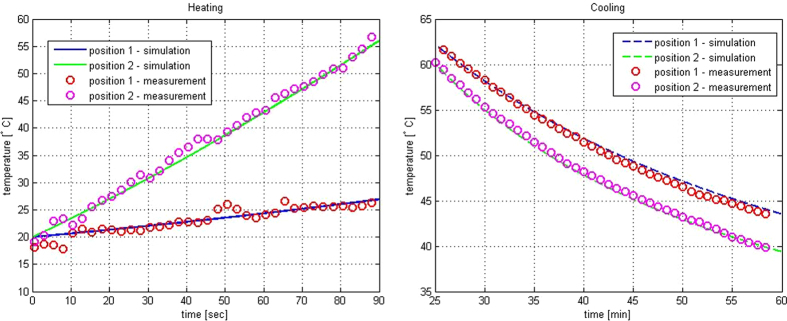
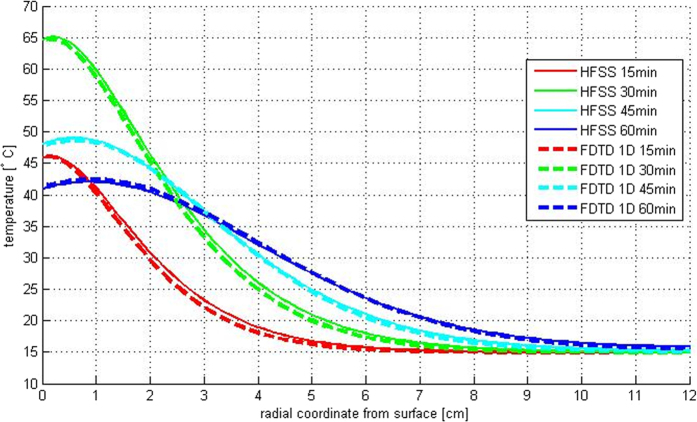
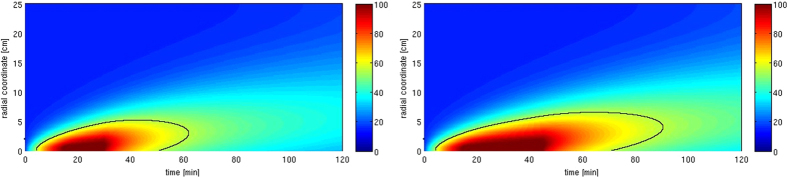
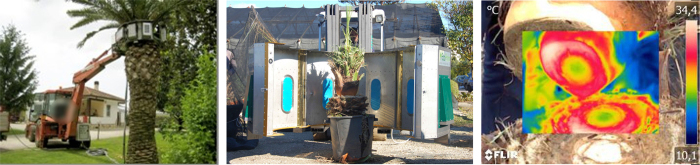
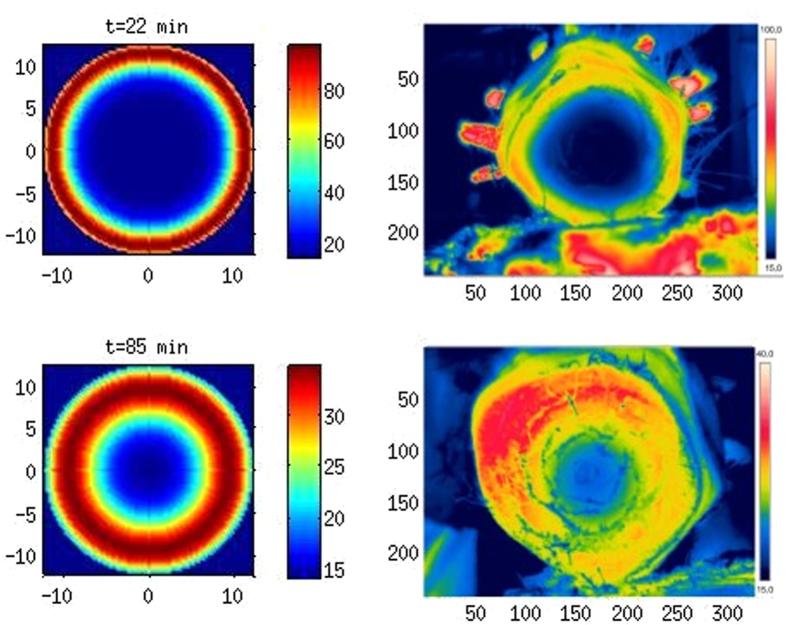
The invasive Red Palm Weevil is the major pest of palms. Several control methods have been applied, however concern is raised regarding the treatments that can cause significant environmental pollution. In this context the use of microwaves is particularly attractive. Microwave heating applications are increasingly proposed in the management of a wide range of agricultural and wood pests, exploiting the thermal death induced in the insects that have a thermal tolerance lower than that of the host matrices. This paper describes research aiming to combat the Red Palm pest using microwave heating systems. An electromagnetic-thermal model was developed to better control the temperature profile inside the palm tissues. In this process both electromagnetic and thermal parameters are involved, the latter being particularly critical depending on plant physiology. Their evaluation was carried out by fitting experimental data and the thermal model with few free parameters. The results obtained by the simplified model well match with both that of a commercial software 3D model and measurements on treated Phoenix canariensis palms with a ring microwave applicator. This work confirms that microwave heating is a promising, eco-compatible solution to fight the spread of weevil.
入侵的红棕榈象鼻虫是棕榈树的主要害虫。已经应用了几种控制方法,但是对于可能导致严重环境污染的处理方法存在担忧。在这种情况下,微波的使用特别有吸引力。微波加热应用在广泛的农业和木材害虫的管理中越来越多地被提出,利用昆虫在比宿主基质更低的热容忍度下产生的热致死。本文描述了使用微波加热系统来防治红棕榈害虫的研究。开发了一个电磁-热模型来更好地控制棕榈组织内部的温度分布。在此过程中,涉及到电磁和热参数,后者根据植物生理学特别关键。通过拟合实验数据和具有少量自由参数的热模型来评估它们。简化模型得到的结果与商业软件 3D 模型和用环形微波辐射器处理的凤凰木的测量结果非常吻合。这项工作证实,微波加热是一种有前途的、生态兼容的解决方案,可以防止象鼻虫的传播。