Martín Azahara C, Rey María-Dolores, Shaw Peter, Moore Graham
John Innes Centre, Norwich Research Park, Norwich, NR4 7UH, UK.
Chromosoma. 2017 Dec;126(6):669-680. doi: 10.1007/s00412-017-0630-0. Epub 2017 Apr 1.
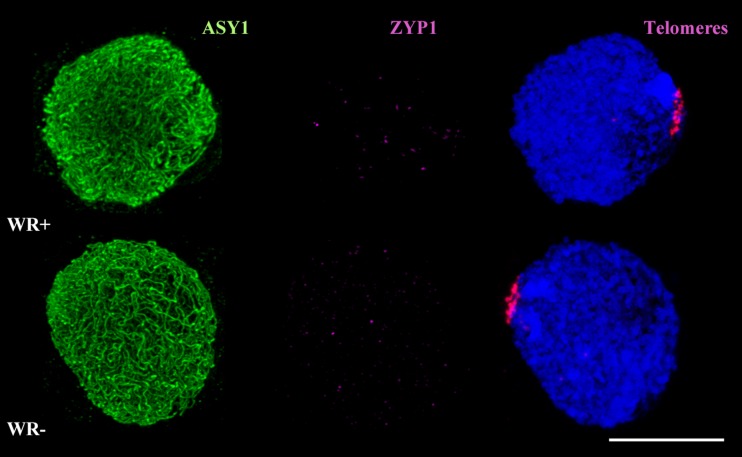
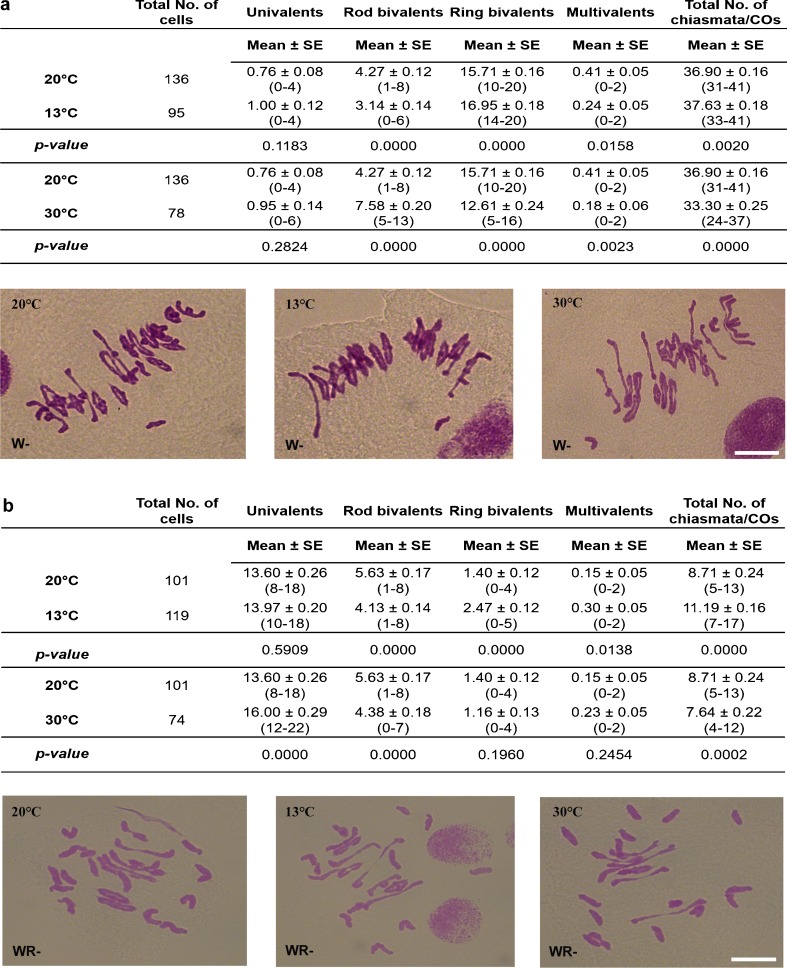
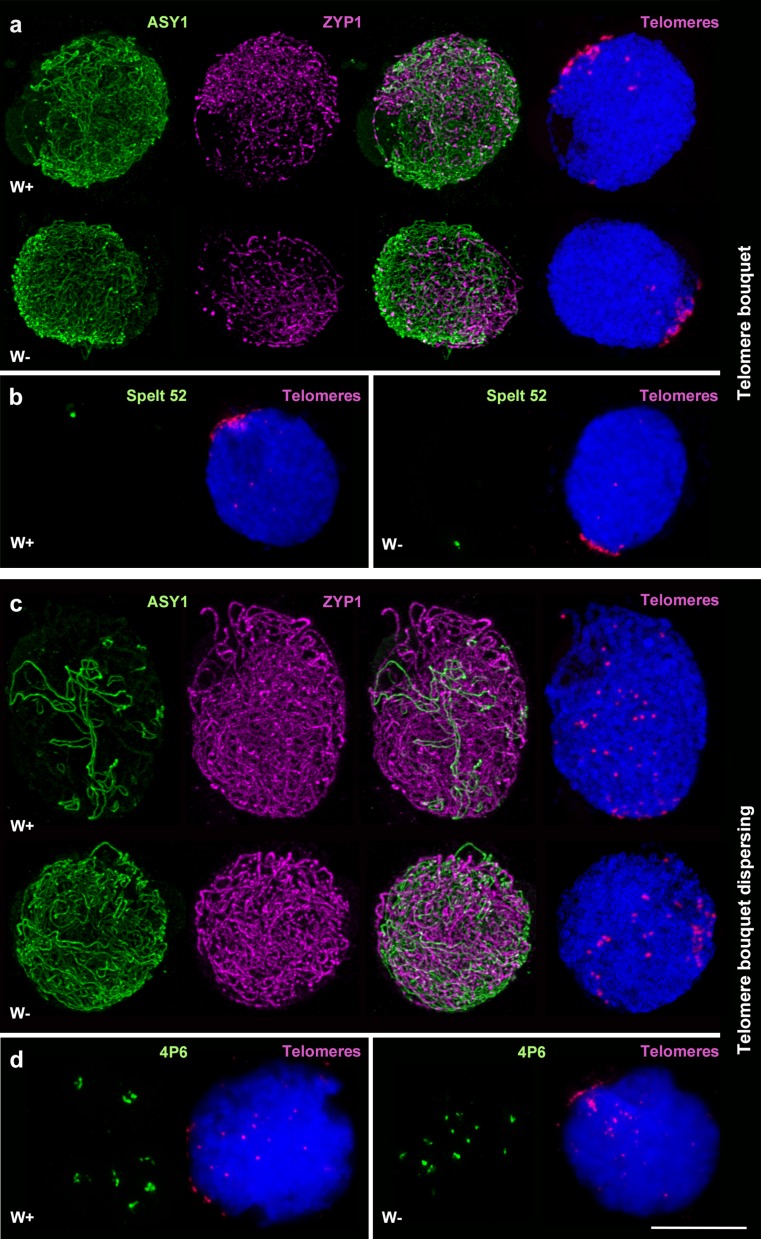
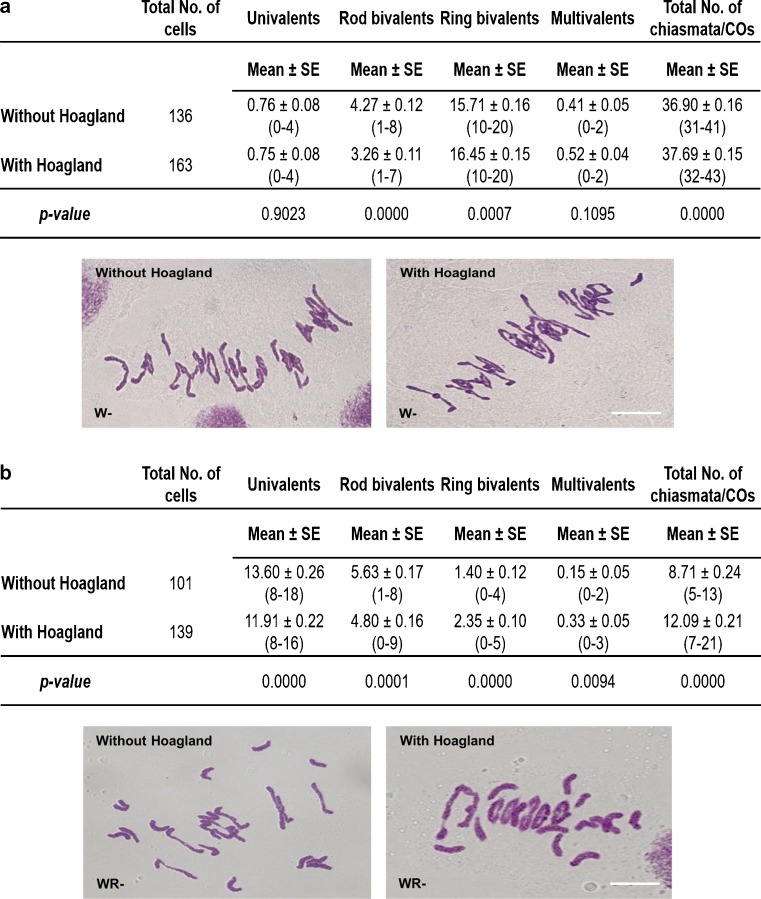
Allopolyploids must possess a mechanism for facilitating synapsis and crossover (CO) between homologues, in preference to homoeologues (related chromosomes), to ensure successful meiosis. In hexaploid wheat, the Ph1 locus has a major effect on the control of these processes. Studying a wheat mutant lacking Ph1 provides an opportunity to explore the underlying mechanisms. Recently, it was proposed that Ph1 stabilises wheat during meiosis, both by promoting homologue synapsis during early meiosis and preventing MLH1 sites on synapsed homoeologues from becoming COs later in meiosis. Here, we explore these two effects and demonstrate firstly that whether or not Ph1 is present, synapsis between homoeologues does not take place during the telomere bouquet stage, with only homologous synapsis taking place during this stage. Furthermore, in wheat lacking Ph1, overall synapsis is delayed with respect to the telomere bouquet, with more synapsis occurring after the bouquet stage, when homoeologous synapsis is also possible. Secondly, we show that in the absence of Ph1, we can increase the number of MLH1 sites progressing to COs by altering environmental growing conditions; we show that higher nutrient levels in the soil or lower temperatures increase the level of both homologue and homoeologue COs. These observations suggest opportunities to improve the exploitation of the Ph1 wheat mutant in breeding programmes.
异源多倍体必须具备一种机制,以促进同源染色体之间的联会和交叉互换(CO),而优先于部分同源染色体(相关染色体)之间的这些过程,以确保减数分裂成功。在六倍体小麦中,Ph1位点对这些过程的控制具有主要影响。研究缺乏Ph1的小麦突变体为探索其潜在机制提供了一个机会。最近有人提出,Ph1在减数分裂过程中稳定小麦,一方面是通过在减数分裂早期促进同源染色体联会,另一方面是防止联会的部分同源染色体上的MLH1位点在减数分裂后期变成交叉互换位点。在此,我们探究这两种作用,并首先证明,无论Ph1是否存在,部分同源染色体之间在端粒花束期都不会发生联会,此阶段仅发生同源染色体联会。此外,在缺乏Ph1的小麦中,相对于端粒花束而言,整体联会延迟,在花束期之后发生更多联会,此时部分同源染色体联会也有可能发生。其次,我们表明,在没有Ph1的情况下,我们可以通过改变环境生长条件来增加进展为交叉互换位点的MLH1位点数量;我们表明,土壤中较高的养分水平或较低的温度会增加同源染色体和部分同源染色体交叉互换的水平。这些观察结果为在育种计划中更好地利用Ph1小麦突变体提供了机会。