Werfel Thomas A, Jackson Meredith A, Kavanaugh Taylor E, Kirkbride Kellye C, Miteva Martina, Giorgio Todd D, Duvall Craig
Department of Biomedical Engineering, Vanderbilt Institute for Nanoscale Science and Engineering, Vanderbilt University School of Engineering, Nashville, TN, USA.
Department of Biomedical Engineering, Vanderbilt Institute for Nanoscale Science and Engineering, Vanderbilt University School of Engineering, Nashville, TN, USA.
J Control Release. 2017 Jun 10;255:12-26. doi: 10.1016/j.jconrel.2017.03.389. Epub 2017 Mar 31.
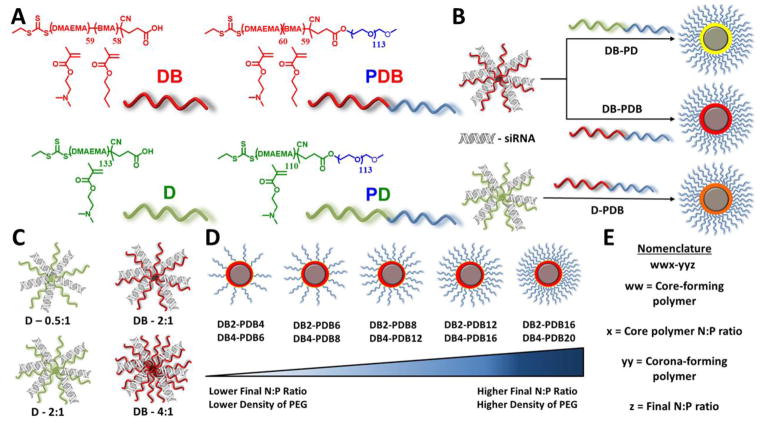
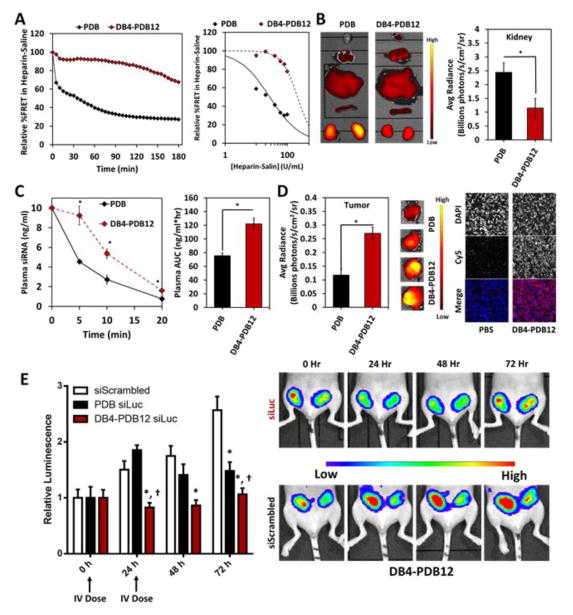
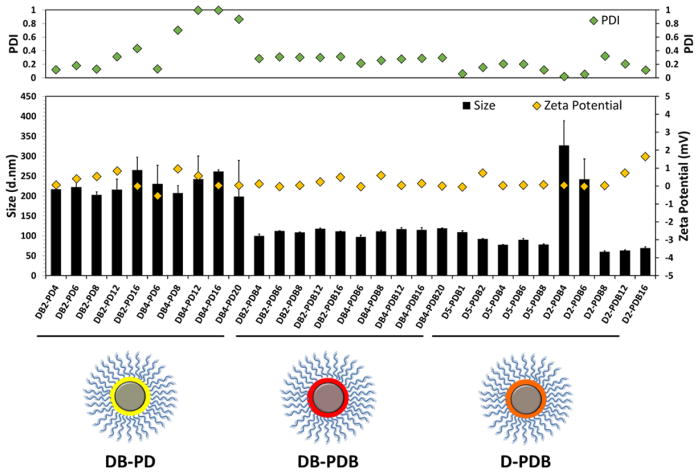
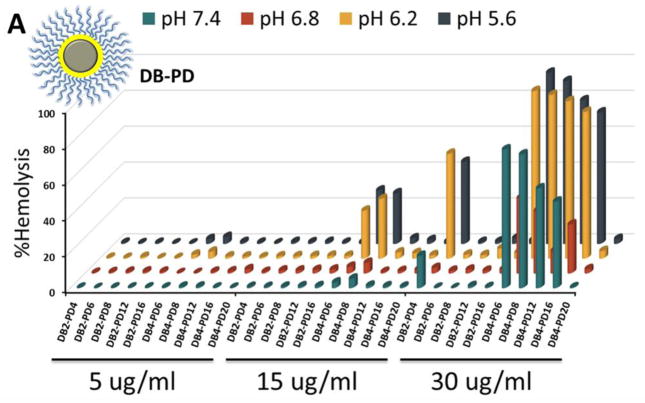
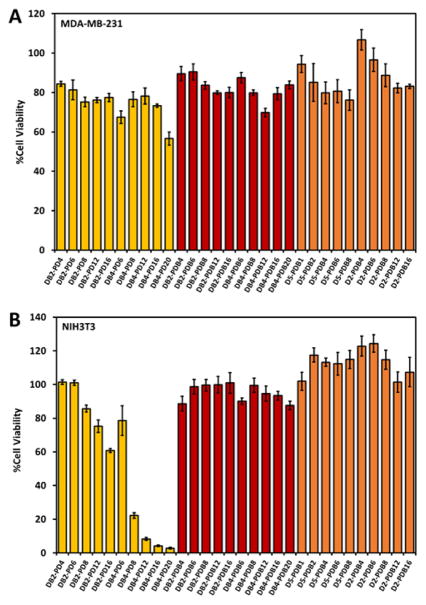
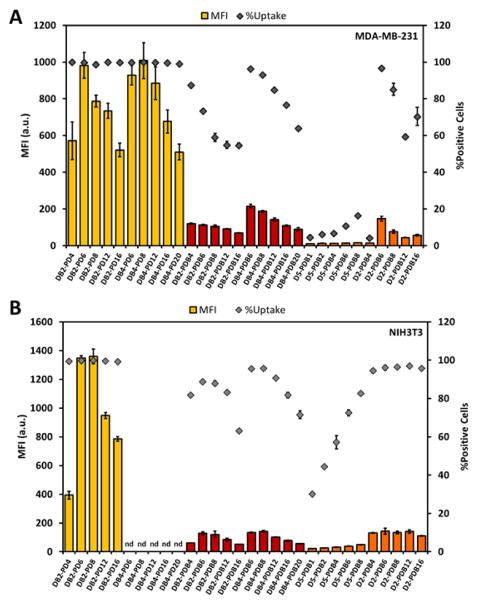
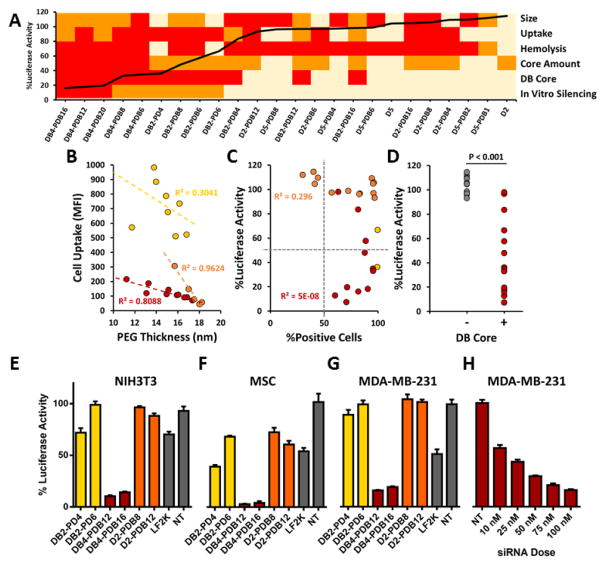
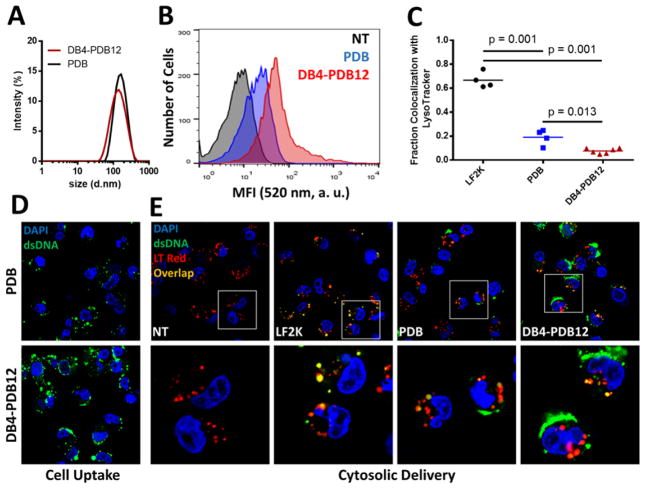
A rationally-designed library of ternary siRNA polyplexes was developed and screened for gene silencing efficacy in vitro and in vivo with the goal of overcoming both cell-level and systemic delivery barriers. [2-(dimethylamino)ethyl methacrylate] (DMAEMA) was homopolymerized or copolymerized (50mol% each) with butyl methacrylate (BMA) from a reversible addition - fragmentation chain transfer (RAFT) chain transfer agent, with and without pre-conjugation to polyethylene glycol (PEG). Both single block polymers were tested as core-forming units, and both PEGylated, diblock polymers were screened as corona-forming units. Ternary siRNA polyplexes were assembled with varied amounts and ratios of core-forming polymers to PEGylated corona-forming polymers. The impact of polymer composition/ratio, hydrophobe (BMA) placement, and surface PEGylation density was correlated to important outcomes such as polyplex size, stability, pH-dependent membrane disruptive activity, biocompatibility, and gene silencing efficiency. The lead formulation, DB4-PDB12, was optimally PEGylated not only to ensure colloidal stability (no change in size by DLS between 0 and 24h) and neutral surface charge (0.139mV) but also to maintain higher cell uptake (>90% positive cells) than the most densely PEGylated particles. The DB4-PDB12 polyplexes also incorporated BMA in both the polyplex core- and corona-forming polymers, resulting in robust endosomolysis and in vitro siRNA silencing (~85% protein level knockdown) of the model gene luciferase across multiple cell types. Further, the DB4-PDB12 polyplexes exhibited greater stability, increased blood circulation time, reduced renal clearance, increased tumor biodistribution, and greater silencing of luciferase compared to our previously-optimized, binary parent formulation following intravenous (i.v.) delivery. This polyplex library approach enabled concomitant optimization of the composition and ratio of core- and corona-forming polymers (indirectly tuning PEGylation density) and identification of a ternary nanomedicine optimized to overcome important siRNA delivery barriers in vitro and in vivo.
为了克服细胞水平和全身递送障碍,我们开发并筛选了一个经过合理设计的三元 siRNA 多聚体文库,以评估其在体外和体内的基因沉默效果。[2-(二甲基氨基)乙基甲基丙烯酸酯](DMAEMA)通过可逆加成-断裂链转移(RAFT)链转移剂与甲基丙烯酸丁酯(BMA)进行均聚或共聚(各占 50mol%),并在有或没有预先与聚乙二醇(PEG)共轭的情况下进行。两种单嵌段聚合物都作为核心形成单元进行测试,两种聚乙二醇化的双嵌段聚合物都作为冠层形成单元进行筛选。三元 siRNA 多聚体由不同数量和比例的核心形成聚合物与聚乙二醇化的冠层形成聚合物组装而成。聚合物组成/比例、疏水基团(BMA)的位置以及表面聚乙二醇化密度的影响与诸如多聚体大小、稳定性、pH 依赖性膜破坏活性、生物相容性和基因沉默效率等重要结果相关。先导制剂 DB4-PDB12 具有最佳的聚乙二醇化效果,不仅能确保胶体稳定性(0 至 24 小时内通过动态光散射测定的大小无变化)和中性表面电荷(0.139mV),而且与聚乙二醇化程度最高的颗粒相比,能保持更高的细胞摄取率(>90%阳性细胞)。DB4-PDB12 多聚体在多聚体核心形成聚合物和冠层形成聚合物中都包含 BMA,从而在多种细胞类型中实现了强大的内体溶解和对模型基因荧光素酶的体外 siRNA 沉默(~85%蛋白质水平敲低)。此外,与我们之前优化的二元母体制剂相比,DB4-PDB12 多聚体在静脉注射(i.v.)给药后表现出更高的稳定性、延长的血液循环时间、降低的肾清除率、增加的肿瘤生物分布以及更强的荧光素酶沉默效果。这种多聚体文库方法能够同时优化核心形成聚合物和冠层形成聚合物的组成和比例(间接调节聚乙二醇化密度),并鉴定出一种经过优化的三元纳米药物,以克服体外和体内重要的 siRNA 递送障碍。