Stafstrom Carl E, Staedtke Verena, Comi Anne M
Division of Pediatric Neurology, Department of Neurology, Johns Hopkins University School of Medicine , Baltimore, MD , USA.
Department of Neurology, Kennedy Krieger Institute, Johns Hopkins University School of Medicine , Baltimore, MD , USA.
Front Neurol. 2017 Mar 17;8:87. doi: 10.3389/fneur.2017.00087. eCollection 2017.
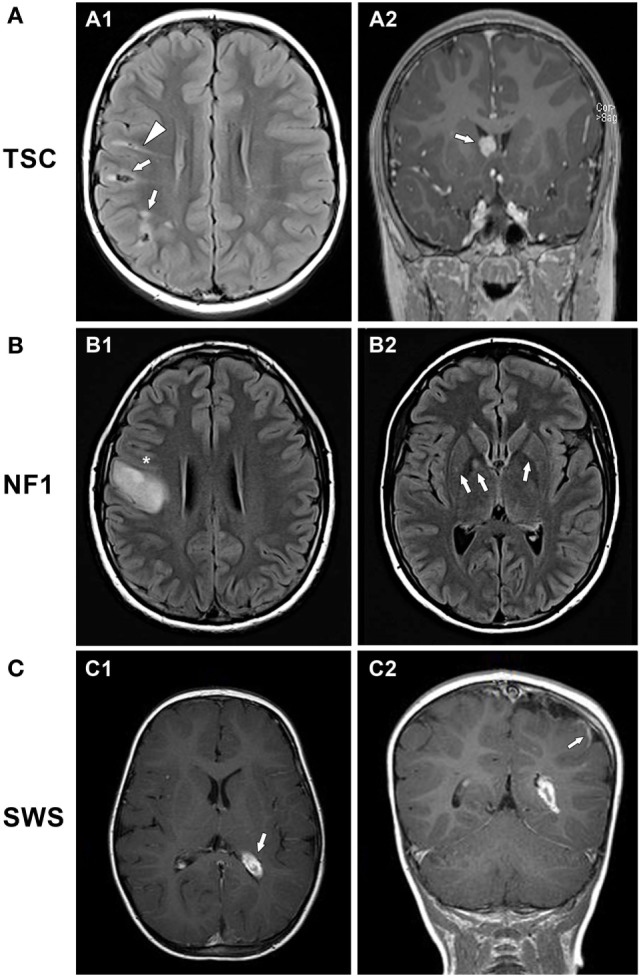
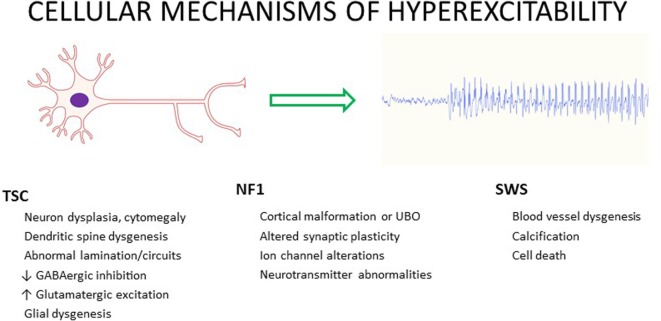
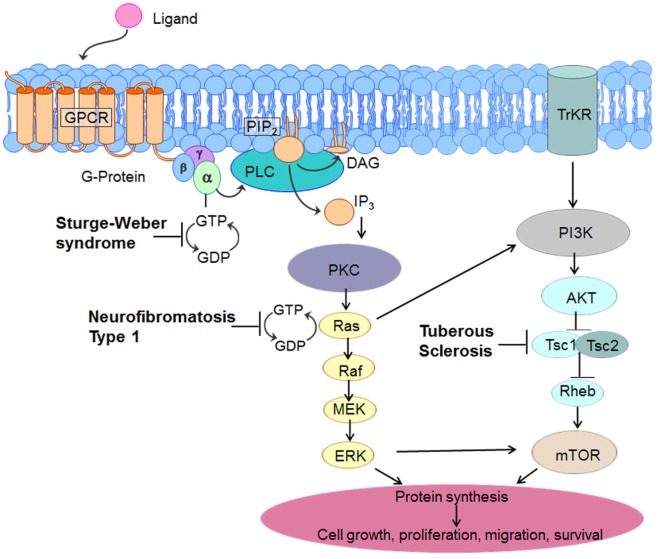
Neurocutaneous disorders are multisystem diseases affecting skin, brain, and other organs. Epilepsy is very common in the neurocutaneous disorders, affecting up to 90% of patients with tuberous sclerosis complex (TSC) and Sturge-Weber syndrome (SWS), for example. The mechanisms underlying the increased predisposition to brain hyperexcitability differ between disorders, yet some molecular pathways overlap. For instance, the mechanistic target of rapamycin (mTOR) signaling cascade plays a central role in seizures and epileptogenesis in numerous acquired and genetic disorders, including several neurocutaneous disorders. Potential routes for target-specific treatments are emerging as the genetic and molecular pathways involved in neurocutaneous disorders become increasingly understood. This review explores the clinical features and mechanisms of epilepsy in three common neurocutaneous disorders-TSC, neurofibromatosis type 1, and SWS.
神经皮肤疾病是影响皮肤、大脑和其他器官的多系统疾病。例如,癫痫在神经皮肤疾病中非常常见,高达90%的结节性硬化症(TSC)和斯特奇-韦伯综合征(SWS)患者会受到影响。不同疾病中脑兴奋性增加易感性的潜在机制有所不同,但一些分子途径存在重叠。例如,雷帕霉素作用靶点(mTOR)信号级联在许多获得性和遗传性疾病(包括几种神经皮肤疾病)的癫痫发作和癫痫发生中起核心作用。随着对神经皮肤疾病所涉及的遗传和分子途径的理解越来越深入,针对特定靶点的治疗潜在途径正在出现。本综述探讨了三种常见神经皮肤疾病——结节性硬化症、1型神经纤维瘤病和斯特奇-韦伯综合征——中癫痫的临床特征和机制。