Eytan Danny, Goodwin Andrew J, Greer Robert, Guerguerian Anne-Marie, Laussen Peter C
Department of Critical Care Medicine, The Hospital for Sick Children, University of Toronto, Toronto, ON, Canada; Department of Pediatric Critical Care, Rambam Medical Center, Haifa, Israel.
Department of Critical Care Medicine, The Hospital for Sick Children, University of Toronto , Toronto, ON , Canada.
Front Pediatr. 2017 Mar 17;5:52. doi: 10.3389/fped.2017.00052. eCollection 2017.
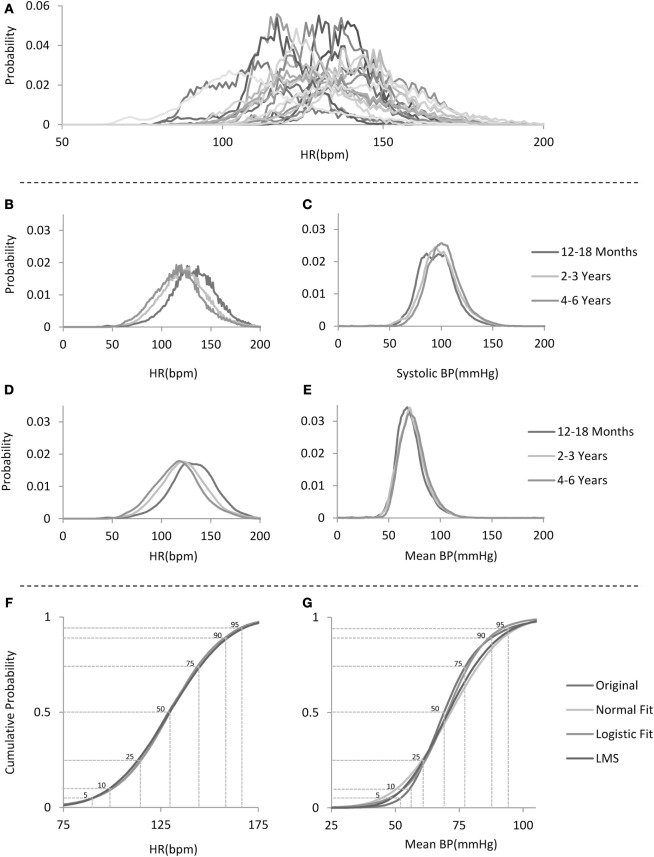
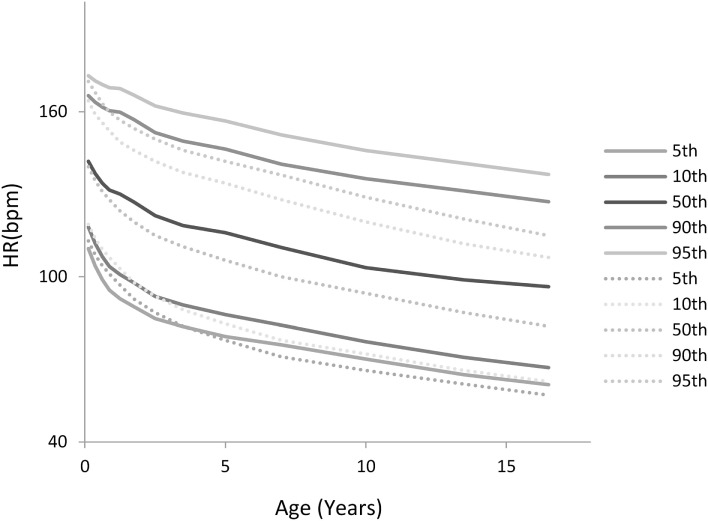
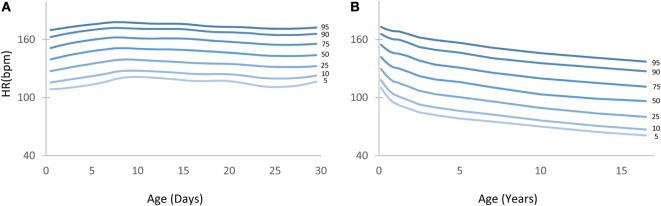
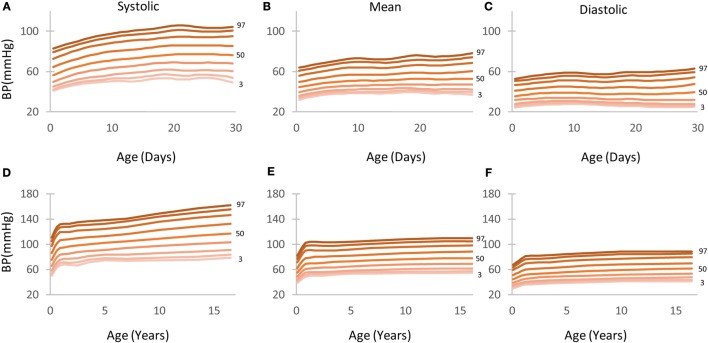
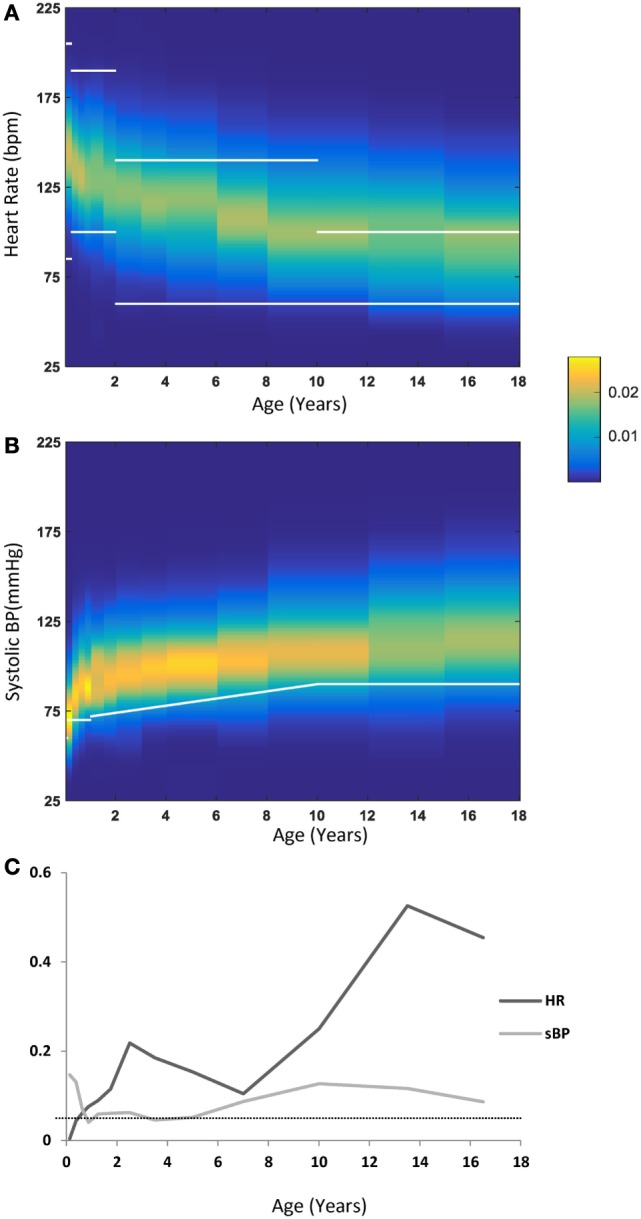
Heart rate (HR) and blood pressure (BP) form the basis for monitoring the physiological state of patients. Although norms have been published for healthy and hospitalized children, little is known about their distributions in critically ill children. The objective of this study was to report the distributions of these basic physiological variables in hospitalized critically ill children. Continuous data from bedside monitors were collected and stored at 5-s intervals from 3,677 subjects aged 0-18 years admitted over a period of 30 months to the pediatric and cardiac intensive care units at a large quaternary children's hospital. Approximately 1.13 billion values served to estimate age-specific distributions for these two basic physiological variables: HR and intra-arterial BP. Centile curves were derived from the sample distributions and compared to common reference ranges. Properties such as kurtosis and skewness of these distributions are described. In comparison to previously published reference ranges, we show that children in these settings exhibit markedly higher HRs than their healthy counterparts or children hospitalized on in-patient wards. We also compared commonly used published estimates of hypotension in children (e.g., the PALS guidelines) to the values we derived from critically ill children. This is a first study reporting the distributions of basic physiological variables in children in the pediatric intensive care settings, and the percentiles derived may serve as useful references for bedside clinicians and clinical trials.
心率(HR)和血压(BP)构成了监测患者生理状态的基础。尽管已公布了健康儿童和住院儿童的相关标准,但对于危重症儿童中这些指标的分布情况却知之甚少。本研究的目的是报告住院危重症儿童中这些基本生理变量的分布情况。我们收集了来自一家大型四级儿童医院儿科和心脏重症监护病房在30个月期间收治的3677名0至18岁受试者床边监测仪的连续数据,并以5秒的间隔进行存储。大约11.3亿个数据用于估计这两个基本生理变量(HR和动脉内血压)的年龄特异性分布。百分位数曲线由样本分布得出,并与常用参考范围进行比较。描述了这些分布的峰度和偏度等特性。与先前公布的参考范围相比,我们发现这些患儿的心率明显高于健康儿童或住院病房中的患儿。我们还将常用的已公布的儿童低血压估计值(例如儿科高级生命支持(PALS)指南)与我们从危重症儿童中得出的值进行了比较。这是第一项报告儿科重症监护环境中儿童基本生理变量分布情况的研究,得出的百分位数可为床边临床医生和临床试验提供有用的参考。