niChe Lab for Stem Cell and Regenerative Medicine, Department of Biochemical Science and Technology, National Taiwan University, Taipei 10617, Taiwan.
Department of Regenerative Medicine, Yokohama City University Graduate School of Medicine, Kanagawa 236-0004, Japan.
Sci Rep. 2017 Apr 3;8:45751. doi: 10.1038/srep45751.
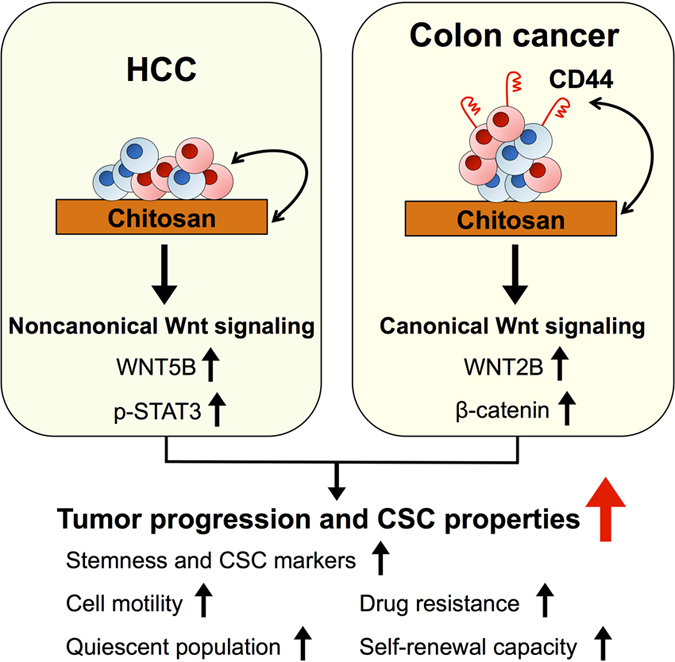
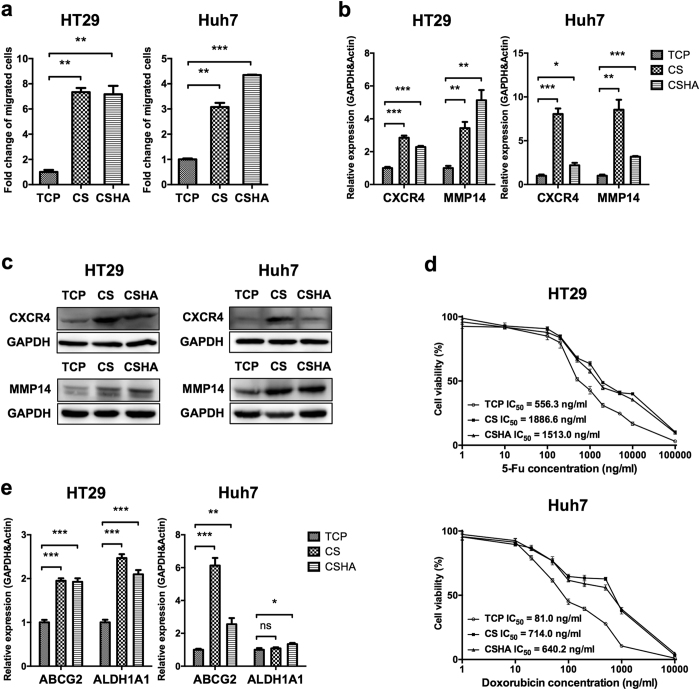
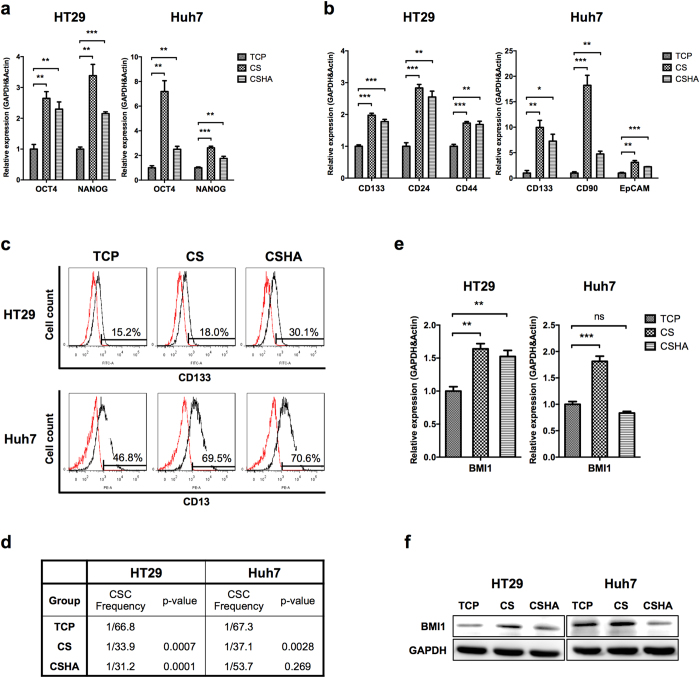
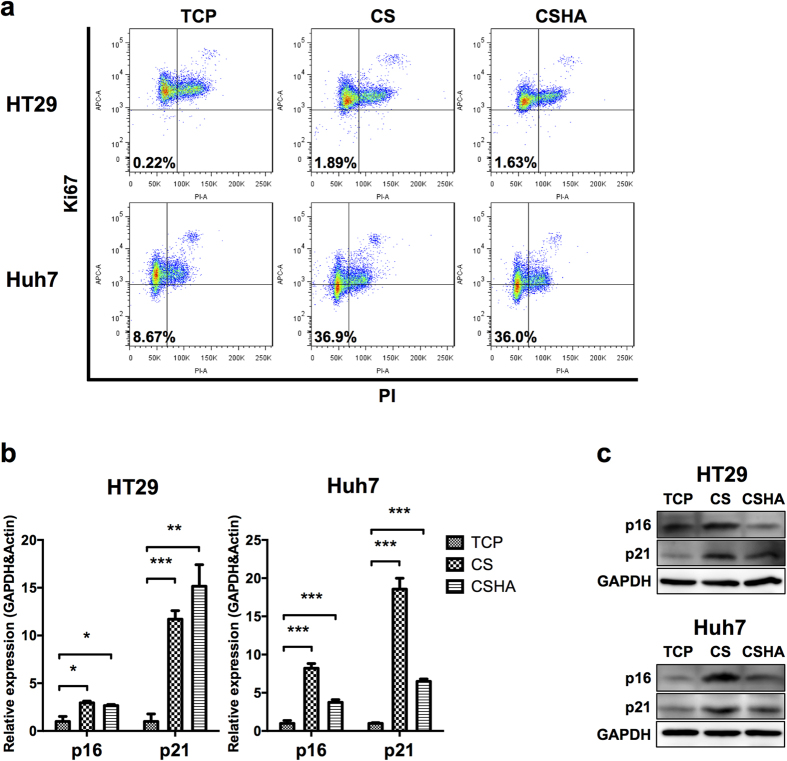
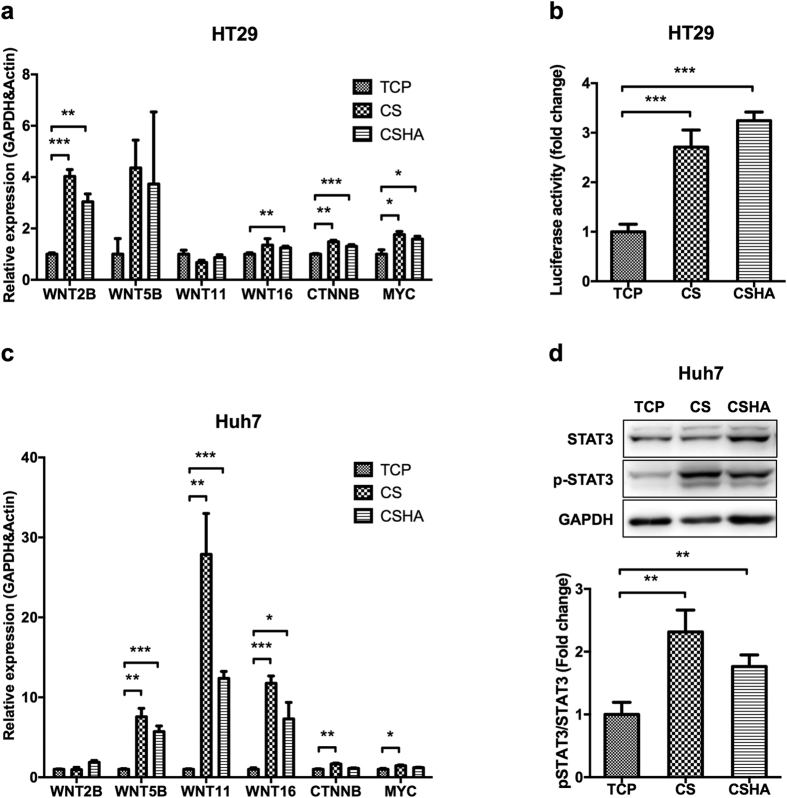
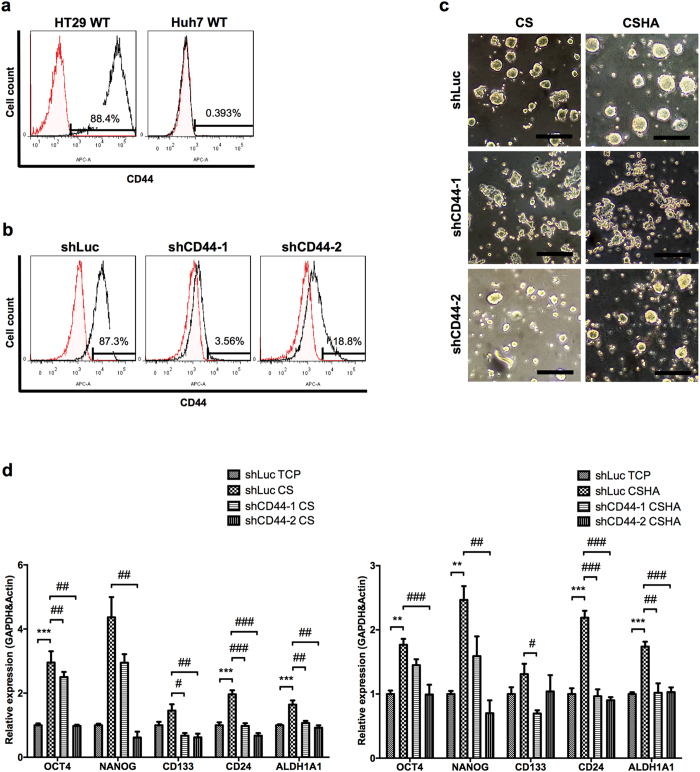
Cancer stem cells (CSCs), a small population of cancer cells, have been considered to be the origin of cancer initiation, recurrence, and metastasis. Tumor microenvironment provides crucial signals for CSCs to maintain stem cell properties and promotes tumorigenesis. Therefore, establishment of an appropriate cell culture system to mimic the microenvironment for CSC studies is an important issue. In this study, we grew colon and hepatocellular carcinoma (HCC) cells on chitosan membranes and evaluated the tumor progression and the CSC properties. Experimental results showed that culturing cancer cells on chitosan increased cell motility, drug resistance, quiescent population, self-renewal capacity, and the expression levels of stemness and CSC marker genes, such as OCT4, NANOG, CD133, CD44, and EpCAM. Furthermore, we demonstrated that chitosan might activate canonical Wnt/β-catenin-CD44 axis signaling in CD44 colon cancer cells and noncanonical Wnt-STAT3 signaling in CD44 HCC cells. In conclusion, chitosan as culture substrates activated the essential signaling of CSCs and promoted CSC properties. The chitosan culture system provides a convenient platform for the research of CSC biology and screening of anticancer drugs.
癌症干细胞(CSCs)是一小部分癌细胞,被认为是癌症起始、复发和转移的根源。肿瘤微环境为 CSCs 维持干细胞特性提供了关键信号,并促进了肿瘤发生。因此,建立一个合适的细胞培养系统来模拟 CSC 研究的微环境是一个重要的问题。在这项研究中,我们将结肠和肝癌(HCC)细胞种植在壳聚糖膜上,并评估了肿瘤的进展和 CSC 特性。实验结果表明,在壳聚糖上培养癌细胞会增加细胞的迁移能力、耐药性、静止细胞群、自我更新能力,以及干性和 CSC 标志物基因(如 OCT4、NANOG、CD133、CD44 和 EpCAM)的表达水平。此外,我们还证明壳聚糖可能会在 CD44 结肠癌细胞中激活经典 Wnt/β-catenin-CD44 轴信号通路,在 CD44 肝癌细胞中激活非经典 Wnt-STAT3 信号通路。总之,壳聚糖作为培养底物激活了 CSCs 的关键信号通路,并促进了 CSC 特性的发展。壳聚糖培养系统为 CSC 生物学研究和抗癌药物筛选提供了一个便捷的平台。