Laboratory of Plant Physiology and Biophysics, Institute of Molecular, Cell and Systems Biology, Bower Building, University of Glasgow, Glasgow G12 8QQ, UK.
J Exp Bot. 2017 Apr 1;68(9):2309-2315. doi: 10.1093/jxb/erx072.
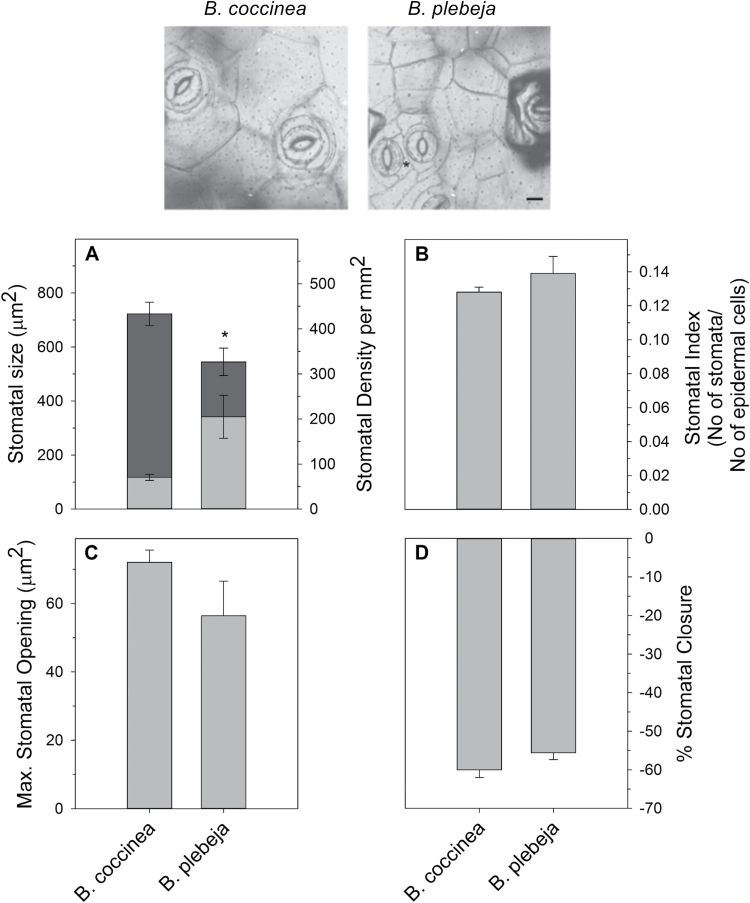
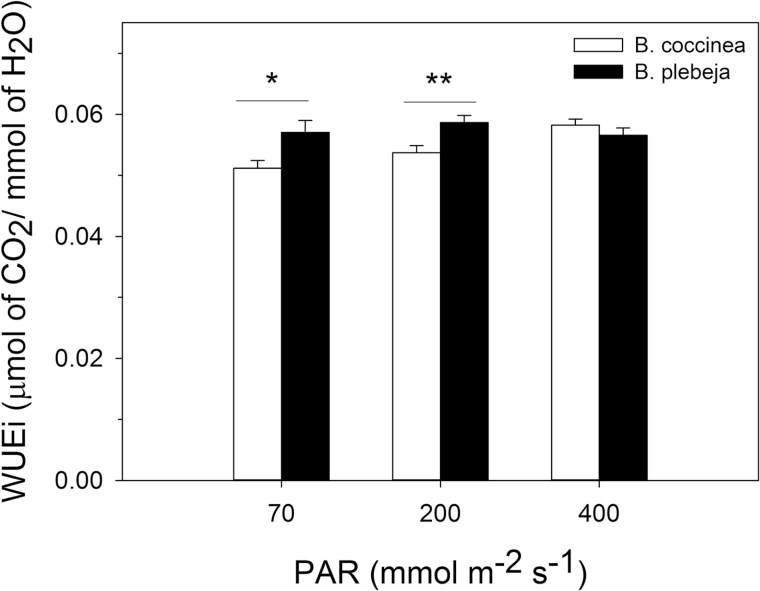
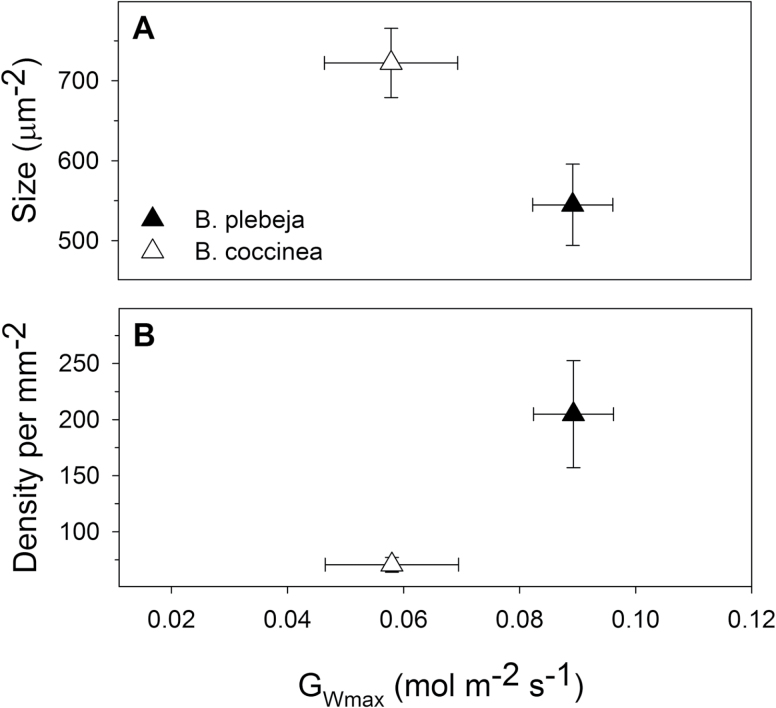
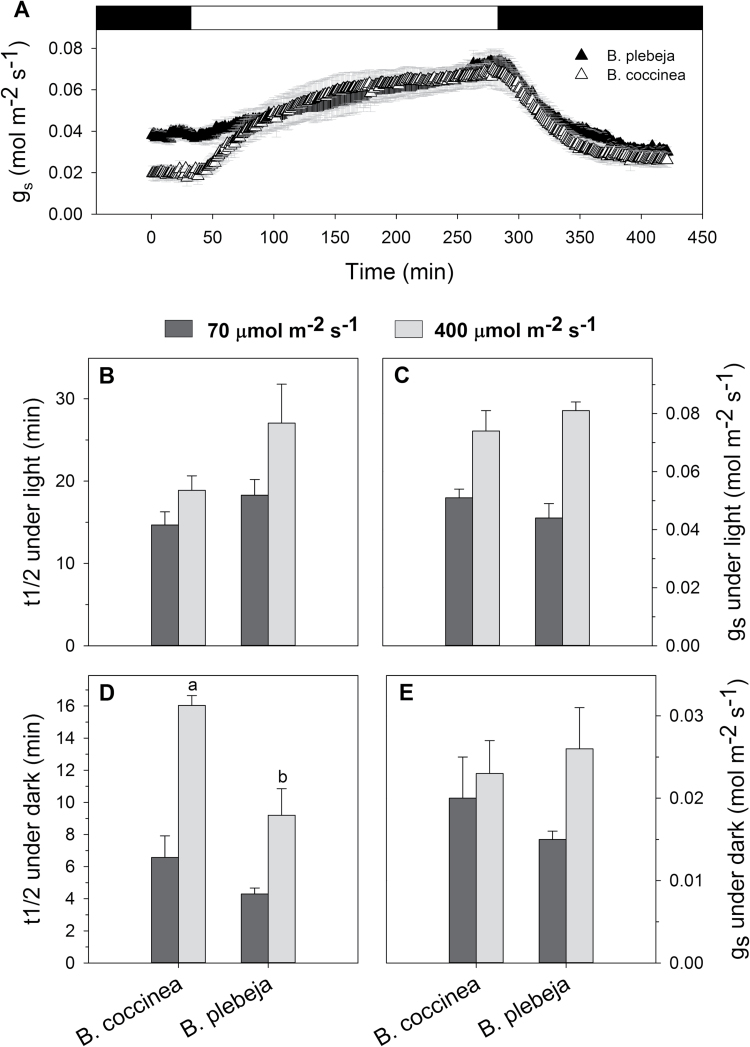
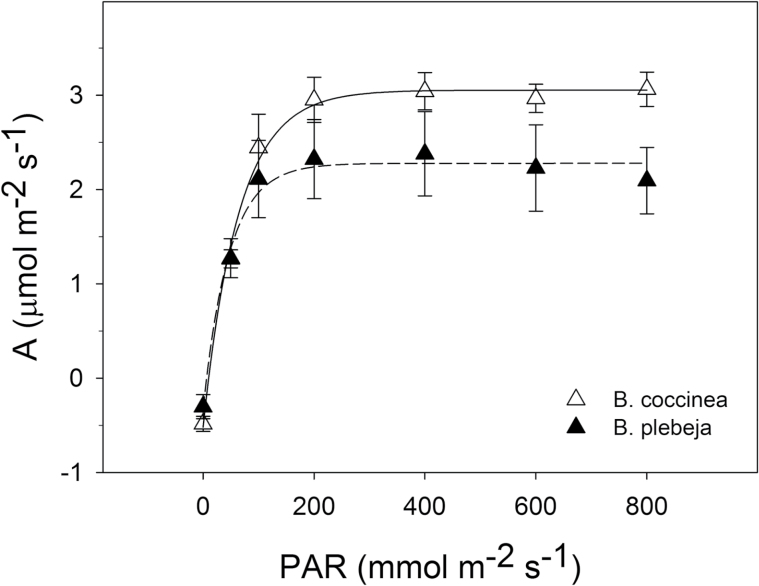
Stomata are microscopic pores formed by specialized cells in the leaf epidermis and permit gaseous exchange between the interior of the leaf and the atmosphere. Stomata in most plants are separated by at least one epidermal pavement cell and, individually, overlay a single substomatal cavity within the leaf. This spacing is thought to enhance stomatal function. Yet, there are several genera naturally exhibiting stomata in clusters and therefore deviating from the one-cell spacing rule with multiple stomata overlaying a single substomatal cavity. We made use of two Begonia species to investigate whether clustering of stomata alters guard cell dynamics and gas exchange under different light and dark treatments. Begonia plebeja, which forms stomatal clusters, exhibited enhanced kinetics of stomatal conductance and CO2 assimilation upon light stimuli that in turn were translated into greater water use efficiency. Our findings emphasize the importance of spacing in stomatal clusters for gaseous exchange and plant performance under environmentally limited conditions.
气孔是叶片表皮中特化细胞形成的微小孔隙,允许叶片内部与大气之间进行气体交换。大多数植物的气孔至少被一个表皮扁平细胞隔开,并且单独覆盖叶片内的单个亚气孔腔。这种间隔被认为可以增强气孔功能。然而,有几个属的植物自然地表现出气孔簇集,因此与单个细胞间隔的规则不同,多个气孔覆盖单个亚气孔腔。我们利用两种秋海棠属植物来研究气孔簇集是否会改变保卫细胞的动态和不同光照和黑暗处理下的气体交换。形成气孔簇集的秋海棠属 plebeja 在受到光照刺激时表现出气孔导度和 CO2 同化的动力学增强,这反过来又转化为更高的水分利用效率。我们的发现强调了在环境受限条件下,气孔簇集中的间隔对于气体交换和植物性能的重要性。