Tsai Meng-Ying, Kuan Chi, Guo Zheng-Lin, Yang Hsun-An, Chung Kuo-Fang, Ho Chin-Min Kimmy
Institute of Plant and Microbial Biology Academia Sinica Taipei Taiwan.
Research Museum and Herbarium (HAST) Biodiversity Research Center, Academia Sinica Taipei Taiwan.
Plant Environ Interact. 2022 Jul 4;3(4):141-154. doi: 10.1002/pei3.10086. eCollection 2022 Aug.
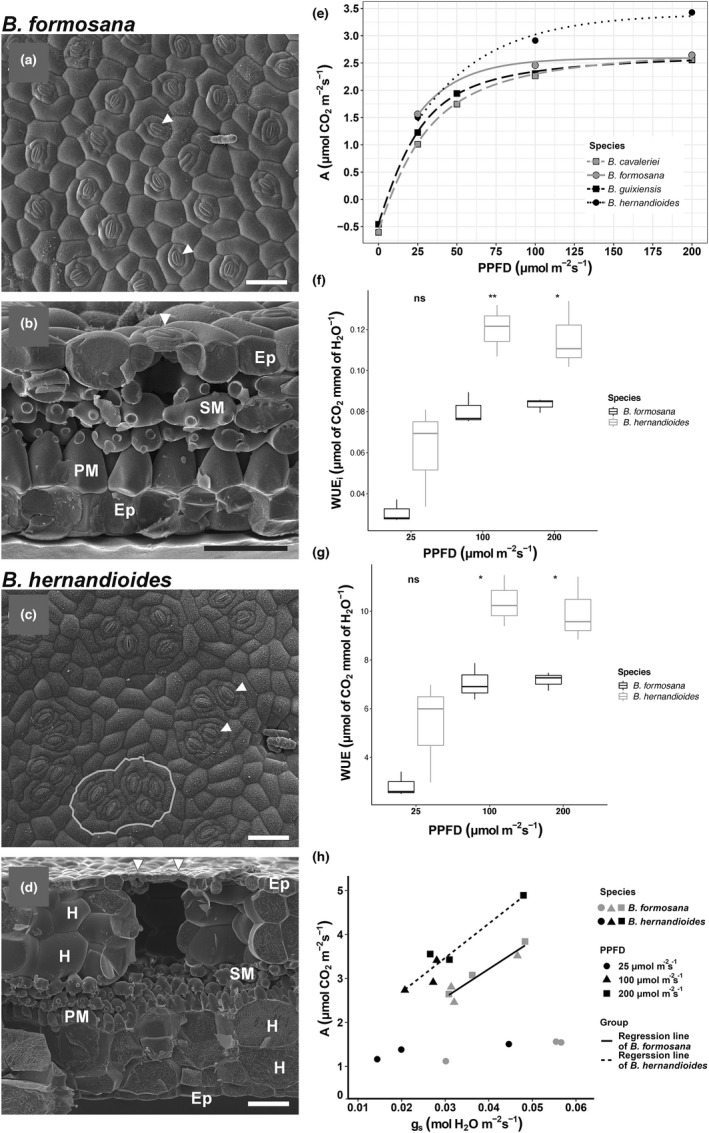
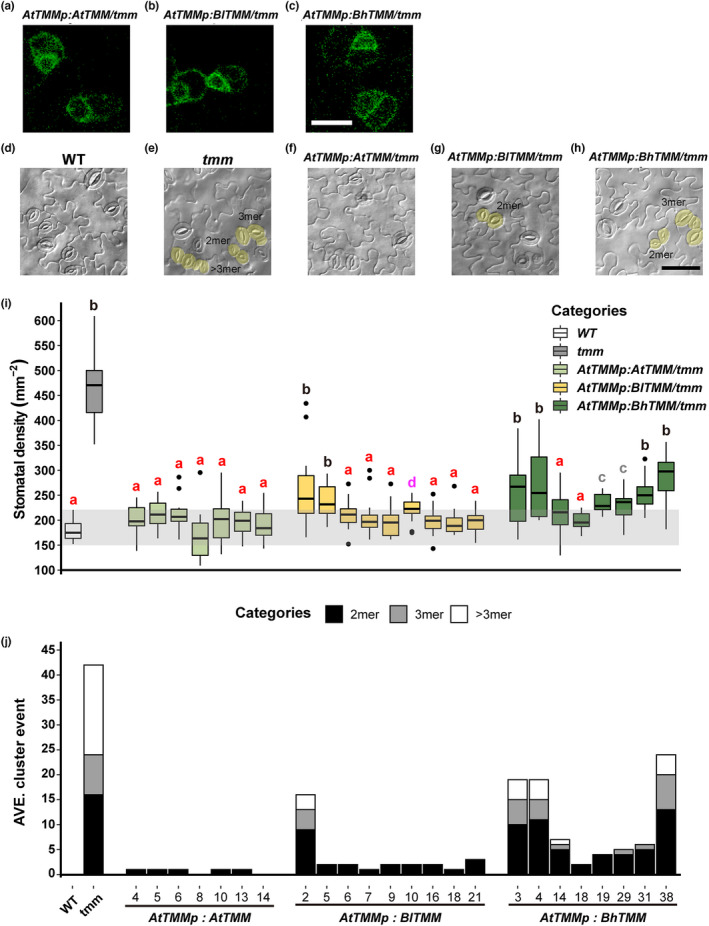
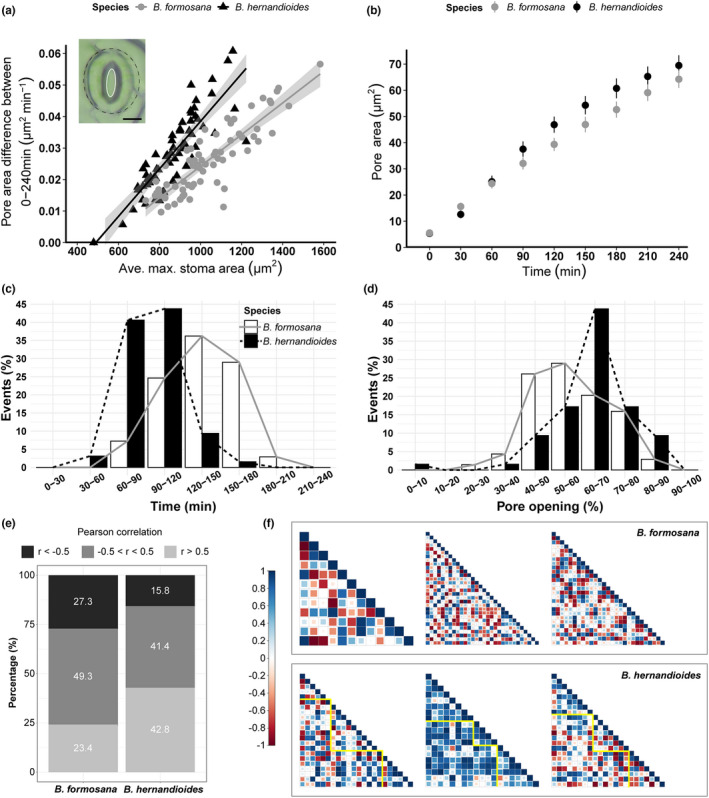
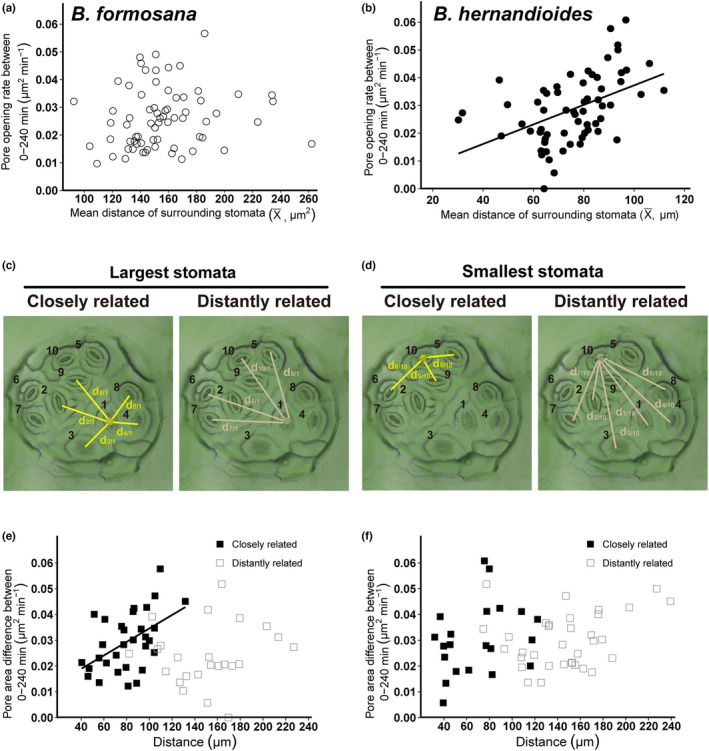
Stomata are a pivotal adaptation of land plants and control gas exchange. While most plants present solitary stomata, some plant species experiencing chronic water deficiency display clustered stomata on their epidermis; for instance, limestone-grown begonias. Moreover, the membrane receptor TOO MANY MOUTHS (TMM) plays a major role in spacing stomata on the epidermis in , but the function of its orthologs is unknown. We used two Asian begonias, (single stomata) and (clustered stomata), to explore the physiological function of stomatal clustering. We also introduced the s into mutants to study the function of TMMs. showed higher water use efficiency under high light intensity, smaller stomata, and faster pore opening than . The short distance between stomata in a cluster may facilitate cell-to-cell interactions to achieve synchronicity in stomatal movement. TMMs function similarly to TMM to inhibit stomatal formation, although complementation by TMM from the clustered species was only partial. Stomatal clustering in begonias may represent a developmental strategy to build small and closer stomata to achieve fast responses to light which provides tight support between stomatal development and environmental adaption.
气孔是陆生植物的关键适应性特征,负责控制气体交换。大多数植物的气孔是单个分布的,而一些长期缺水的植物物种在其表皮上会出现成簇的气孔;例如,生长在石灰岩上的秋海棠。此外,膜受体“过多的口”(TMM)在调节表皮上气孔的间距中起主要作用,但其直系同源物的功能尚不清楚。我们使用了两种亚洲秋海棠,即具有单个气孔的[具体物种1]和具有成簇气孔的[具体物种2],来探究气孔成簇的生理功能。我们还将[具体物种2]的[相关基因]导入[具体物种1]的突变体中,以研究[具体物种2]的TMMs的功能。结果表明,在高光强下,[具体物种2]具有更高的水分利用效率、更小的气孔以及更快的气孔张开速度。成簇气孔之间的短距离可能有助于细胞间的相互作用,从而实现气孔运动的同步性。[具体物种2]的TMMs与[具体物种1]的TMM功能相似,都能抑制气孔形成,不过来自成簇物种的TMM的互补作用只是部分有效。秋海棠中的气孔成簇可能代表了一种发育策略,可以形成更小且更紧密的气孔,以便对光照做出快速响应,这在气孔发育和环境适应性之间提供了紧密的支持。