Payne Christa, Cirilli Laetitia, Bachevalier Jocelyne
Yerkes National Primate Research Center, Emory University, Atlanta, Georgia.
Dev Psychobiol. 2017 May;59(4):495-506. doi: 10.1002/dev.21514. Epub 2017 Apr 3.
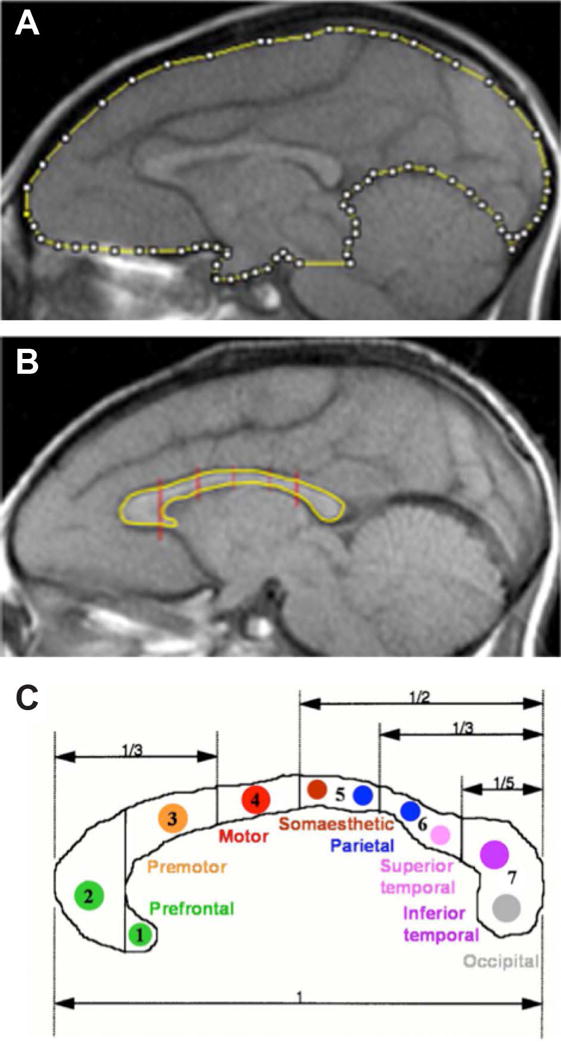
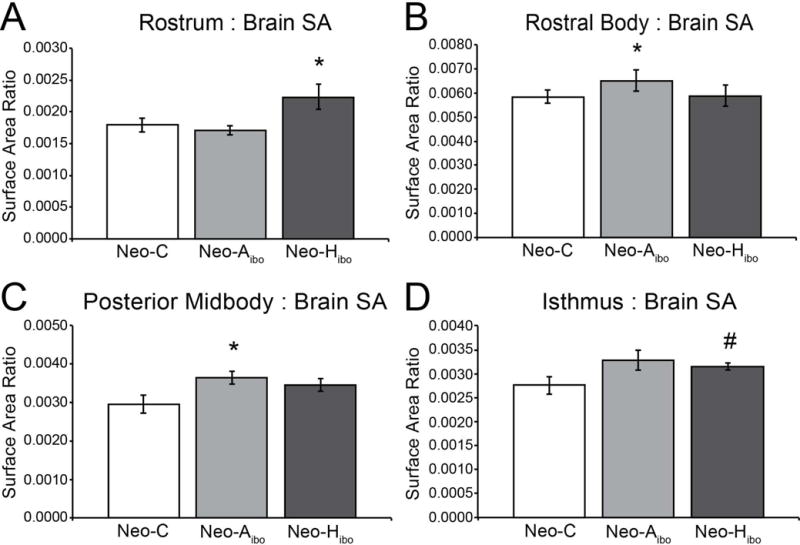
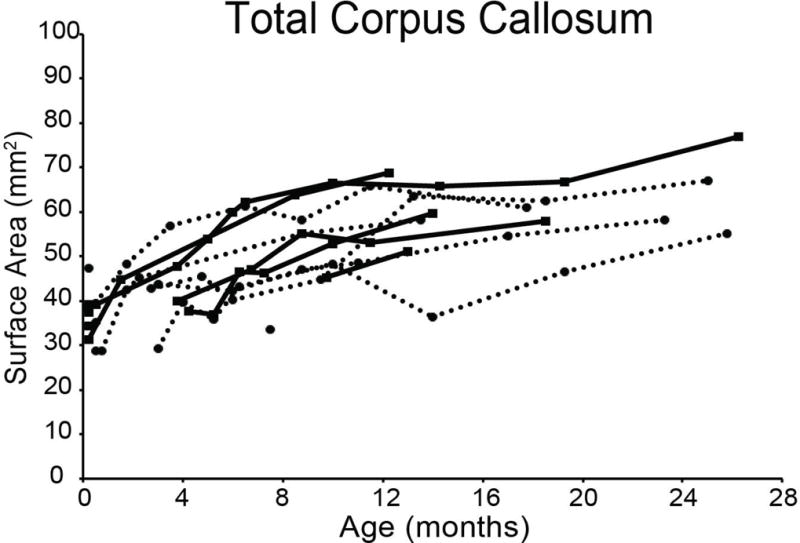
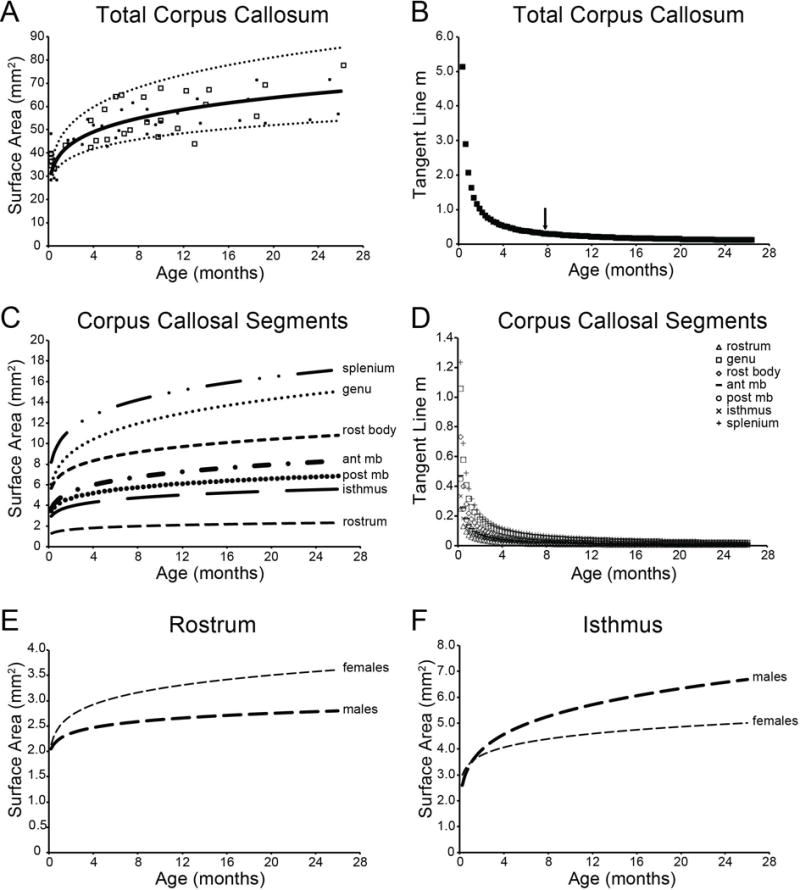
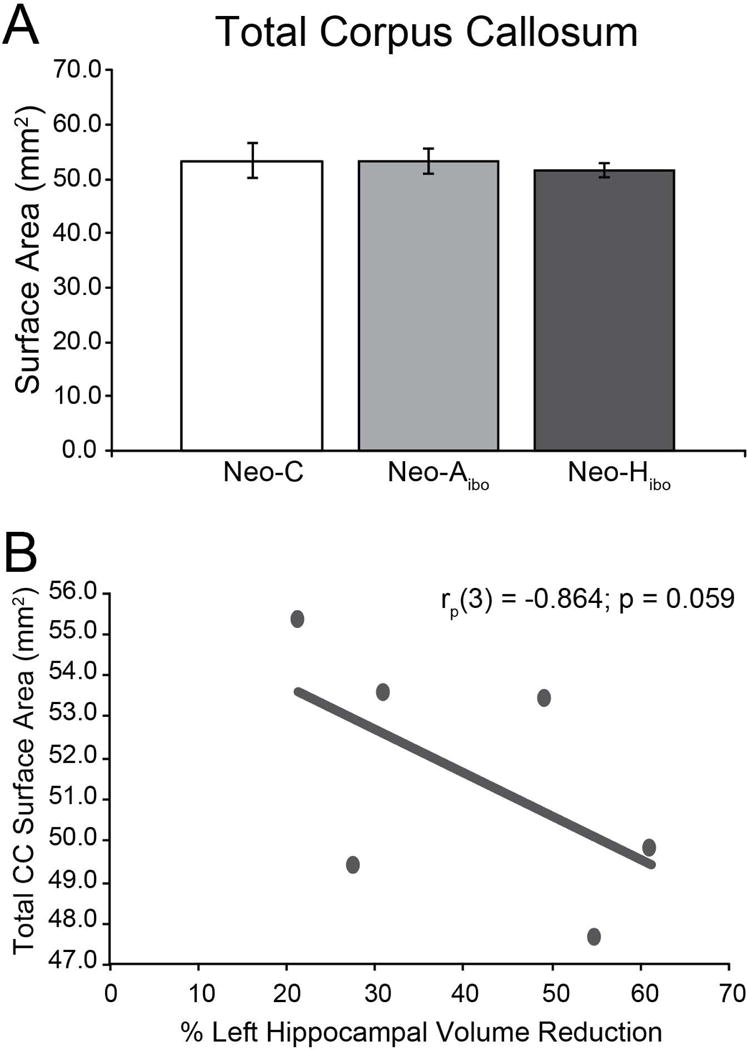
This study provides the first characterization of early developmental trajectories of corpus callosum (CC) segments in rhesus macaques using noninvasive MRI techniques and assesses long-term effects of neonatal amygdala or hippocampal lesions on CC morphometry. In Experiment 1, 10 monkeys (5 males) were scanned at 1 week-2 years of age; eight additional infants (4 males) were scanned once at 1-4 weeks of age. The first 8 months showed marked growth across all segments, with sustained, albeit slower, growth through 24 months. Males and females had comparable patterns of CC maturation overall, but exhibited slight differences in the anterior and posterior segments, with greater increases in the isthmus for males and greater increases in the rostrum for females. The developmental changes are likely a consequence of varying degrees of axonal myelination, redirection, and pruning. In Experiment 2, animals with neonatal lesions of the amygdala (n = 6; 3 males) or hippocampus (n = 6; 4 males) were scanned at 1.5 years post-surgery and compared to scans of six control animals from Experiment 1. Whereas amygdala damage yielded larger rostral and posterior body segments, hippocampal damage yielded larger rostrum and isthmus. These differences demonstrate that early perturbations to one medial temporal lobe structure may produce extensive and long-lasting repercussions in other brain areas. The current findings emphasize the complexity of neural circuitry putatively subserving neurodevelopmental disorders such as autism spectrum disorder and Williams syndrome, which are each characterized by malformations and dysfunction of complex neural networks that include regions of the medial temporal lobe.
本研究首次利用非侵入性MRI技术对恒河猴胼胝体(CC)节段的早期发育轨迹进行了表征,并评估了新生儿杏仁核或海马体损伤对CC形态测量的长期影响。在实验1中,对10只猴子(5只雄性)在1周龄至2岁时进行扫描;另外8只婴儿(4只雄性)在1至4周龄时进行了一次扫描。最初的8个月里,所有节段都有显著生长,到24个月时生长持续但速度较慢。总体而言,雄性和雌性的CC成熟模式相当,但在前后节段存在细微差异,雄性的峡部增加幅度更大,雌性的嘴部增加幅度更大。发育变化可能是轴突髓鞘形成、重新定向和修剪程度不同的结果。在实验2中,对杏仁核(n = 6;3只雄性)或海马体(n = 6;4只雄性)有新生儿损伤的动物在手术后1.5年进行扫描,并与实验1中的6只对照动物的扫描结果进行比较。杏仁核损伤导致嘴部和后体节段更大,海马体损伤导致嘴部和峡部更大。这些差异表明,对一个内侧颞叶结构的早期扰动可能会在其他脑区产生广泛而持久的影响。目前的研究结果强调了假定为自闭症谱系障碍和威廉姆斯综合征等神经发育障碍提供支持的神经回路的复杂性,这些疾病的特征分别是包括内侧颞叶区域在内的复杂神经网络的畸形和功能障碍。