Department of Neurology, The Agnes Ginges Center for Human Neurogenetics, Hadassah Hebrew University Medical Center, Jerusalem, Israel.
Laboratory of Radiobiology and Biotechnology, Sharett Institute of Oncology, Hadassah Hebrew University Medical Center, Jerusalem, Israel.
Stem Cells Transl Med. 2017 Apr;6(4):1286-1294. doi: 10.5966/sctm.2015-0363. Epub 2016 Sep 29.
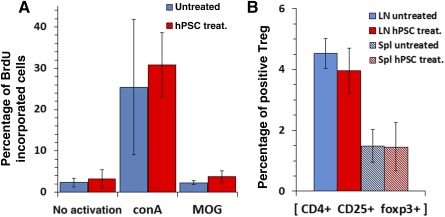
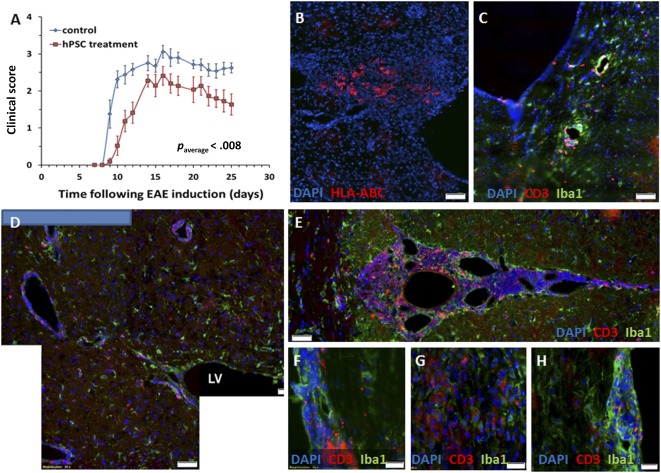
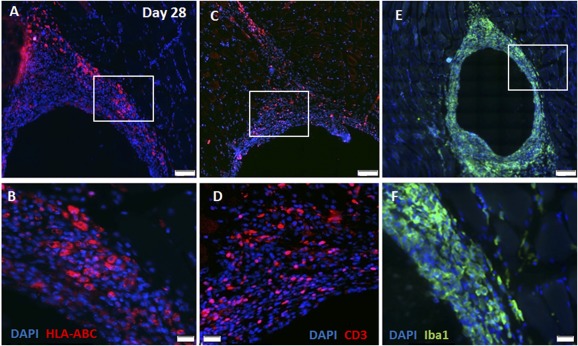
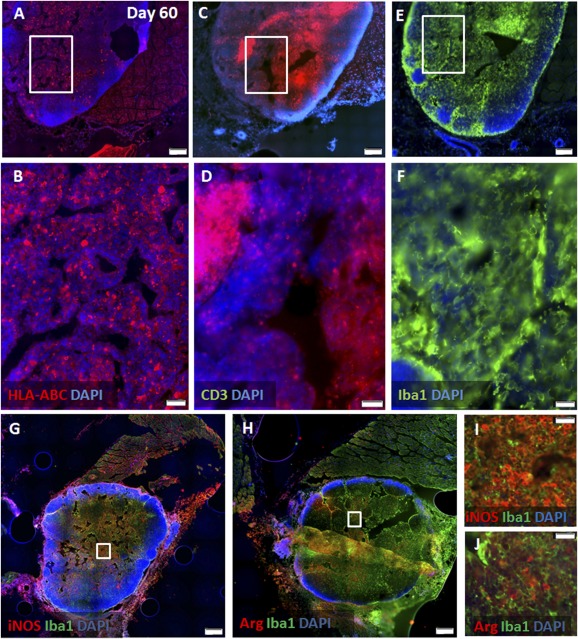
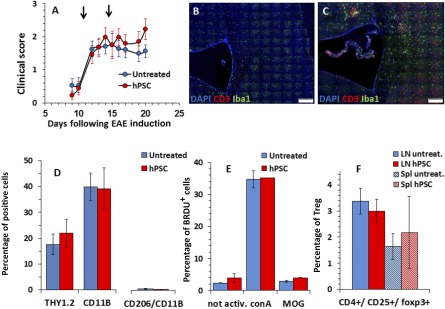
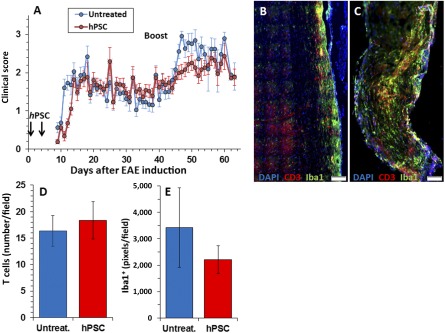
Multiple sclerosis (MS) is an immune-mediated disease of the central nervous system (CNS) with no effective treatment available for the chronic-progressive stage. Cell therapy is a promising therapeutic approach for attenuating the immune-mediated CNS process. Isolated and expanded human placental stromal cells (hPSCs) possess potent immunomodulatory and trophic properties, making them a good candidate for MS therapy. We examined the potential of hPSC therapy in preventing the onset or attenuating the course of established disease in a murine MS model of myelin oligodendrocyte glycoprotein-induced experimental autoimmune encephalomyelitis. We examined the feasibility of hPSC systemic delivery by intramuscular (i.m.) implantation rather than the commonly used intravenous injection, which is dose-limiting and carries the risk of pulmonary obstruction. Our findings showed significant attenuation of the disease only when hPSCs were injected directly to the central nervous system. Intramuscular implanted hPSCs survived at the site of injection for at least 2 months and elicited extensive local immune responses. Intramuscular hPSC implantation before disease onset caused a delay in the appearance of clinical signs and reduced the severity of a relapse induced by repeated challenge with the autoantigen. Intramuscular implantation after disease onset did not affect its course. Thus, pathological analysis of CNS tissue did not show inhibition of neuroinflammation in i.m. hPSC-implanted mice. Moreover, no apparent effect was seen on the proliferative response of peripheral lymph node cells in these animals. We conclude that to maximize their therapeutic potential in MS, hPSCs should be delivered directly to the affected CNS. Stem Cells Translational Medicine 2017;6:1286-1294.
多发性硬化症(MS)是一种中枢神经系统(CNS)的免疫介导疾病,目前尚无有效的慢性进展期治疗方法。细胞疗法是一种有前途的治疗方法,可以减弱免疫介导的中枢神经系统过程。分离和扩增的人胎盘基质细胞(hPSC)具有强大的免疫调节和营养特性,使其成为 MS 治疗的良好候选者。我们研究了 hPSC 疗法在预防发病或减轻髓鞘少突胶质细胞糖蛋白诱导的实验性自身免疫性脑脊髓炎的小鼠 MS 模型中已建立疾病的进程中的潜力。我们研究了通过肌肉内(i.m.)植入而不是常用的静脉内注射进行 hPSC 系统给药的可行性,静脉内注射具有剂量限制并存在肺部阻塞的风险。我们的研究结果表明,只有当 hPSC 直接注射到中枢神经系统时,疾病才会明显减轻。肌肉内植入的 hPSC 在注射部位至少存活 2 个月,并引起广泛的局部免疫反应。在疾病发作前进行肌肉内 hPSC 植入可延迟临床症状的出现,并减轻重复用自身抗原挑战引起的复发的严重程度。疾病发作后进行肌肉内植入不会影响其病程。因此,对 CNS 组织的病理分析并未显示出肌肉内植入的 hPSC 抑制了神经炎症。此外,在这些动物中,没有观察到外周淋巴结细胞的增殖反应有明显变化。我们得出结论,为了使 hPSC 在 MS 中的治疗潜力最大化,应将其直接递送至受影响的中枢神经系统。《干细胞转化医学》2017;6:1286-1294。