Balomenos Athanasios D, Tsakanikas Panagiotis, Aspridou Zafiro, Tampakaki Anastasia P, Koutsoumanis Konstantinos P, Manolakos Elias S
Department of Informatics and Telecommunications, National and Kapodistrian University of Athens, Ilissia, Greece.
Biomedical Research Foundation of the Academy of Athens, 4 Soranou Ephessiou Street, Athens, Greece.
BMC Syst Biol. 2017 Apr 4;11(1):43. doi: 10.1186/s12918-017-0399-z.
Time-lapse microscopy is an essential tool for capturing and correlating bacterial morphology and gene expression dynamics at single-cell resolution. However state-of-the-art computational methods are limited in terms of the complexity of cell movies that they can analyze and lack of automation. The proposed Bacterial image analysis driven Single Cell Analytics (BaSCA) computational pipeline addresses these limitations thus enabling high throughput systems microbiology.
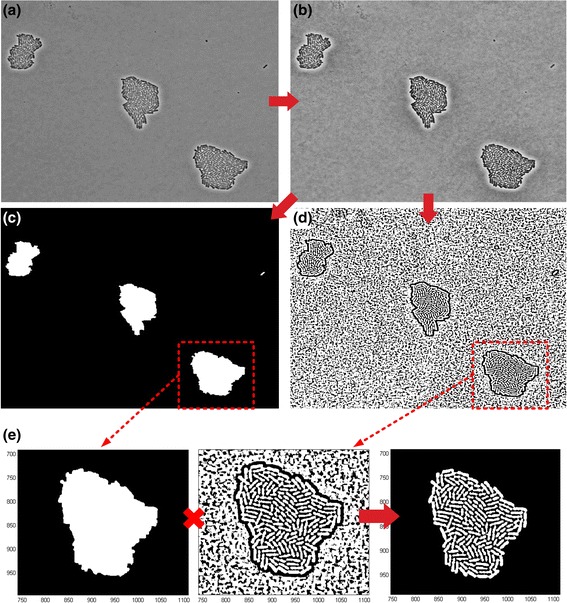
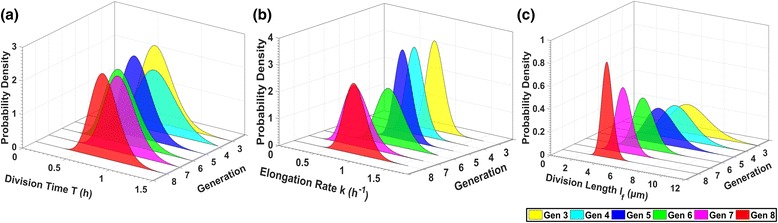
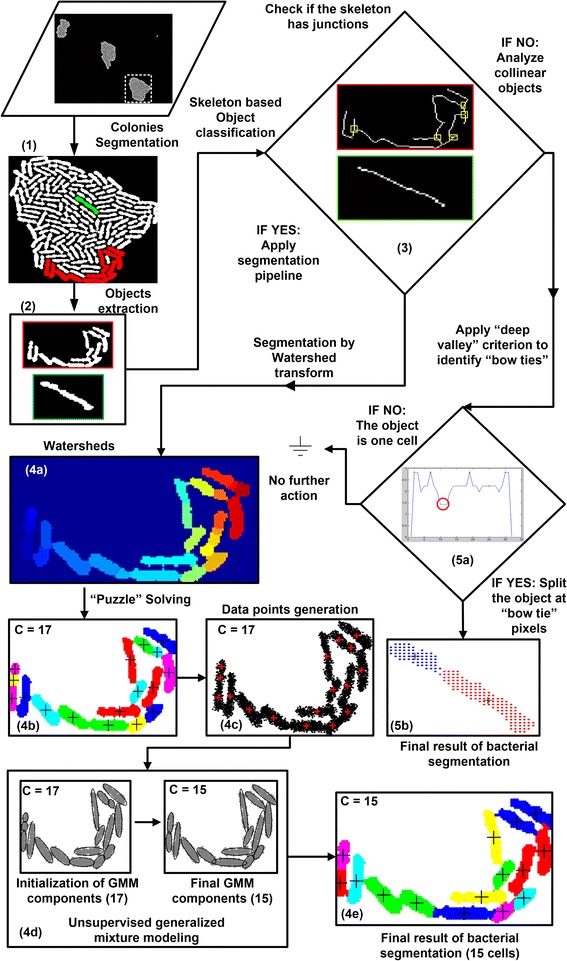
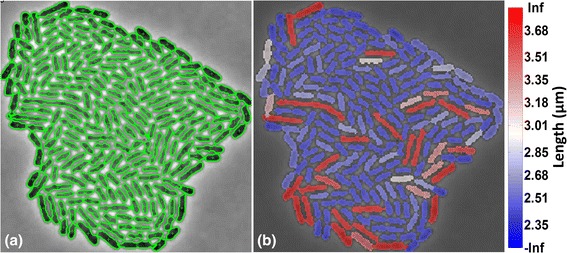
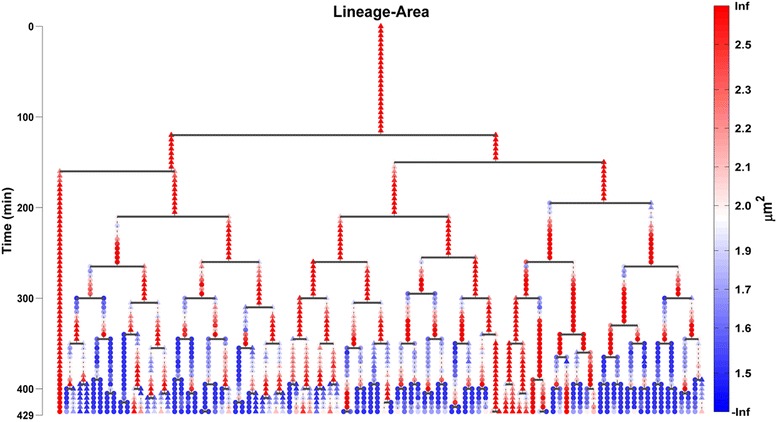
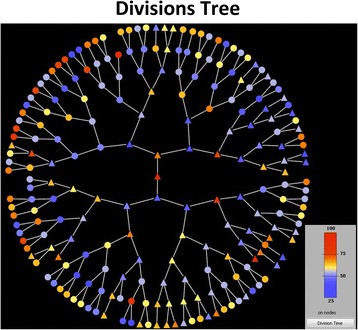
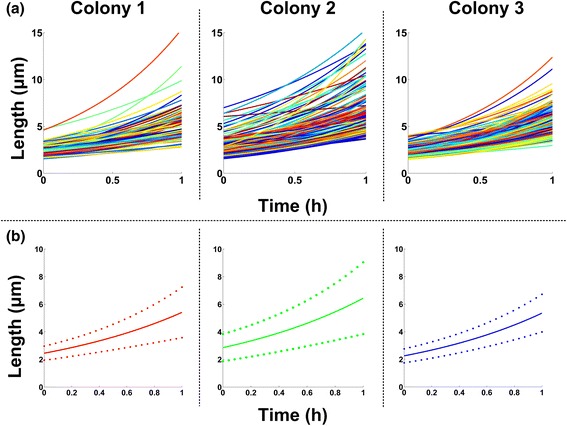
BaSCA can segment and track multiple bacterial colonies and single-cells, as they grow and divide over time (cell segmentation and lineage tree construction) to give rise to dense communities with thousands of interacting cells in the field of view. It combines advanced image processing and machine learning methods to deliver very accurate bacterial cell segmentation and tracking (F-measure over 95%) even when processing images of imperfect quality with several overcrowded colonies in the field of view. In addition, BaSCA extracts on the fly a plethora of single-cell properties, which get organized into a database summarizing the analysis of the cell movie. We present alternative ways to analyze and visually explore the spatiotemporal evolution of single-cell properties in order to understand trends and epigenetic effects across cell generations. The robustness of BaSCA is demonstrated across different imaging modalities and microscopy types.
BaSCA can be used to analyze accurately and efficiently cell movies both at a high resolution (single-cell level) and at a large scale (communities with many dense colonies) as needed to shed light on e.g. how bacterial community effects and epigenetic information transfer play a role on important phenomena for human health, such as biofilm formation, persisters' emergence etc. Moreover, it enables studying the role of single-cell stochasticity without losing sight of community effects that may drive it.
延时显微镜是一种用于在单细胞分辨率下捕捉和关联细菌形态与基因表达动态的重要工具。然而,目前的先进计算方法在可分析的细胞电影复杂性方面存在局限性,且缺乏自动化。所提出的细菌图像分析驱动的单细胞分析(BaSCA)计算流程解决了这些局限性,从而实现了高通量系统微生物学。
BaSCA能够对多个细菌菌落和单细胞进行分割和跟踪,随着它们随时间生长和分裂(细胞分割和谱系树构建),在视野中形成包含数千个相互作用细胞的密集群落。它结合了先进的图像处理和机器学习方法,即使在处理视野中存在多个过度拥挤菌落的质量不佳图像时,也能实现非常准确的细菌细胞分割和跟踪(F值超过95%)。此外,BaSCA能即时提取大量单细胞属性,并将其整理成一个数据库,总结细胞电影的分析结果。我们提出了分析和直观探索单细胞属性时空演变的替代方法,以了解细胞世代间的趋势和表观遗传效应。BaSCA的稳健性在不同成像模式和显微镜类型中得到了证明。
BaSCA可根据需要用于准确高效地分析高分辨率(单细胞水平)和大规模(具有许多密集菌落的群落)的细胞电影,以阐明例如细菌群落效应和表观遗传信息传递如何在对人类健康重要的现象(如生物膜形成、持久性细胞出现等)中发挥作用。此外,它能够研究单细胞随机性的作用,而不会忽视可能驱动它的群落效应。