Cook Daniel, Donzelli Bruno G G, Creamer Rebecca, Baucom Deana L, Gardner Dale R, Pan Juan, Moore Neil, Krasnoff Stuart B, Jaromczyk Jerzy W, Schardl Christopher L
Poisonous Plant Research Laboratory, United States Department of Agriculture-Agricultural Research Service, Logan, Utah 84321.
School of Integrative Plant Science, Cornell University, Ithaca, New York 14853.
G3 (Bethesda). 2017 Jun 7;7(6):1791-1797. doi: 10.1534/g3.117.041384.
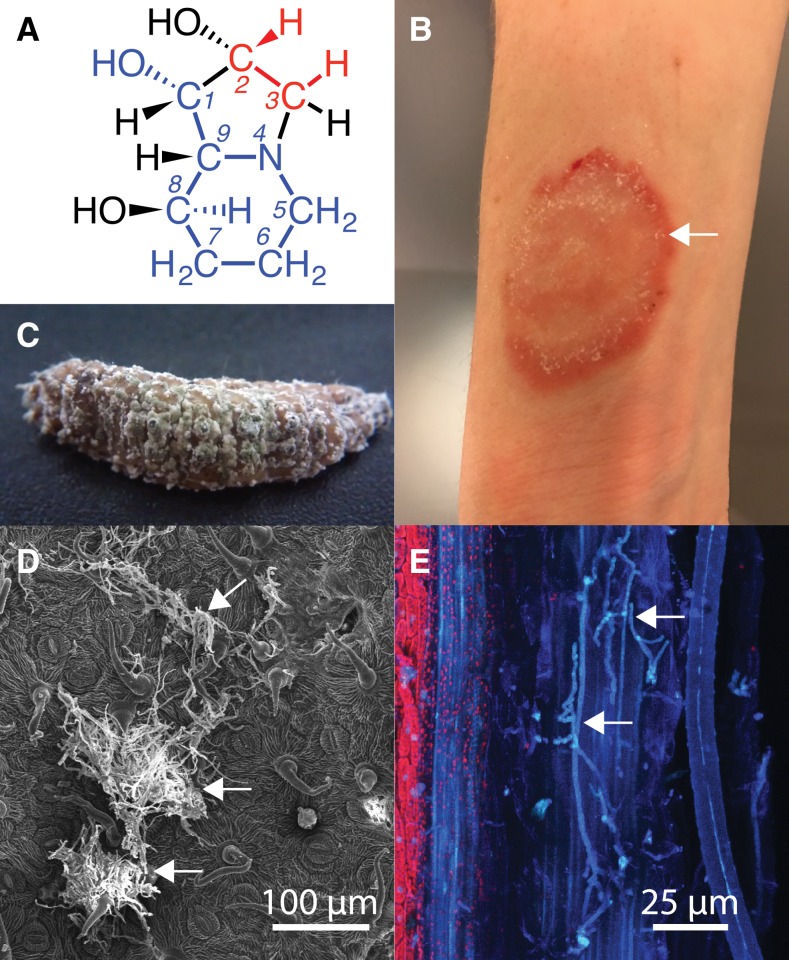
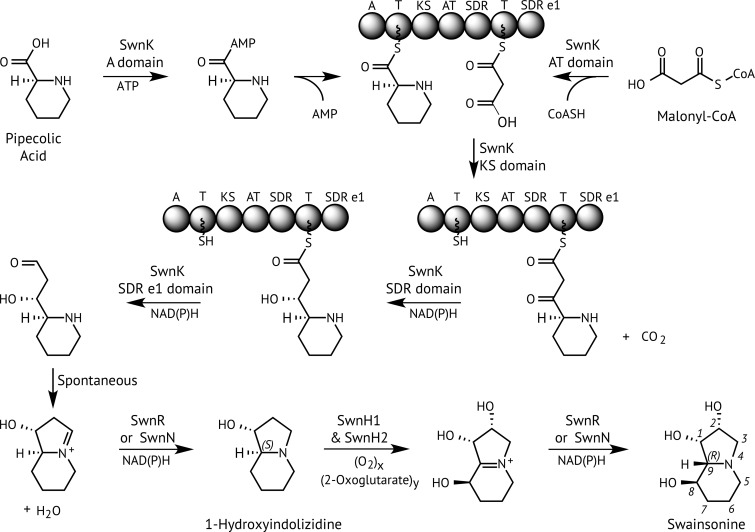
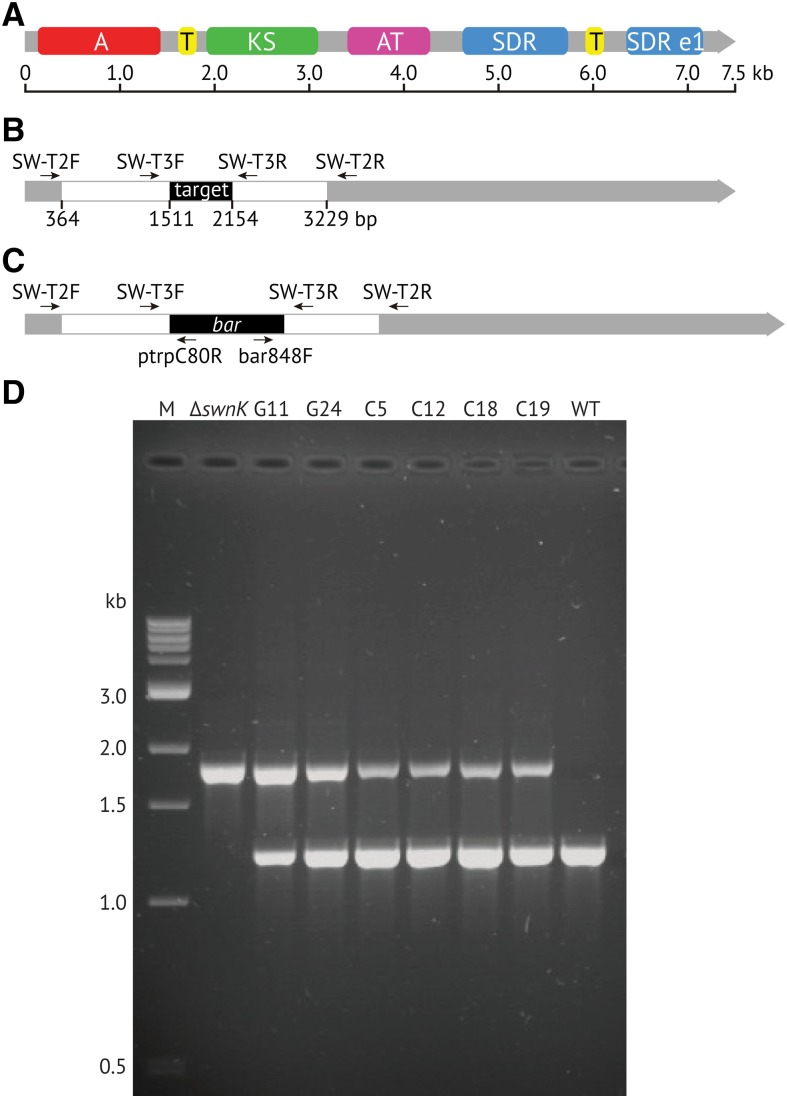
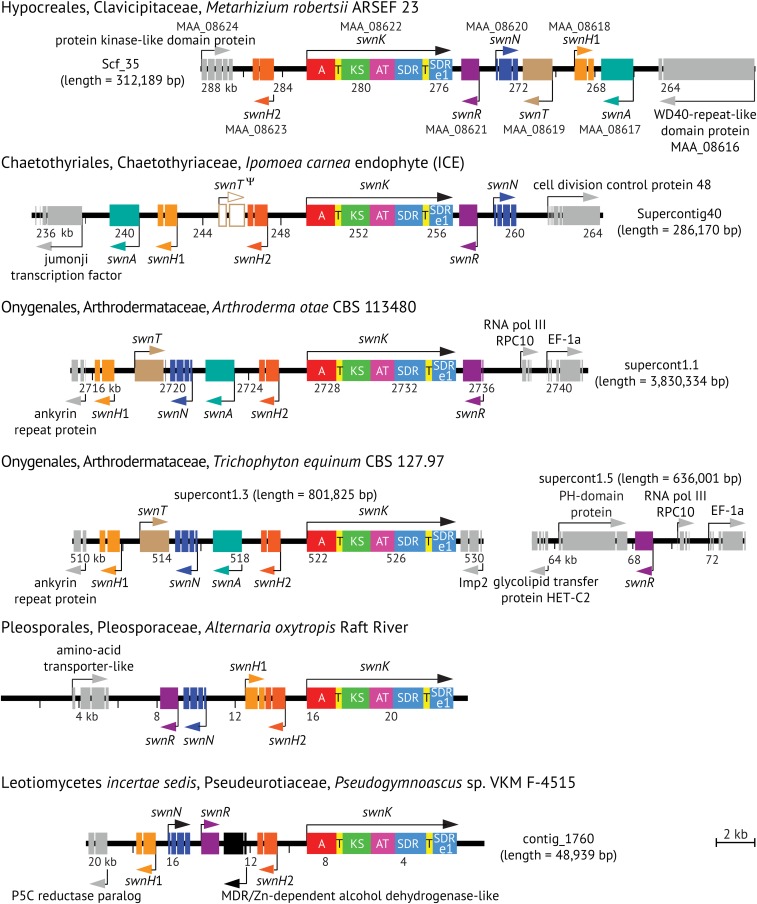
Swainsonine-a cytotoxic fungal alkaloid and a potential cancer therapy drug-is produced by the insect pathogen and plant symbiont , the clover pathogen , locoweed symbionts belonging to sect. , and a recently discovered morning glory symbiont belonging to order Chaetothyriales. Genome sequence analyses revealed that these fungi share orthologous gene clusters, designated "," which included a multifunctional gene comprising predicted adenylylation and acyltransferase domains with their associated thiolation domains, a β-ketoacyl synthase domain, and two reductase domains. The role of was demonstrated by inactivating it in through homologous gene replacement to give a ∆ mutant that produced no detectable swainsonine, then complementing the mutant with the wild-type gene to restore swainsonine biosynthesis. Other cluster genes were predicted to encode two putative hydroxylases and two reductases, as expected to complete biosynthesis of swainsonine from the predicted SwnK product. gene clusters were identified in six out of seven sequenced genomes of species, and in all 15 sequenced genomes of Arthrodermataceae, a family of fungi that cause athlete's foot and ringworm diseases in humans and other mammals. Representative isolates of all of these species were cultured, and all spp. with clusters, as well as all but one of the Arthrodermataceae, produced swainsonine. These results suggest a new biosynthetic hypothesis for this alkaloid, extending the known taxonomic breadth of swainsonine producers to at least four orders of Ascomycota, and suggest that swainsonine has roles in mutualistic symbioses and diseases of plants and animals.
苦马豆素——一种具有细胞毒性的真菌生物碱和一种潜在的癌症治疗药物——由昆虫病原体和植物共生体、三叶草病原体、属于该属的疯草共生体以及最近发现的属于毛壳目(Chaetothyriales)的旋花科植物共生体产生。基因组序列分析表明,这些真菌共享直系同源基因簇,命名为“”,其中包括一个多功能基因,该基因包含预测的腺苷酸化和酰基转移酶结构域及其相关的硫醇化结构域、一个β-酮酰基合酶结构域和两个还原酶结构域。通过同源基因替换在中使其失活,得到一个不产生可检测到的苦马豆素的Δ突变体,然后用野生型基因对该突变体进行互补以恢复苦马豆素的生物合成,从而证明了的作用。正如预期的那样,其他簇基因被预测编码两种假定的羟化酶和两种还原酶,以完成从预测的SwnK产物合成苦马豆素。在种的七个测序基因组中的六个以及引起人类和其他哺乳动物足癣和癣病的真菌科——节皮菌科(Arthrodermataceae)的所有15个测序基因组中都鉴定出了基因簇。培养了所有这些物种的代表性分离株,所有具有簇的种以及除一种节皮菌科真菌外的所有节皮菌科真菌都产生了苦马豆素。这些结果为这种生物碱提出了一种新的生物合成假说,将已知的苦马豆素生产者的分类学范围扩展到至少四个子囊菌纲目,并表明苦马豆素在植物和动物的互利共生和疾病中发挥作用。