Ma Fei, Li Huihui, Li Yiqun, Ding Xiaoyan, Wang Haijuan, Fan Ying, Lin Chen, Qian Haili, Xu Binghe
Department of Medical Oncology, National Cancer Center/Cancer Hospital,Chinese Academy of Medical Sciences and Peking Union Medical College Department of Medical Oncology, Shandong Cancer Hospital/Institute, Jinan, Shandong Department of Medical Oncology, Beijing Ditan Hospital, Capital Medical University State Key Laboratory of Molecular Oncology, Cancer Hospital, Chinese Academy of Medical Sciences and Peking Union Medical College, Beijing, China.
Medicine (Baltimore). 2017 Apr;96(14):e6561. doi: 10.1097/MD.0000000000006561.
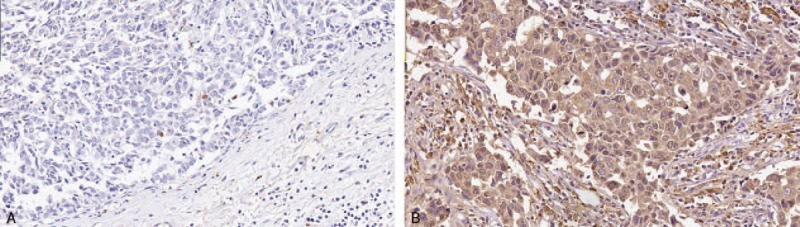
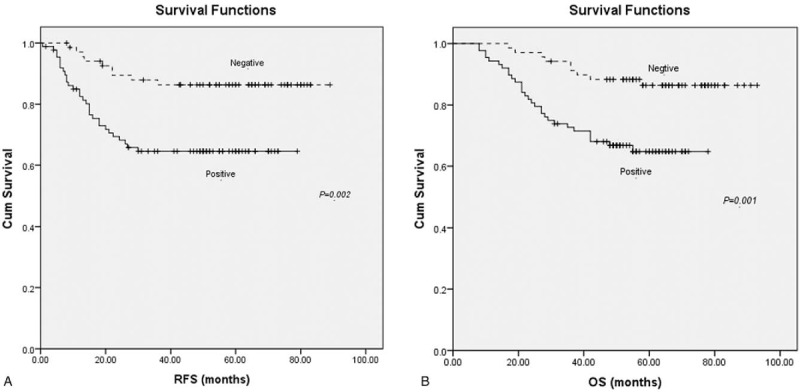
Triple negative breast cancer (TNBC) is a subset of breast cancer that is highly aggressive and has a poor prognosis. Meanwhile, cancer stem cells (CSCs) are also characterized by a strong tumorigenic potential, which might be partly responsible for the aggressive behavior of TNBC. We previously showed that CSCs are enriched in TNBC cell lines and tissues. Further experiments in animal models revealed higher tumorigenicity of CSCs sorted from TNBC cell lines. In this study, we aimed to determine the clinical relationship between CSCs and TNBC by exploring the expression of aldehyde dehydrogenase 1 (ALDH1), which is a putative marker of breast CSCs, in TNBC tissues.ALDH1 levels in paraffin-embedded tumor tissues from 158 TNBC patients were evaluated by immunohistochemistry staining using an ALDH1A1 primary antibody. Staining evaluation was performed independently by two pathologists, and the expression level of ALDH1 was evaluated in terms of the percentage and intensity of positive cells. The association of immunohistochemistry staining of ALDH1 expression with clinical parameters was also analyzed.ALDH1 expression in tumor cells was observed in 88 out of 158 cases (55.7%). Analysis of clinicopathological parameters showed that the immunohistochemistry staining of ALDH1 was significantly correlated with tumor size (P = 0.02) and stage (P = 0.04). Survival analysis in patients with ALDH1 expression demonstrated shorter relapse-free survival (RFS) and overall survival (OS) times (P = 0.01; P = 0.001). Moreover, Cox multivariate analysis revealed that ALDH1 expression was an independent prognostic indicator of RFS and OS (P = 0.04; P = 0.04).Immunohistochemistry staining of ALDH1 in tumor cells is an independent prognostic indicator of RFS and OS in TNBC patients.
三阴性乳腺癌(TNBC)是乳腺癌的一个亚型,具有高度侵袭性且预后较差。同时,癌症干细胞(CSCs)也具有很强的致瘤潜力,这可能部分解释了TNBC的侵袭性行为。我们之前表明,CSCs在TNBC细胞系和组织中富集。在动物模型中的进一步实验显示,从TNBC细胞系分选的CSCs具有更高的致瘤性。在本研究中,我们旨在通过探索醛脱氢酶1(ALDH1)的表达来确定CSCs与TNBC之间的临床关系,ALDH1是乳腺CSCs的一个假定标志物,存在于TNBC组织中。
使用ALDH1A1一抗通过免疫组织化学染色评估了158例TNBC患者石蜡包埋肿瘤组织中的ALDH1水平。由两名病理学家独立进行染色评估,并根据阳性细胞的百分比和强度评估ALDH1的表达水平。还分析了ALDH1表达的免疫组织化学染色与临床参数的相关性。
158例病例中有88例(55.7%)观察到肿瘤细胞中ALDH1表达。临床病理参数分析表明,ALDH1的免疫组织化学染色与肿瘤大小(P = 0.02)和分期(P = 0.04)显著相关。对ALDH1表达患者的生存分析显示无复发生存期(RFS)和总生存期(OS)较短(P = 0.01;P = 0.001)。此外,Cox多变量分析显示,ALDH1表达是RFS和OS的独立预后指标(P = 0.04;P = 0.04)。
肿瘤细胞中ALDH1的免疫组织化学染色是TNBC患者RFS和OS的独立预后指标。