Wassermann-Dozorets Rina, Rubinstein Menachem
Department of Molecular Genetics, The Weizmann Institute of Science, Rehovot, Israel.
Cell Death Dis. 2017 Apr 6;8(4):e2733. doi: 10.1038/cddis.2017.155.
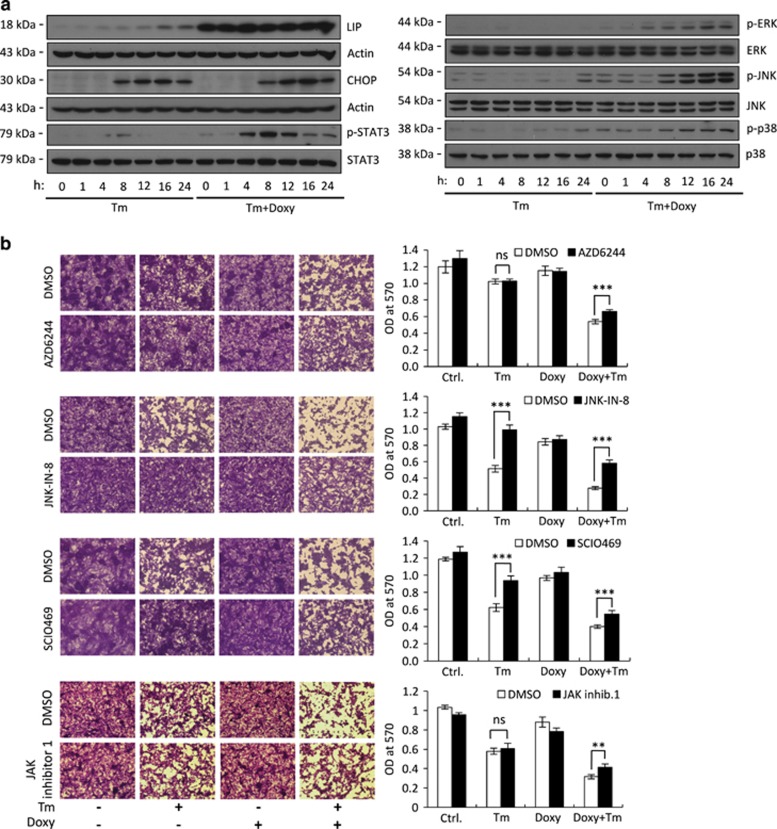
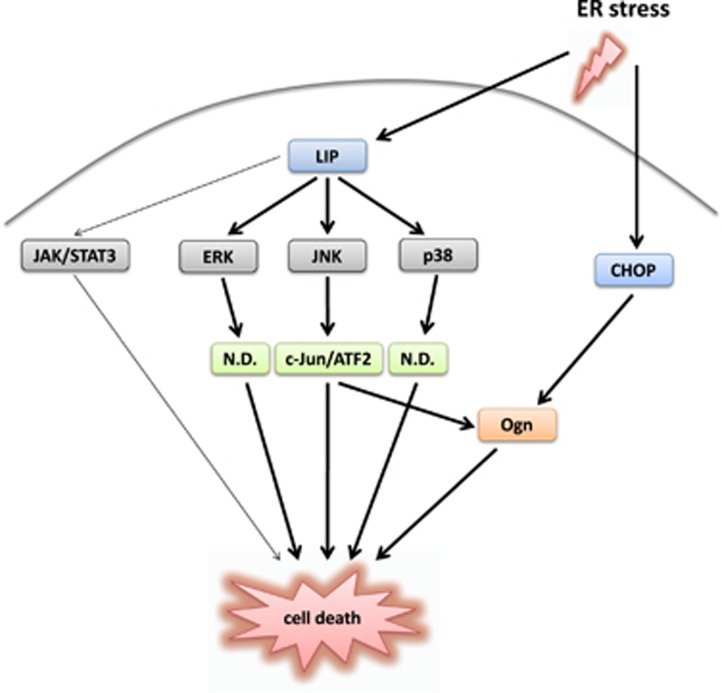
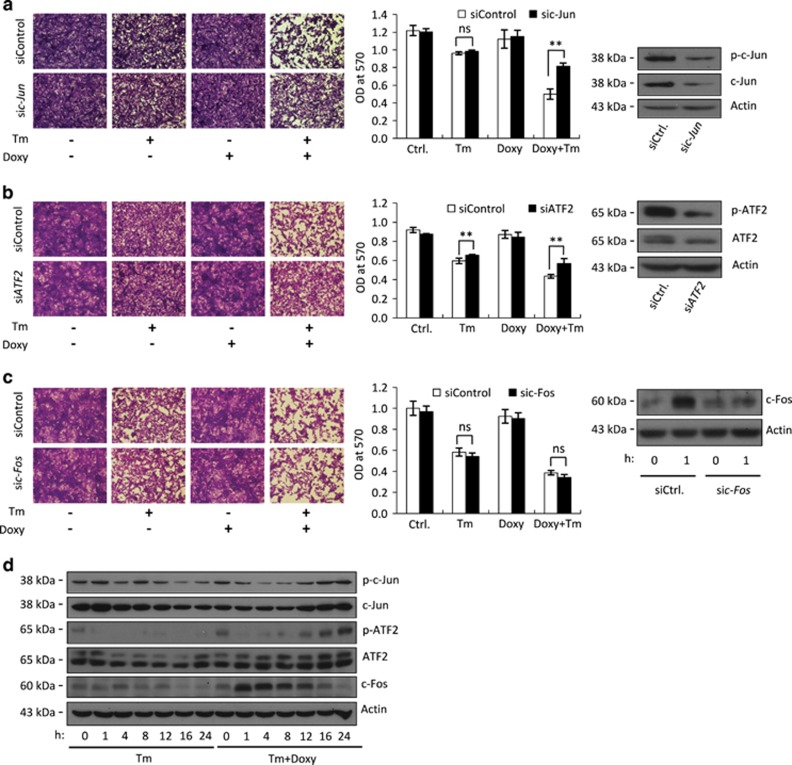
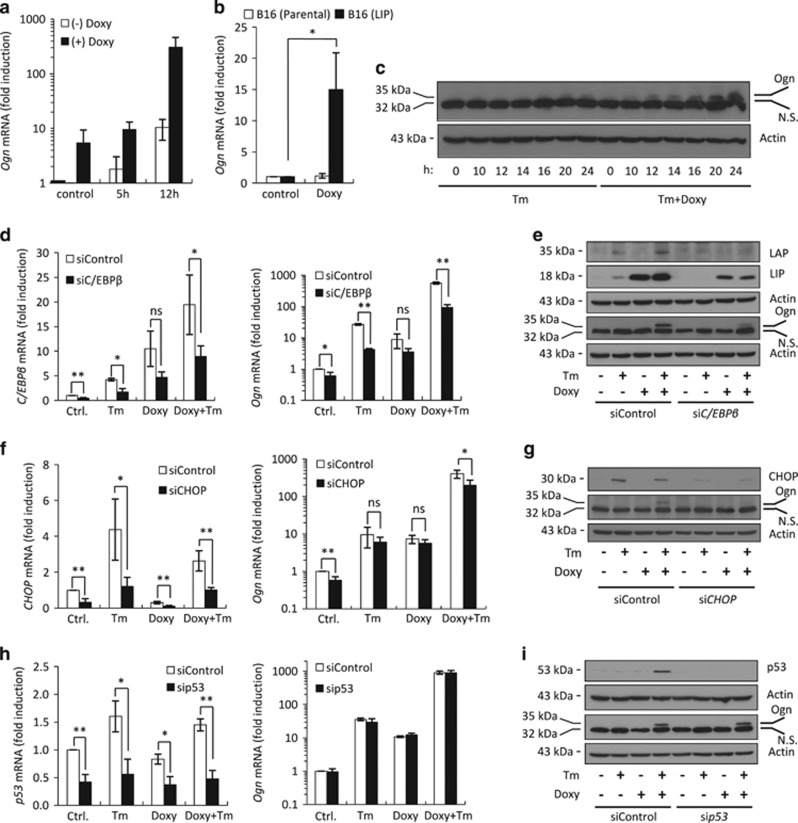
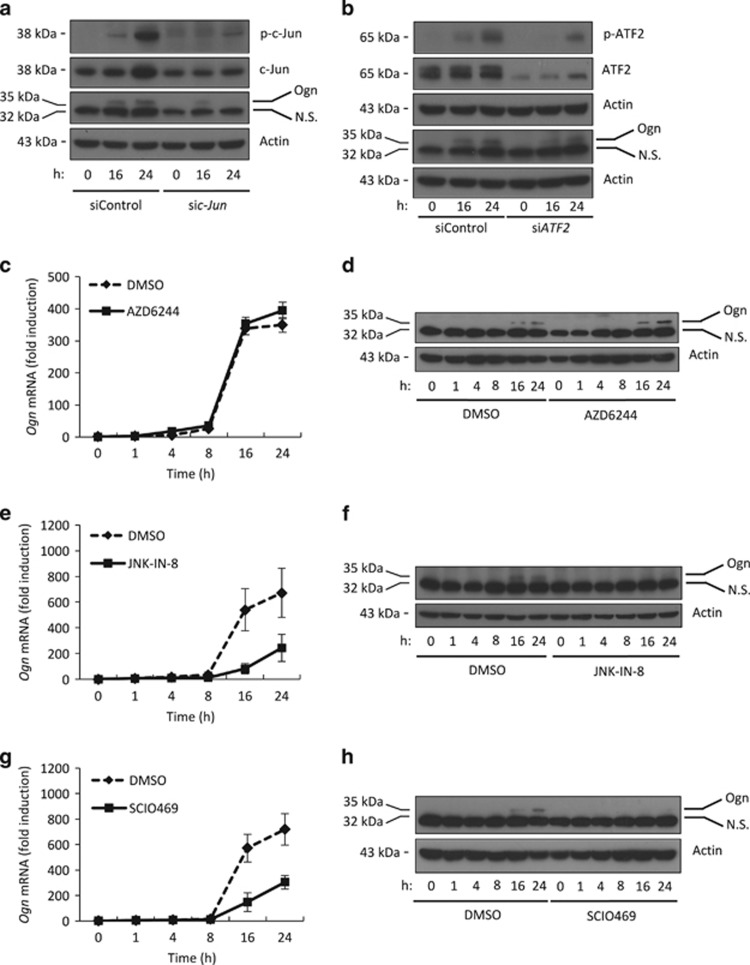
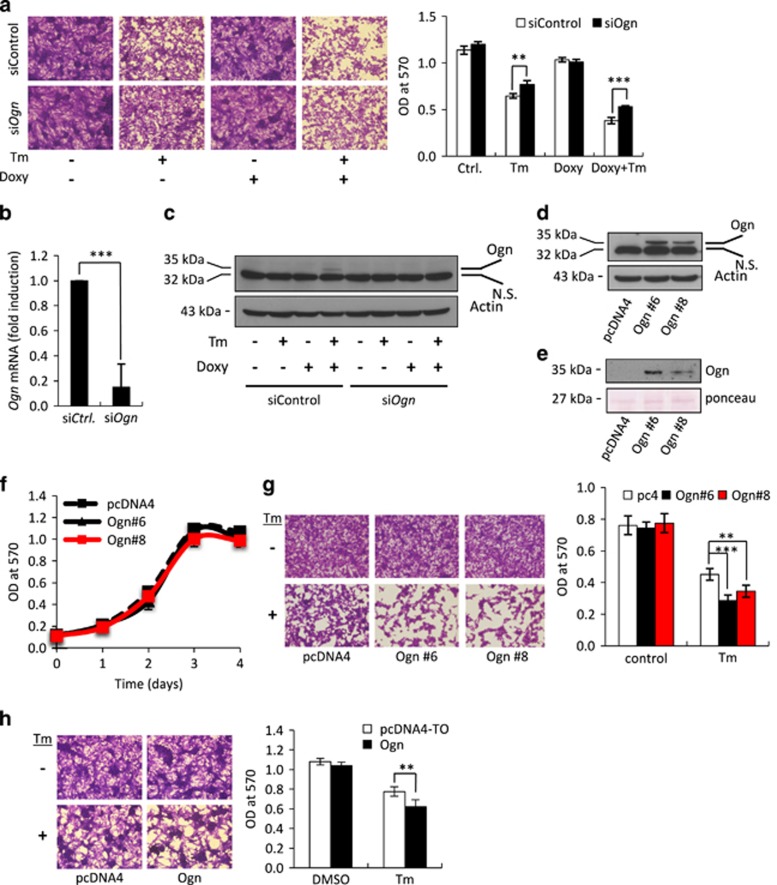
Many types of tumor cell are devoid of the extracellular matrix proteoglycan osteoglycin (Ogn), but its role in tumor biology is poorly studied. Here we show that RNAi of Ogn attenuates stress-triggered cell death, whereas its overexpression increases cell death. We found that the transcription factor C/EBPβ regulates the expression of Ogn. C/EBPβ is expressed as a full-length, active form (LAP) and as a truncated, dominant-negative form (LIP), and the LIP/LAP ratio is positively correlated with the extent of cell death under stress. For example, we reported that drug-resistant tumor cells lack LIP altogether, and its supplementation abolished their resistance to chemotherapy and to endoplasmic reticulum (ER) stress. Here we further show that elevated LIP/LAP ratio robustly increased Ogn expression and cell death under stress by modulating the mitogen-activated protein kinase/activator protein 1 pathway (MAPK/AP-1). Our findings suggest that LIP deficiency renders tumor cell resistant to ER stress by preventing the induction of Ogn.
许多类型的肿瘤细胞缺乏细胞外基质蛋白聚糖骨甘蛋白(Ogn),但其在肿瘤生物学中的作用研究较少。在此我们表明,Ogn的RNA干扰会减弱应激触发的细胞死亡,而其过表达则会增加细胞死亡。我们发现转录因子C/EBPβ调节Ogn的表达。C/EBPβ以全长活性形式(LAP)和截短的显性负性形式(LIP)表达,并且LIP/LAP比率与应激下的细胞死亡程度呈正相关。例如,我们报道耐药肿瘤细胞完全缺乏LIP,补充LIP可消除它们对化疗和内质网(ER)应激的抗性。在此我们进一步表明,升高的LIP/LAP比率通过调节丝裂原活化蛋白激酶/活化蛋白1途径(MAPK/AP-1),在应激下强烈增加Ogn表达和细胞死亡。我们的研究结果表明,LIP缺乏通过阻止Ogn的诱导使肿瘤细胞对内质网应激产生抗性。