Department of Colorectal Surgery, Fudan University Shanghai Cancer Center, 270 Dong'an Road, Shanghai, 20032, China.
Department of Oncology, Shanghai Medical College, Fudan University, Shanghai, 200032, China.
J Exp Clin Cancer Res. 2018 Mar 2;37(1):41. doi: 10.1186/s13046-018-0718-2.
Many types of cancers are devoid of the small leucine-rich proteoglycans: osteoglycin (OGN), but its role in tumorigenesis is poorly studied especially in colorectal cancers (CRC). Here we aim to evaluate the relationship between OGN expression patterns and the clinical course of CRC, and the role of OGN in cancer progression.
The tissue microarray staining was performed and the relevance between OGN expression and oncologic outcomes was performed using Cox regression analysis. The effect of OGN on cell proliferation and tumorigenesis was examined in vitro and in vivo. Immunoprecipitation assay, immunofluorescence analysis and internalization assay were used for mechanistic study.
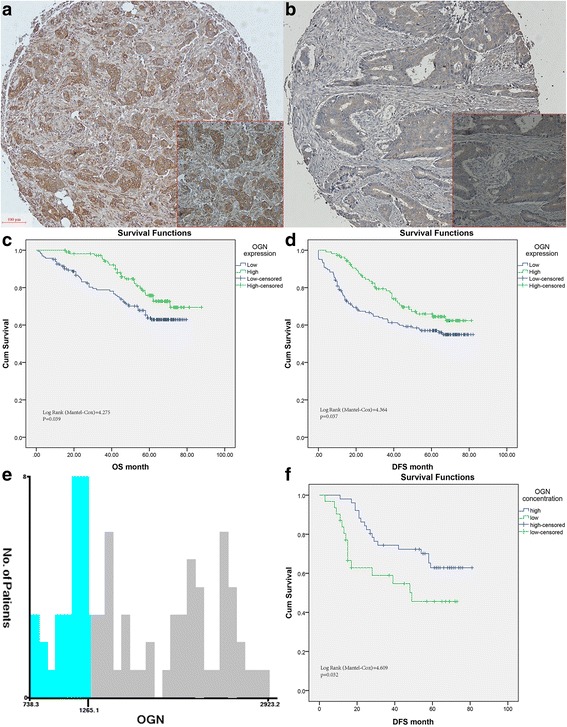
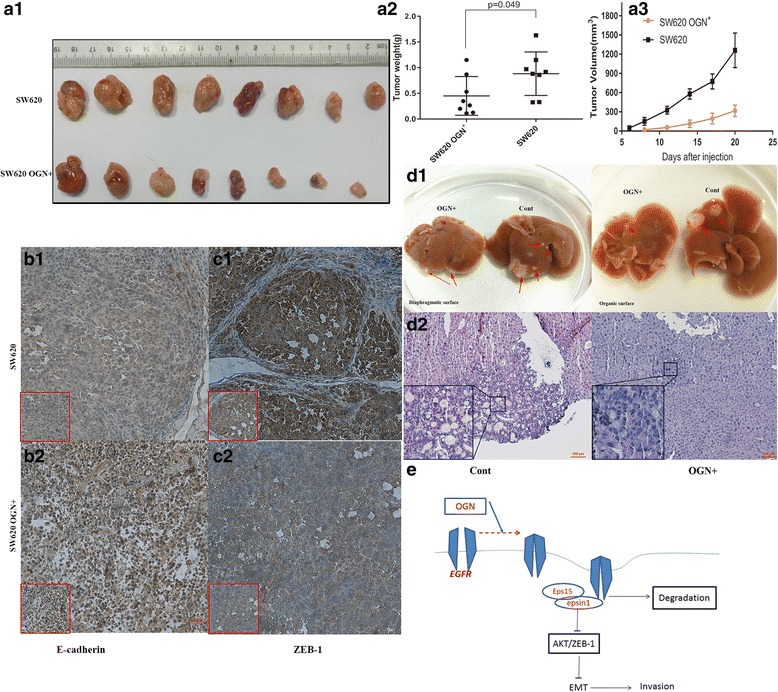
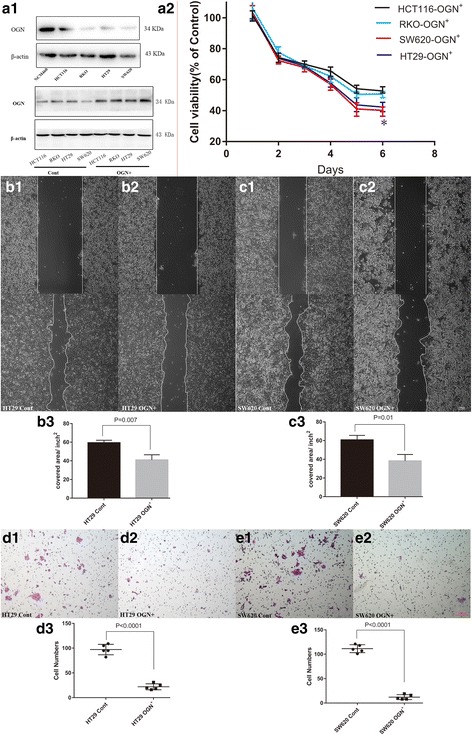
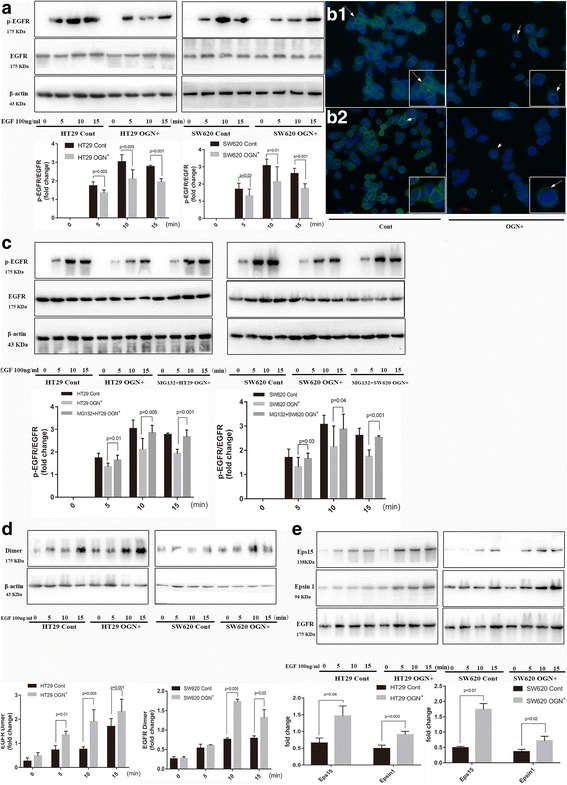
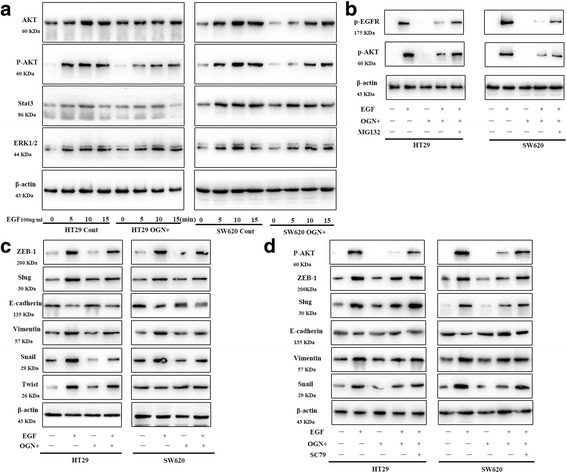
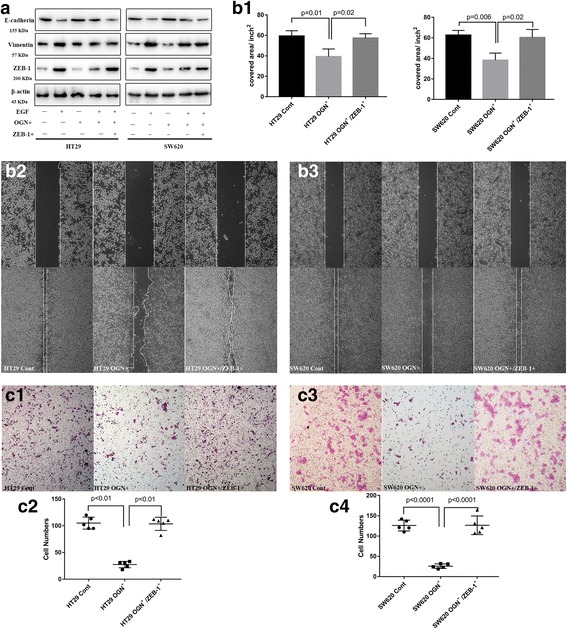
Patients with high expression of OGN were associated with a profound longer survival in CRC and the high serum OGN level was also indicative of fewer recurrences consistently. In colon cancer cells, OGN increased dimerization of EGFR, then triggered EGFR endocytosis and induced the recruitment of downstream components of the EGFR internalization machinery (Eps15 and epsin1). Above all, OGN reduced Zeb-1 expression via EGFR/Akt leading to inhibition of epithelial-mesenchymal transition. As results, in vitro and in vivo, the OGN expression was demonstrated to reduce cell proliferation, inhibit invasion of colon cancer cells then impede cancer progression.
There is a positive association between OGN level and prolonged survival in CRC. OGN plays a restrictive role in colorectal cancer progression by reduced activation of EGFR/AKT/Zeb-1.
许多类型的癌症缺乏小分子富含亮氨酸的蛋白聚糖:骨桥蛋白(OGN),但其在肿瘤发生中的作用尚未得到充分研究,尤其是在结直肠癌(CRC)中。在这里,我们旨在评估 OGN 表达模式与 CRC 临床病程之间的关系,以及 OGN 在癌症进展中的作用。
进行组织微阵列染色,并使用 Cox 回归分析评估 OGN 表达与肿瘤学结果之间的相关性。在体外和体内检查 OGN 对细胞增殖和肿瘤发生的影响。使用免疫沉淀测定、免疫荧光分析和内化测定进行机制研究。
OGN 高表达的患者在 CRC 中具有显著更长的生存时间,并且高水平的血清 OGN 也一致预示着更少的复发。在结肠癌细胞中,OGN 增加了 EGFR 的二聚化,然后触发 EGFR 内化,并诱导 EGFR 内化机制的下游成分(Eps15 和 epsin1)的募集。最重要的是,OGN 通过 EGFR/Akt 降低了 Zeb-1 的表达,从而抑制了上皮-间充质转化。结果,在体外和体内,证明 OGN 表达可减少细胞增殖,抑制结肠癌细胞侵袭,从而阻碍癌症进展。
OGN 水平与 CRC 患者的生存时间延长呈正相关。OGN 通过减少 EGFR/AKT/Zeb-1 的激活,在结直肠癌细胞进展中发挥限制作用。