Chen Chun-Hao, He Chun-Wei, Liao Chien-Po, Pan Chun-Liang
Institute of Molecular Medicine, College of Medicine, National Taiwan University, Taipei, Taiwan.
PLoS Genet. 2017 Apr 6;13(4):e1006720. doi: 10.1371/journal.pgen.1006720. eCollection 2017 Apr.
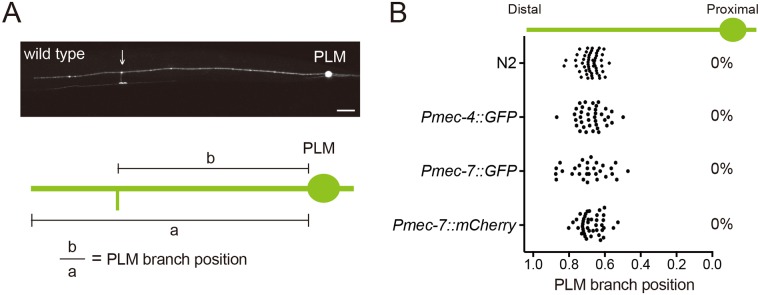
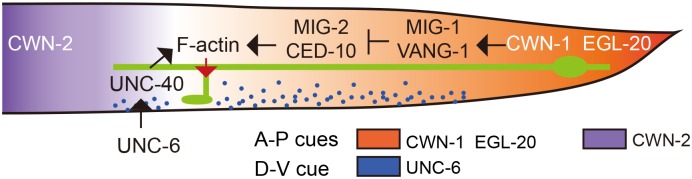
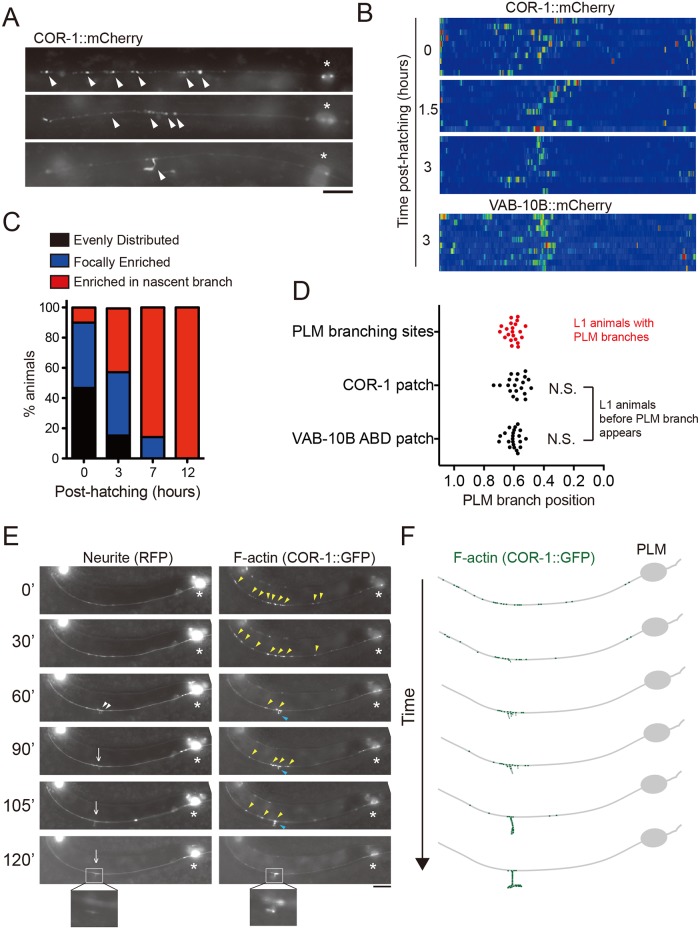
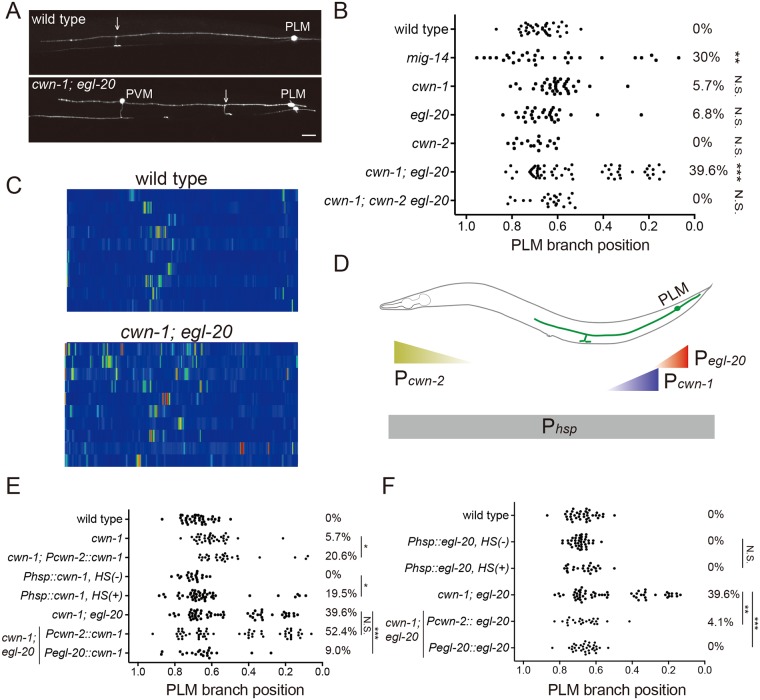
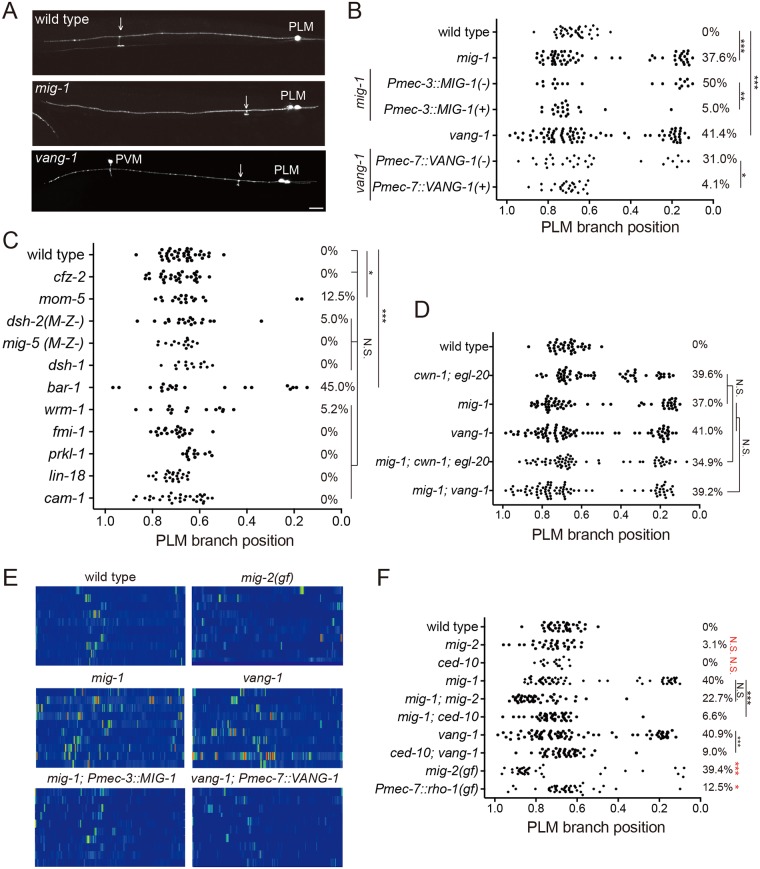
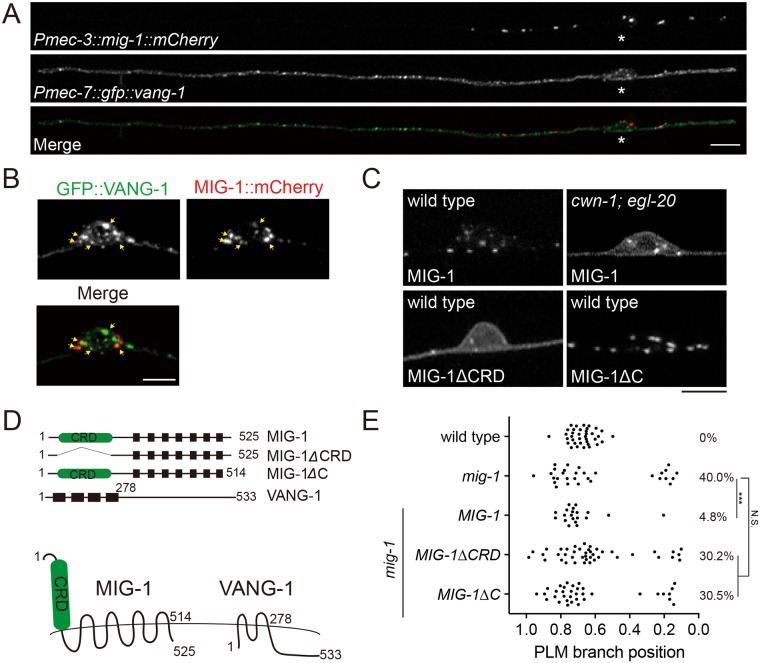
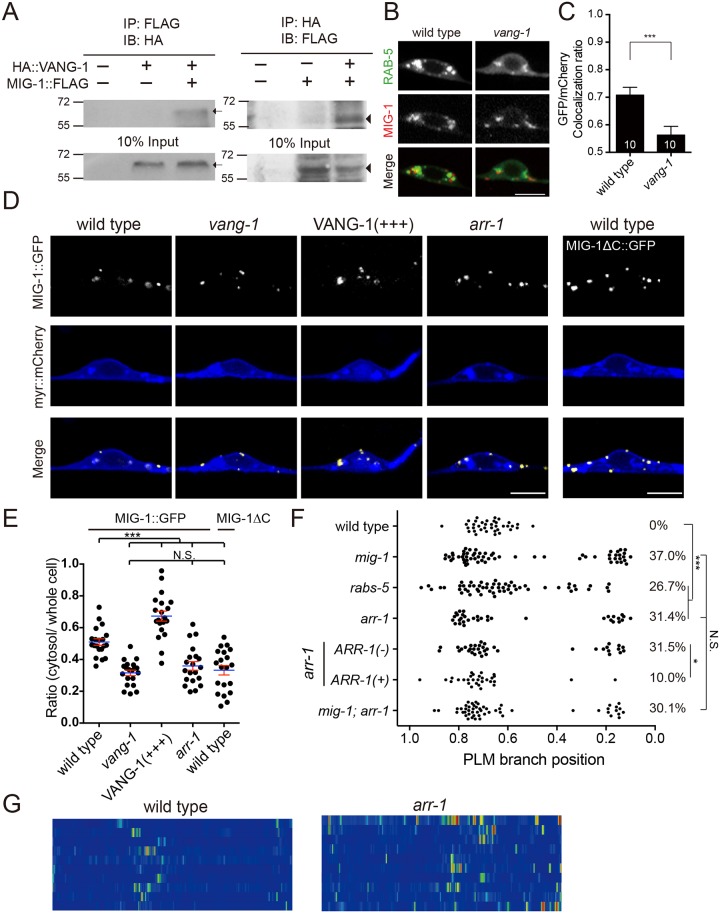
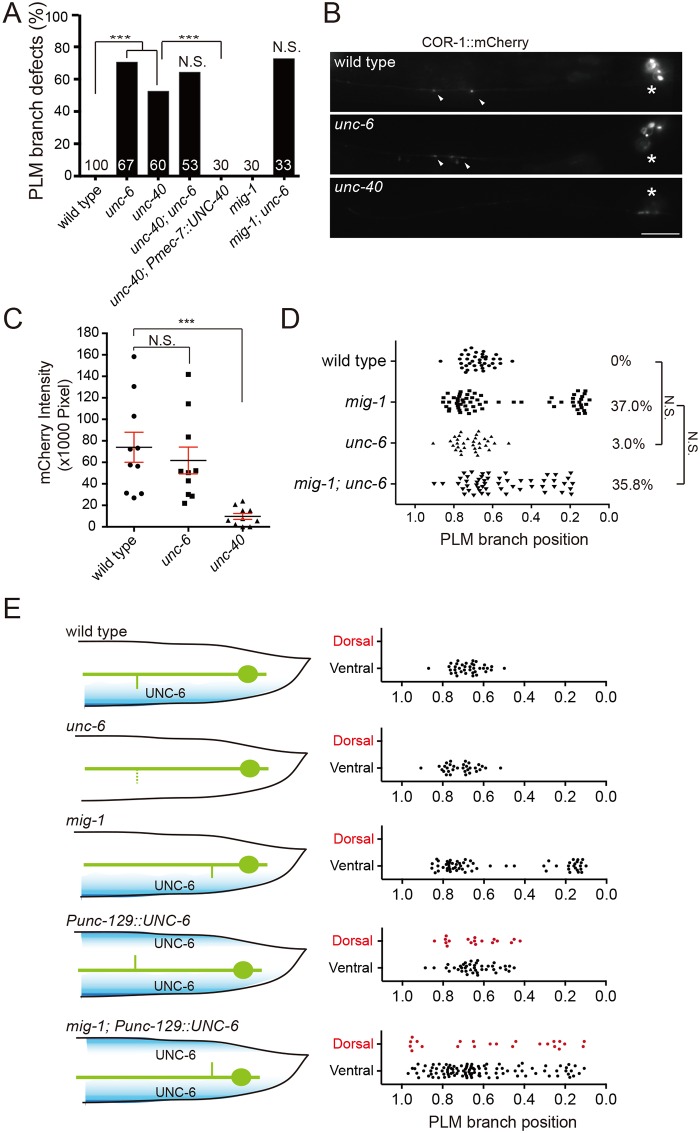
Spatial arrangement of neurite branching is instructed by both attractive and repulsive cues. Here we show that in C. elegans, the Wnt family of secreted glycoproteins specify neurite branching sites in the PLM mechanosensory neurons. Wnts function through MIG-1/Frizzled and the planar cell polarity protein (PCP) VANG-1/Strabismus/Vangl2 to restrict the formation of F-actin patches, which mark branching sites in nascent neurites. We find that VANG-1 promotes Wnt signaling by facilitating Frizzled endocytosis and genetically acts in a common pathway with arr-1/β-arrestin, whose mutation results in defective PLM branching and F-actin patterns similar to those in the Wnt, mig-1 or vang-1 mutants. On the other hand, the UNC-6/Netrin pathway intersects orthogonally with Wnt-PCP signaling to guide PLM branch growth along the dorsal-ventral axis. Our study provides insights for how attractive and repulsive signals coordinate to sculpt neurite branching patterns, which are critical for circuit connectivity.
神经突分支的空间排列受吸引和排斥信号的共同指导。我们在此表明,在秀丽隐杆线虫中,分泌型糖蛋白的Wnt家族决定了PLM机械感觉神经元中的神经突分支位点。Wnts通过MIG-1/卷曲蛋白和平面细胞极性蛋白(PCP)VANG-1/斜视蛋白/Vangl2发挥作用,以限制F-肌动蛋白斑块的形成,这些斑块标志着新生神经突中的分支位点。我们发现,VANG-1通过促进卷曲蛋白的内吞作用来促进Wnt信号传导,并且在与arr-1/β-抑制蛋白的共同途径中发挥遗传作用,其突变导致PLM分支和F-肌动蛋白模式缺陷,类似于Wnt、mig-1或vang-1突变体中的情况。另一方面,UNC-6/网蛋白途径与Wnt-PCP信号正交相交,以指导PLM分支沿背腹轴生长。我们的研究为吸引和排斥信号如何协同塑造对回路连接至关重要的神经突分支模式提供了见解。