Urano-Morisawa Eri, Takami Masamichi, Suzawa Tetsuo, Matsumoto Akifumi, Osumi Noriko, Baba Kazuyoshi, Kamijo Ryutaro
Department of Biochemistry, School of Dentistry, Showa University, Tokyo, Japan.
Department of Prosthodontics, School of Dentistry, Showa University, Tokyo, Japan.
PLoS One. 2017 Apr 6;12(4):e0174940. doi: 10.1371/journal.pone.0174940. eCollection 2017.
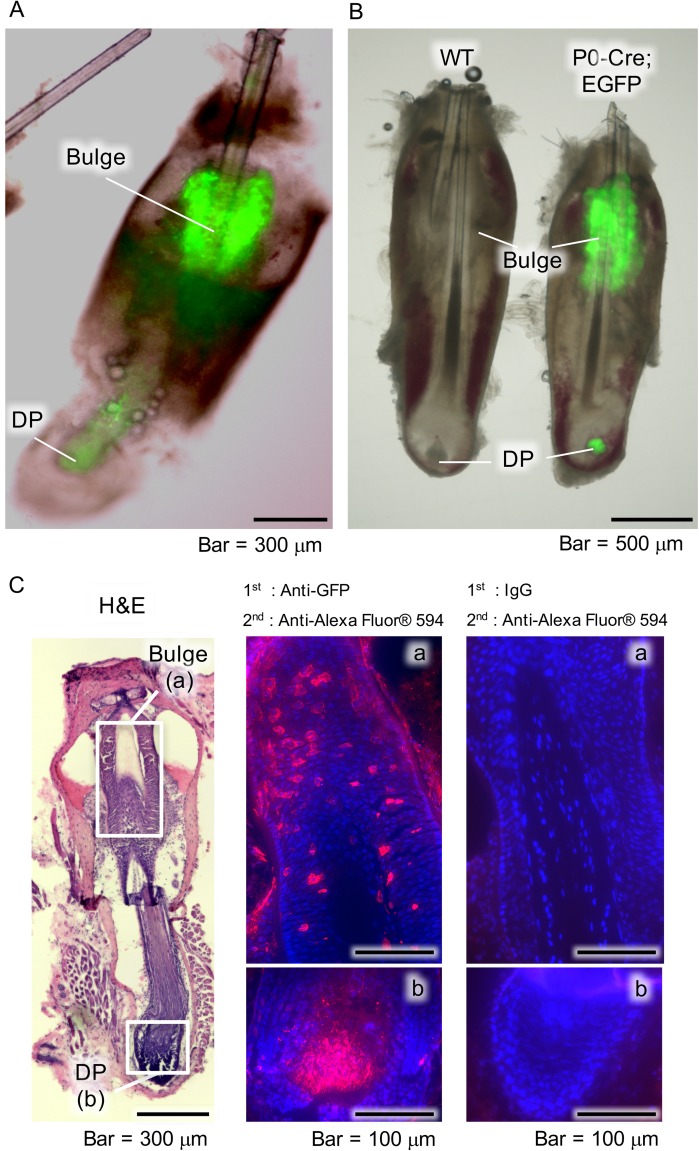
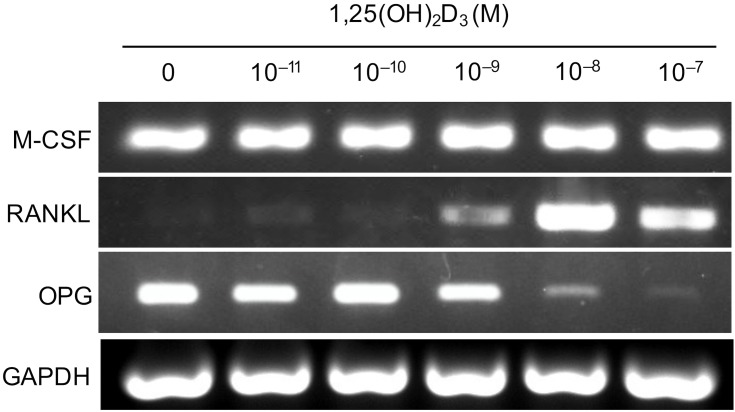
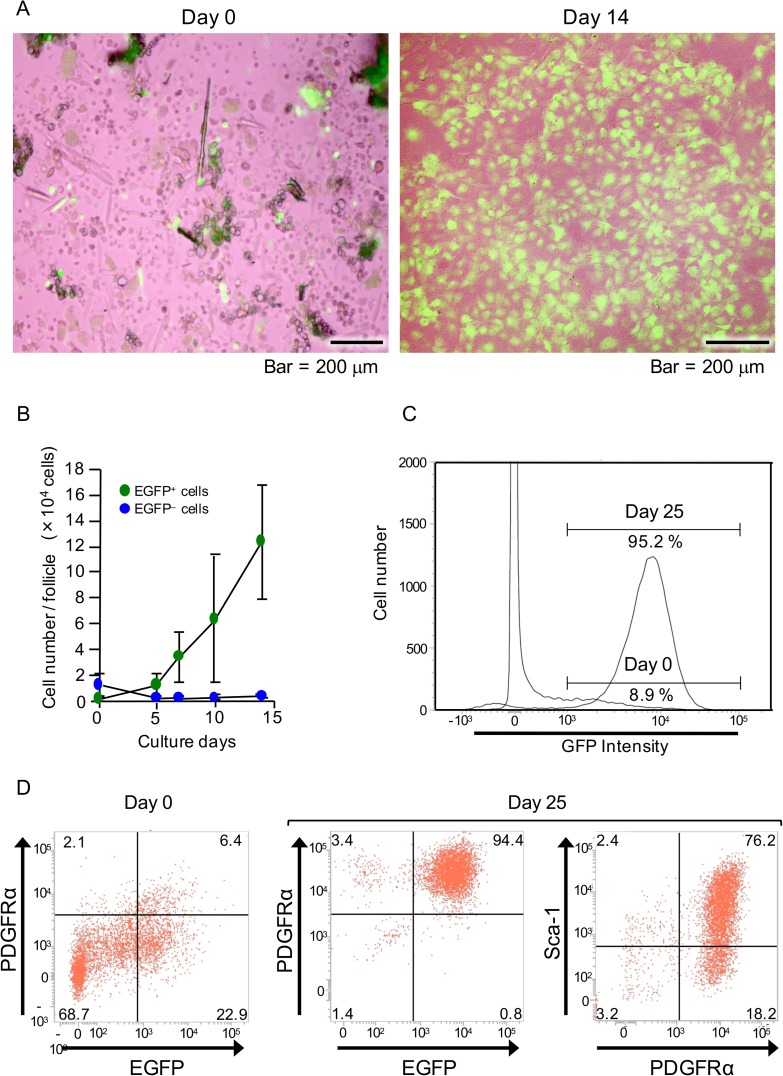
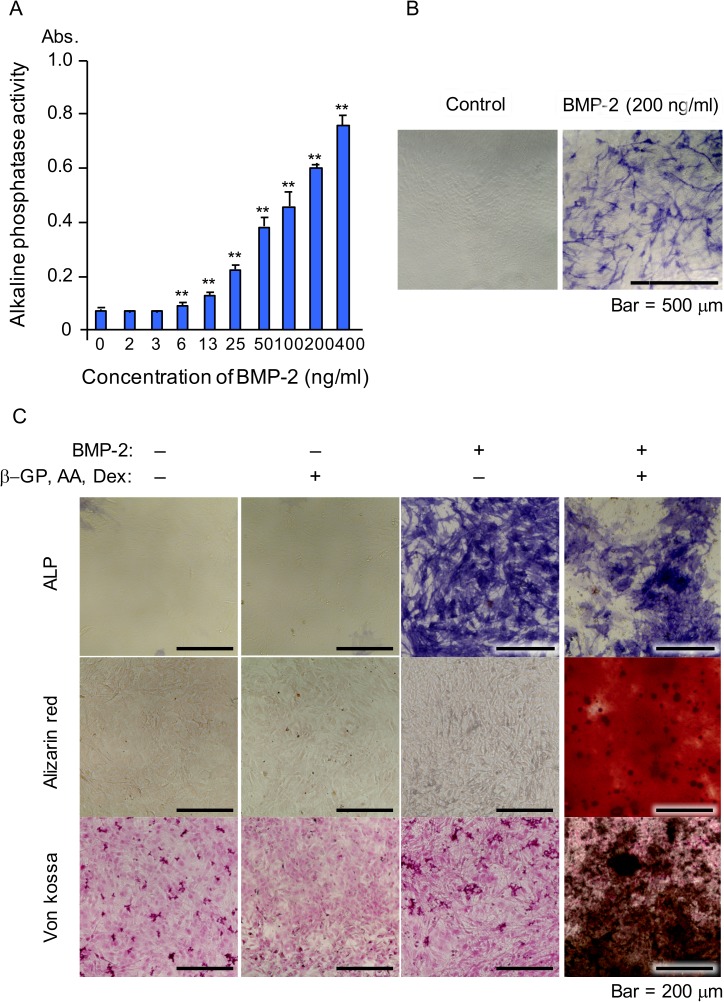
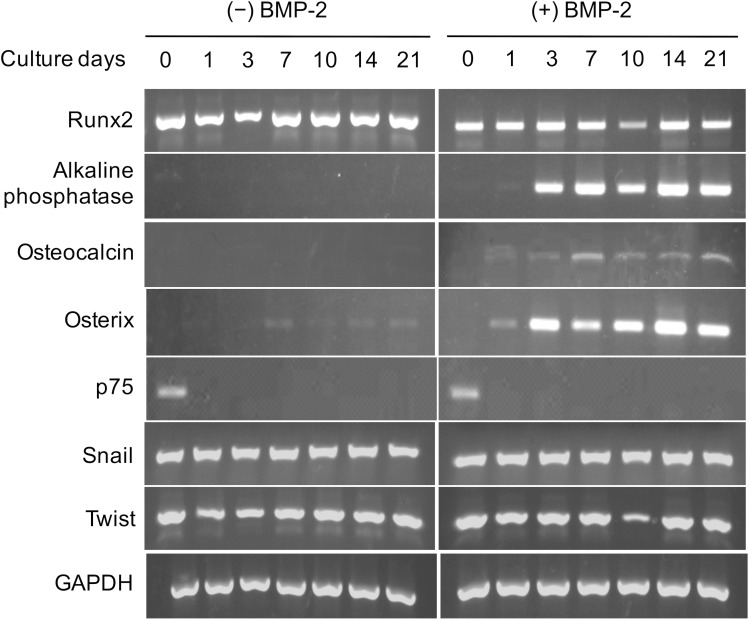
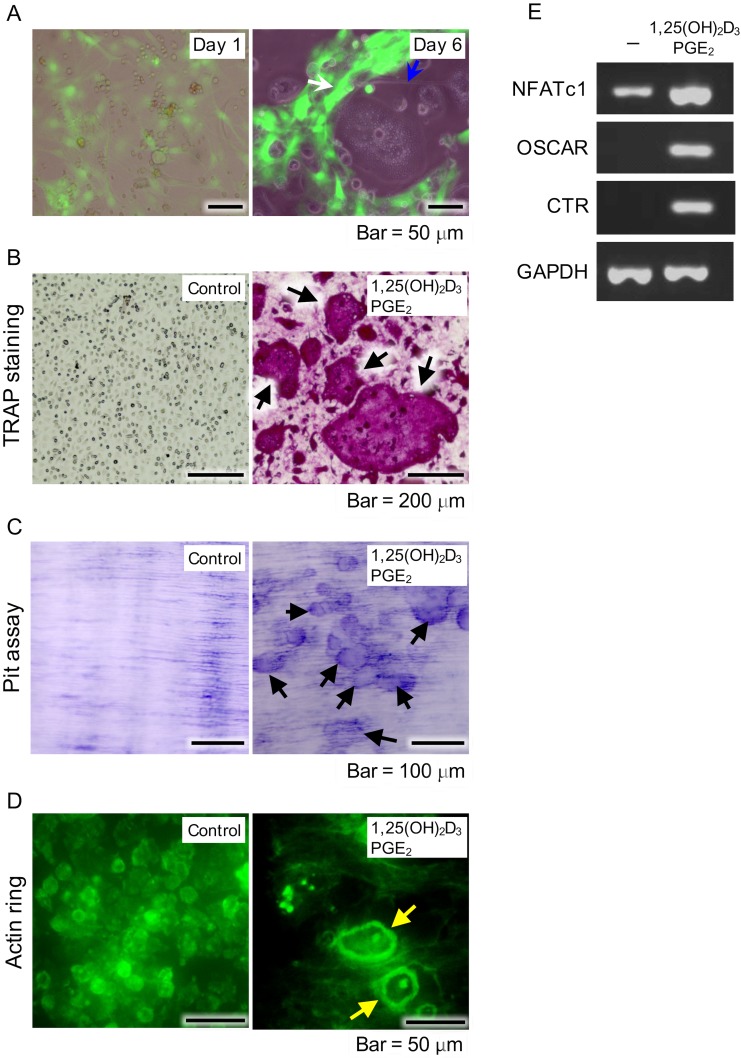
The neural crest (NC) arises near the neural tube during embryo development. NC cells migrate throughout the embryo and have potential to differentiate into multiple cell types, such as peripheral nerves, glial, cardiac smooth muscle, endocrine, and pigment cells, and craniofacial bone. In the present study, we induced osteoblast-like cells using whisker follicles obtained from the NC of mice. Hair follicle cells derived from the NC labeled with enhanced green fluorescent protein (EGFP) were collected from protein zero-Cre/floxed-EGFP double transgenic mice and cultured, then treated and cultured in stem cell growth medium. After growth for 14 days, results of flow cytometry analysis showed that 95% of the EGFP-positive (EGFP+) hair follicle cells derived from the NC had proliferated and 76.2% of those expressed mesenchymal stem cells markers, such as platelet-derived growth factor α and stem cell antigen-1, and also showed constitutive expression of Runx2 mRNA. Cells stimulated with bone morphogenetic protein-2 expressed osteocalcin, osterix, and alkaline phosphatase mRNA, resulting in production of mineralized matrices, which were detected by von Kossa and alizarin red staining. Moreover, EGFP+ hair follicle cells consistently expressed macrophage colony-stimulating factor and osteoprotegerin (OPG). Addition of 1α,25-dihydroxyvitamin D3 [1,25(OH)2D3] (10-8 M) to the cultures suppressed OPG expression and induced RANKL production in the cells. Furthermore, multinucleated osteoclasts appeared within 6 days after starting co-cultures of bone marrow cells with EGFP+ cells in the presence of 1,25(OH)2D3 and PGE2. These results suggest that NC-derived hair follicle cells possess a capacity for osteoblastic differentiation and may be useful for developing new bone regenerative medicine therapies.
神经嵴(NC)在胚胎发育过程中出现在神经管附近。神经嵴细胞迁移至整个胚胎,并具有分化为多种细胞类型的潜力,如周围神经、神经胶质细胞、心脏平滑肌、内分泌细胞、色素细胞和颅面骨。在本研究中,我们使用从小鼠神经嵴获得的毛囊诱导成骨样细胞。从蛋白零-Cre/loxed-增强绿色荧光蛋白(EGFP)双转基因小鼠的神经嵴中收集标记有增强绿色荧光蛋白的毛囊细胞并进行培养,然后在干细胞生长培养基中进行处理和培养。生长14天后,流式细胞术分析结果显示,95%源自神经嵴的EGFP阳性(EGFP+)毛囊细胞发生了增殖,其中76.2%表达间充质干细胞标志物,如血小板衍生生长因子α和干细胞抗原-1,并且还显示出Runx2 mRNA的组成性表达。用骨形态发生蛋白-2刺激的细胞表达骨钙素、osterix和碱性磷酸酶mRNA,从而产生矿化基质,通过冯科萨染色和茜素红染色检测到这些矿化基质。此外,EGFP+毛囊细胞持续表达巨噬细胞集落刺激因子和骨保护素(OPG)。向培养物中添加1α,25-二羟基维生素D3 [1,25(OH)2D3](10-8 M)可抑制OPG表达并诱导细胞中RANKL的产生。此外,在1,25(OH)·2D3和前列腺素E2存在的情况下,将骨髓细胞与EGFP+细胞共培养开始后6天内出现了多核破骨细胞。这些结果表明,源自神经嵴的毛囊细胞具有成骨分化能力,可能有助于开发新的骨再生医学疗法。