Poroca Diogo R, Pelis Ryan M, Chappe Valérie M
Department of Physiology and Biophysics, Dalhousie University, Halifax NS, Canada.
Department of Pharmacology, Dalhousie University, Halifax NS, Canada.
Front Pharmacol. 2017 Mar 23;8:151. doi: 10.3389/fphar.2017.00151. eCollection 2017.
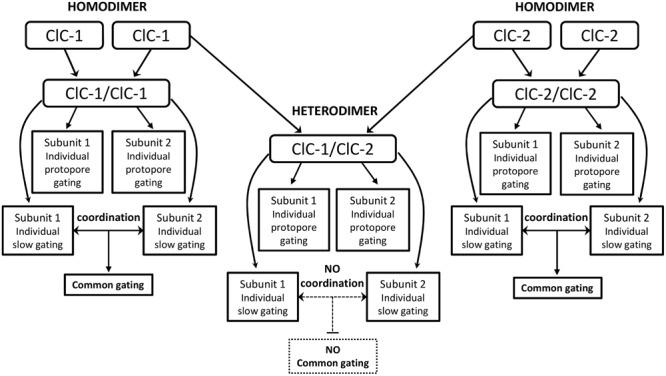
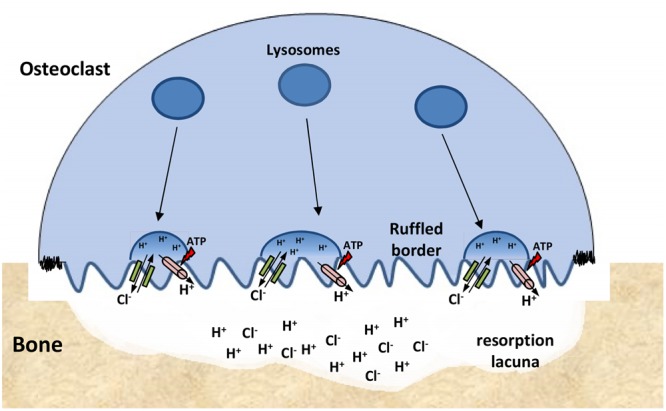
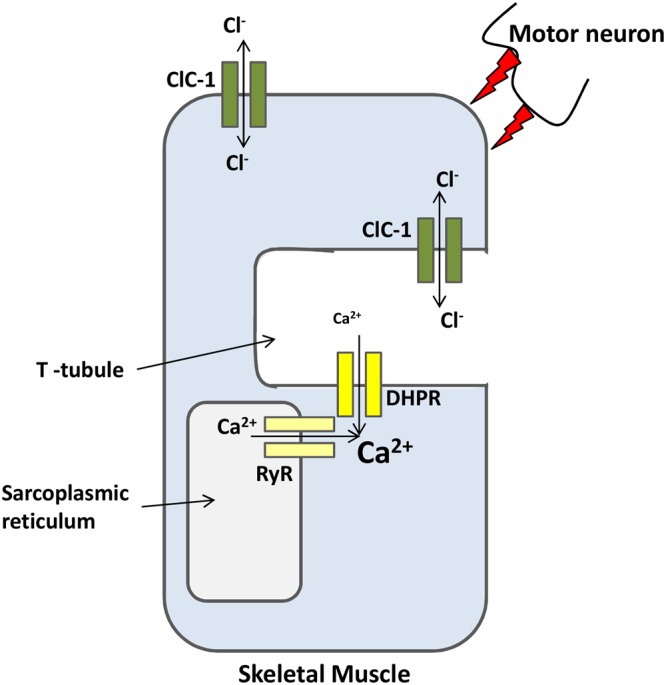
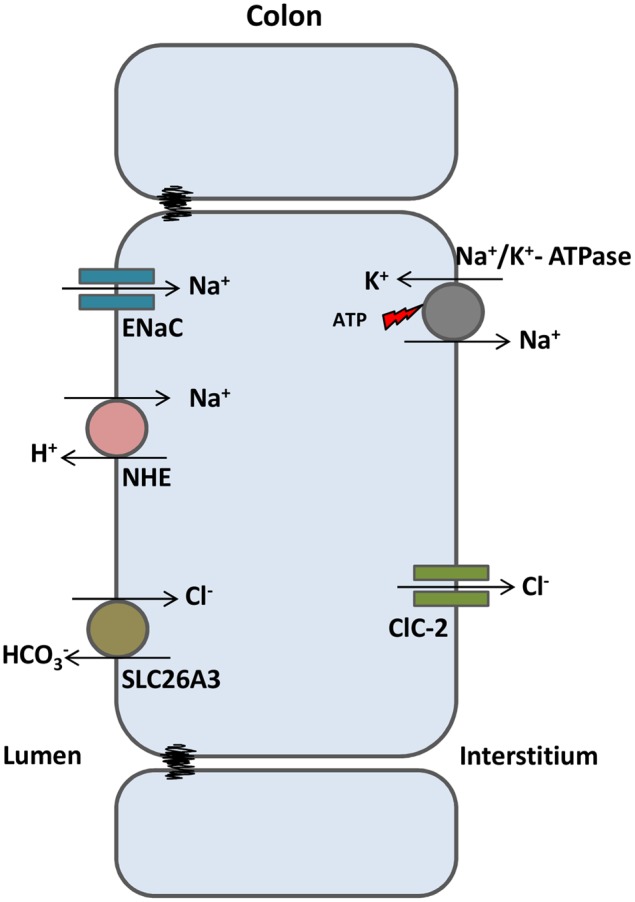
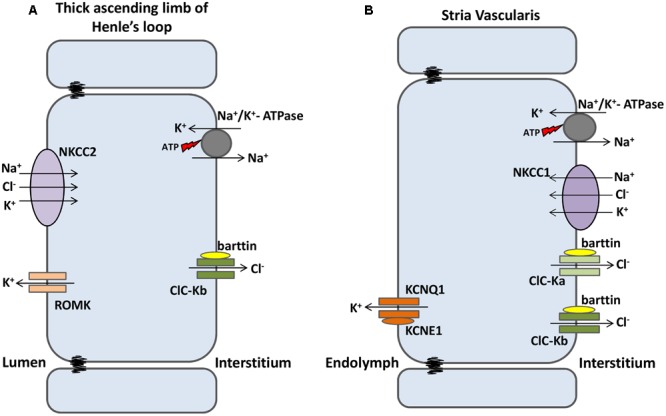
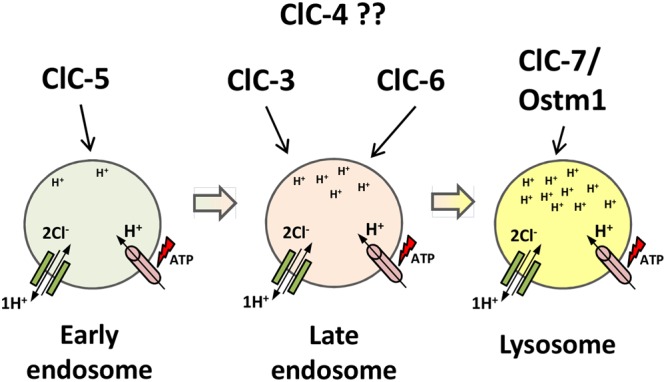
The discovery of ClC proteins at the beginning of the 1990s was important for the development of the Cl transport research field. ClCs form a large family of proteins that mediate voltage-dependent transport of Cl ions across cell membranes. They are expressed in both plasma and intracellular membranes of cells from almost all living organisms. ClC proteins form transmembrane dimers, in which each monomer displays independent ion conductance. Eukaryotic members also possess a large cytoplasmic domain containing two CBS domains, which are involved in transport modulation. ClC proteins function as either Cl channels or Cl/H exchangers, although all ClC proteins share the same basic architecture. ClC channels have two gating mechanisms: a relatively well-studied fast gating mechanism, and a slow gating mechanism, which is poorly defined. ClCs are involved in a wide range of physiological processes, including regulation of resting membrane potential in skeletal muscle, facilitation of transepithelial Cl reabsorption in kidneys, and control of pH and Cl concentration in intracellular compartments through coupled Cl/H exchange mechanisms. Several inherited diseases result from C1C gene mutations, including myotonia congenita, Bartter's syndrome (types 3 and 4), Dent's disease, osteopetrosis, retinal degeneration, and lysosomal storage diseases. This review summarizes general features, known or suspected, of ClC structure, gating and physiological functions. We also discuss biophysical properties of mammalian ClCs that are directly involved in the pathophysiology of several human inherited disorders, or that induce interesting phenotypes in animal models.
20世纪90年代初ClC蛋白的发现对Cl转运研究领域的发展具有重要意义。ClC蛋白构成了一个大家族,介导Cl离子跨细胞膜的电压依赖性转运。它们在几乎所有生物体细胞的质膜和内膜中均有表达。ClC蛋白形成跨膜二聚体,其中每个单体具有独立的离子电导。真核生物成员还拥有一个包含两个CBS结构域的大细胞质结构域,这两个结构域参与转运调节。尽管所有ClC蛋白都具有相同的基本结构,但它们既可以作为Cl通道发挥作用,也可以作为Cl/H交换体发挥作用。ClC通道有两种门控机制:一种是研究相对充分的快速门控机制,另一种是定义尚不明确的慢速门控机制。ClC蛋白参与广泛的生理过程,包括调节骨骼肌的静息膜电位、促进肾脏上皮细胞Cl的重吸收,以及通过耦合的Cl/H交换机制控制细胞内区室的pH值和Cl浓度。几种遗传性疾病是由C1C基因突变引起的,包括先天性肌强直、巴特综合征(3型和4型)、丹特病、骨硬化症、视网膜变性和溶酶体贮积病。本综述总结了ClC结构、门控和生理功能的已知或疑似一般特征。我们还讨论了哺乳动物ClC的生物物理特性,这些特性直接参与了几种人类遗传性疾病的病理生理学过程,或在动物模型中诱导出有趣的表型。