Wang Menglei, Liang Liuping, Li Li, Han Kai, Li Qian, Peng Yusheng, Peng Xuebiao, Zeng Kang
Department of Dermatology, Nanfang Hospital, Southern Medical University, Guangzhou, Guangdong 510515, P.R. China.
Mol Med Rep. 2017 Jun;15(6):3479-3484. doi: 10.3892/mmr.2017.6422. Epub 2017 Apr 3.
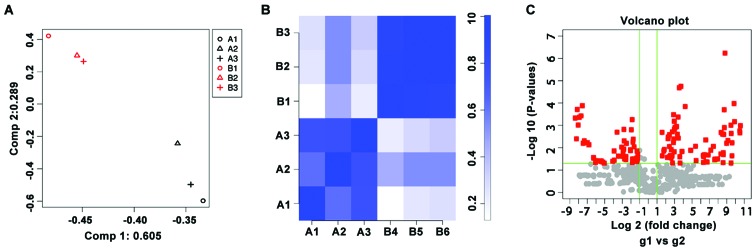
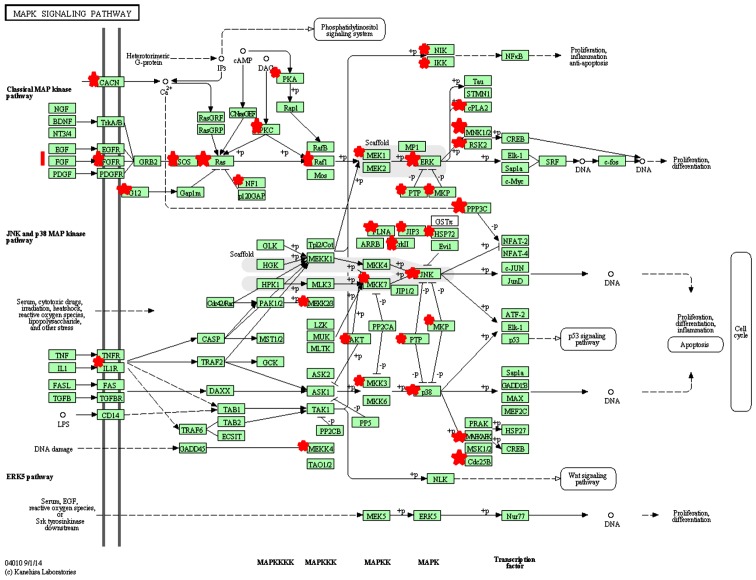
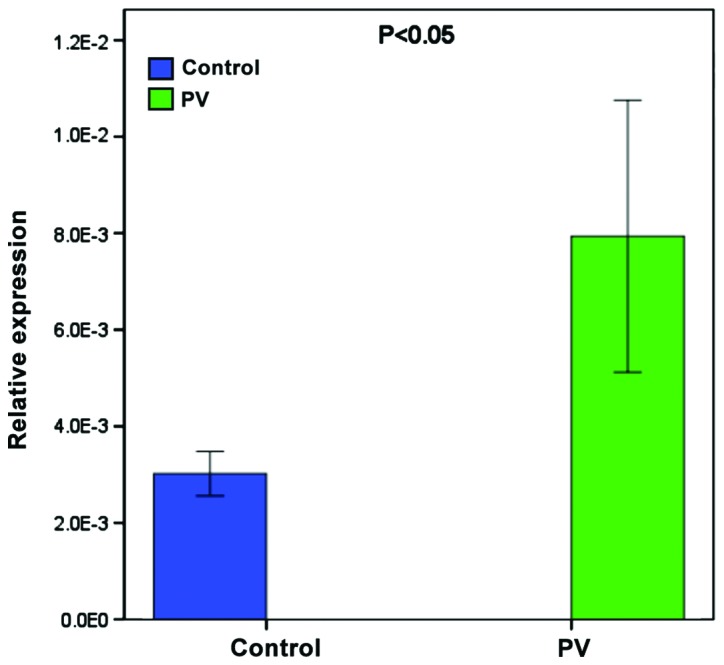
Pemphigus is an autoimmune disease that causes blisters and erosions in the skin and mucous membranes. The development of pemphigus is associated with the imbalance of T‑cell and humoral responses. MicroRNAs (miRNAs) can regulate many cell functions. However, whether miRNA expression is altered in peripheral blood mononuclear cells (PBMCs) during the pathogenesis of pemphigus has not been clarified. The aim of the present study was to examine the miRNA expression profiles of PBMCs from patients with pemphigus. The expression profiles of miRNAs in PBMCs from patients with active pemphigus (n=3) and healthy subjects (n=3) were analyzed by microarray. The relative levels of miR-424-5p expression in PBMCs from 9 patients and controls were validated by RT-qPCR. The functional and biological processes of the differentially expressed miRNAs were analyzed by bioinformatics. There were 124 differentially expressed miRNAs in PBMCs from the patients with pemphigus, compared with healthy controls, including 71 that were upregulated (P<0.05, fold change >2), and 53 that were downregulated (P<0.05, fold change <0.5). miR-424-5p was highly expressed in patients with pemphigus. Bioinformatics analysis indicated that the genes targeted by miR-424-5p were involved in intracellular signaling cascades, phosphate metabolism and regulation of kinase activity. The predicted target genes were associated with the T-cell receptor and mitogen-activated protein kinase signaling pathways as well as others. In conclusion, the results have demonstrated the miRNA expression profile, and verified that miR-424-5p was upregulated in PBMCs from patients with pemphigus. The biological function and potential pathways of miR-424-5p in pemphigus were predicted. Thus, miR-424-5p may contribute to the pathogenesis of pemphigus.
天疱疮是一种自身免疫性疾病,可导致皮肤和黏膜出现水疱和糜烂。天疱疮的发生与T细胞和体液反应的失衡有关。微小RNA(miRNA)可调节多种细胞功能。然而,在天疱疮发病机制中,外周血单个核细胞(PBMC)中miRNA表达是否改变尚未明确。本研究的目的是检测天疱疮患者PBMC中的miRNA表达谱。通过微阵列分析活动期天疱疮患者(n = 3)和健康受试者(n = 3)PBMC中miRNA的表达谱。采用RT-qPCR验证9例患者和对照者PBMC中miR-424-5p的相对表达水平。通过生物信息学分析差异表达miRNA的功能和生物学过程。与健康对照相比,天疱疮患者PBMC中有124个差异表达的miRNA,其中71个上调(P<0.05,变化倍数>2),53个下调(P<0.05,变化倍数<0.5)。miR-424-5p在天疱疮患者中高表达。生物信息学分析表明,miR-424-5p靶向的基因参与细胞内信号级联反应、磷酸盐代谢和激酶活性调节。预测的靶基因与T细胞受体和丝裂原活化蛋白激酶信号通路等有关。总之,结果显示了miRNA表达谱,并证实天疱疮患者PBMC中miR-424-5p上调。预测了miR-424-5p在天疱疮中的生物学功能和潜在途径。因此,miR-424-5p可能参与天疱疮的发病机制。