Eisermann Kurtis, Fraizer Gail
School of Biomedical Sciences, Kent State University, Kent, OH 44242, USA.
Department of Biological Sciences, Kent State University, Kent, OH 44242, USA.
Cancers (Basel). 2017 Apr 10;9(4):32. doi: 10.3390/cancers9040032.
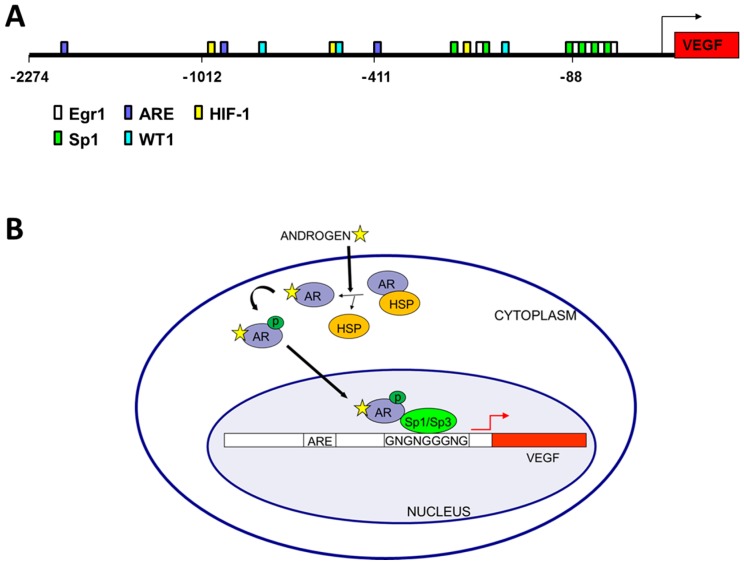
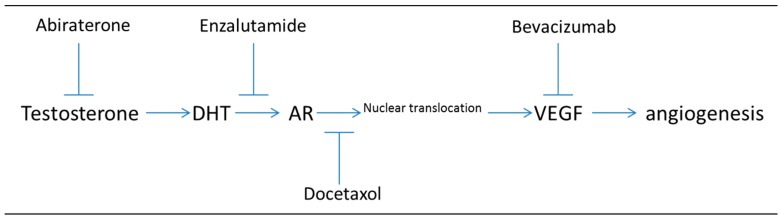
Prostate cancer progression is controlled by the androgen receptor and new blood vessel formation, or angiogenesis, which promotes metastatic prostate cancer growth. Angiogenesis is induced by elevated expression of vascular endothelial growth factor (VEGF). VEGF is regulated by many factors in the tumor microenvironment including lowered oxygen levels and elevated androgens. Here we review evidence delineating hormone mediated mechanisms of VEGF regulation, including novel interactions between the androgen receptor (AR), epigenetic and zinc-finger transcription factors, AR variants and the hypoxia factor, HIF-1. The relevance of describing the impact of both hormones and hypoxia on VEGF expression and angiogenesis is revealed in recent reports of clinical therapies targeting both VEGF and AR signaling pathways. A better understanding of the complexities of VEGF expression could lead to improved targeting and increased survival time for a subset of patients with metastatic castration-resistant prostate cancer.
前列腺癌的进展受雄激素受体以及新生血管形成(即血管生成)的控制,血管生成会促进转移性前列腺癌的生长。血管生成由血管内皮生长因子(VEGF)表达升高所诱导。VEGF受肿瘤微环境中的多种因素调节,包括氧水平降低和雄激素水平升高。在此,我们综述了描述VEGF调节的激素介导机制的证据,包括雄激素受体(AR)、表观遗传和锌指转录因子、AR变体与缺氧因子HIF-1之间的新型相互作用。在近期针对VEGF和AR信号通路的临床治疗报告中,揭示了描述激素和缺氧对VEGF表达及血管生成影响的相关性。更好地理解VEGF表达的复杂性可能会改善对一部分转移性去势抵抗性前列腺癌患者的靶向治疗并延长其生存时间。