
自发性高血压大鼠(SHR)对利血平诱导的帕金森病渐进模型具有抗性:运动行为、酪氨酸羟化酶和α-突触核蛋白表达的差异。
Spontaneously Hypertensive Rats (SHR) Are Resistant to a Reserpine-Induced Progressive Model of Parkinson's Disease: Differences in Motor Behavior, Tyrosine Hydroxylase and α-Synuclein Expression.
作者信息
Leão Anderson H F F, Meurer Ywlliane S R, da Silva Anatildes F, Medeiros André M, Campêlo Clarissa L C, Abílio Vanessa C, Engelberth Rovena C G K, Cavalcante Jeferson S, Izídio Geison S, Ribeiro Alessandra M, Silva Regina H
机构信息
Memory Studies Laboratory, Department of Physiology, Federal University of Rio Grande do NorteNatal, Brazil; Brain Institute, Federal University of Rio Grande do NorteNatal, Brazil; Behavioral Neuroscience Laboratory, Department of Pharmacology, Federal University of São PauloSão Paulo, Brazil.
Memory Studies Laboratory, Department of Physiology, Federal University of Rio Grande do Norte Natal, Brazil.
出版信息
Front Aging Neurosci. 2017 Mar 27;9:78. doi: 10.3389/fnagi.2017.00078. eCollection 2017.
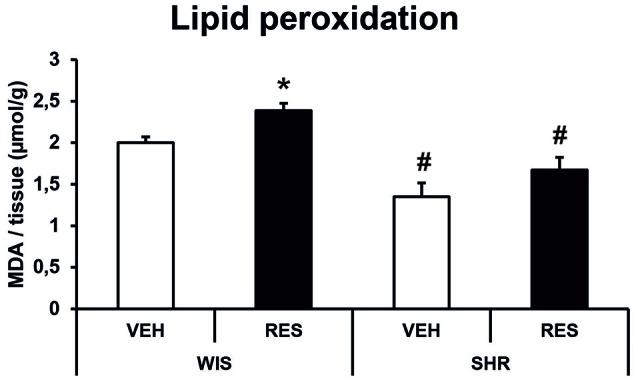
Reserpine is an irreversible inhibitor of vesicular monoamine transporter-2 (VMAT2) used to study Parkinson's disease (PD) and screening for antiparkinsonian treatments in rodents. Recently, the repeated treatment with a low-dose of reserpine was proposed as a progressive model of PD. Rats under this treatment show progressive catalepsy behavior, oral movements and spontaneous motor activity decrement. In parallel, compared to Wistar rats, spontaneously hypertensive rats (SHR) are resistant to acute reserpine-induced oral dyskinesia. We aimed to assess whether SHR would present differential susceptibility to repeated reserpine-induced deficits in the progressive model of PD. Male Wistar and SHR rats were administered 15 subcutaneously (s.c.) injections of reserpine (0.1 mg/kg) or vehicle, every other day and motor activity was assessed by the catalepsy, oral movements and open field tests. Only reserpine-treated Wistar rats presented increased latency to step down in the catalepsy test and impaired spontaneous activity in the open field. On the other hand, there was an increase in oral movements in both reserpine-treated strains, although with reduced magnitude and latency to instauration in SHR. After a 15-day withdrawn period, both strains recovered from motor impairment, but SHR animals expressed reduced latencies to reach control levels. Finally, we performed immunohistochemistry for tyrosine hydroxylase (TH) and α-synuclein (α-syn) 48 h after the last injection or 15 days after withdrawn. Reserpine-treated animals presented a reduction in TH and an increase in α-syn immunoreactivity in the substantia nigra and dorsal striatum (dSTR), which were both recovered after 15 days of withdraw. Furthermore, SHR rats were resistant to reserpine-induced TH decrement in the substantia nigra, and presented reduced immunoreactivity to α-syn in the dSTR relative to Wistar rats, irrespective of treatment. This effect was accompanied by increase of malondaldhyde (MDA) in the striatum of reserpine-treated Wistar rats, while SHR presented reduced MDA in both control and reserpine conditions relative to Wistar strain. In conclusion, the current results show that SHR are resilient to motor and neurochemical impairments induced by the repeated low-dose reserpine protocol. These findings indicate that the neurochemical, molecular and genetic differences in the SHR strain are potential relevant targets to the study of susceptibility to PD.
利血平是囊泡单胺转运体2(VMAT2)的不可逆抑制剂,用于研究帕金森病(PD)以及在啮齿动物中筛选抗帕金森病的治疗方法。最近,低剂量利血平重复给药被提议作为一种PD的渐进性模型。接受这种治疗的大鼠表现出进行性的僵住行为、口腔运动和自发运动活动减少。同时,与Wistar大鼠相比,自发性高血压大鼠(SHR)对急性利血平诱导的口腔运动障碍具有抗性。我们旨在评估SHR在PD渐进性模型中对重复利血平诱导的缺陷是否具有不同的易感性。雄性Wistar和SHR大鼠每隔一天皮下注射15次利血平(0.1mg/kg)或赋形剂,并通过僵住、口腔运动和旷场试验评估运动活动。仅接受利血平治疗的Wistar大鼠在僵住试验中表现出下台潜伏期延长,在旷场试验中自发活动受损。另一方面,两种接受利血平治疗的品系的口腔运动均增加,尽管SHR的增加幅度和恢复潜伏期有所减小。在15天的撤药期后,两个品系均从运动障碍中恢复,但SHR动物达到对照水平的潜伏期缩短。最后,我们在最后一次注射后48小时或撤药15天后对酪氨酸羟化酶(TH)和α-突触核蛋白(α-syn)进行免疫组织化学检测。接受利血平治疗的动物在黑质和背侧纹状体(dSTR)中TH减少,α-syn免疫反应性增加,撤药15天后两者均恢复。此外,SHR大鼠对利血平诱导的黑质TH减少具有抗性,并且与Wistar大鼠相比,无论治疗如何,其在dSTR中对α-syn的免疫反应性均降低。这种效应伴随着接受利血平治疗的Wistar大鼠纹状体中丙二醛(MDA)的增加,而SHR在对照和利血平处理条件下相对于Wistar品系MDA均降低。总之,目前的结果表明SHR对重复低剂量利血平方案诱导的运动和神经化学损伤具有抵抗力。这些发现表明SHR品系中的神经化学、分子和遗传差异是研究PD易感性的潜在相关靶点。


 Zotero 插件